

Multigenerational living is more than fitting extra bedrooms into a floor plan—it’s designing a home where every generation can feel connected while still having privacy, comfort, and independence. Whether you’re planning for aging parents, adult children returning home, or long-term family visits, the right layout and details make daily life run smoothly.
In this guide, we’ll cover the key design priorities that matter most (privacy and noise control, layout zoning, accessibility, shared vs. separate kitchens/laundry, and storage), the best layout options for multigenerational living, and a step-by-step process to turn your goals into a buildable plan. If you’re considering building in Southern Indiana or Eastern Illinois, Reinbrecht Homes can help you tailor these ideas to your lot, budget, and long-term plans.
What Does Multigenerational Living Look Like?
Multigenerational living goes beyond simply sharing a house with extended family. It involves creating flexible, intentional spaces that accommodate diverse needs while preserving privacy and promoting connection.
Typical Scenarios
- Aging Parents Moving In: Homes may include a first-floor main-floor suite with an accessible bathroom and additional safety features to support elderly parents.
- Adult Children Returning Home: Designed semi-private areas—such as a separate wing or an apartment-style suite—allow returning adult children to maintain their independence while staying connected.
- Adapting for Special Needs: Custom features such as zero-threshold showers, wider hallways, and adjustable fixtures address mobility or sensory requirements.
- Space for Extended Visits: Convertible guest rooms or flexible spaces can evolve based on the duration and needs of extended family visits.
Opportunities and Challenges
Multigenerational living offers strengthened relationships, shared resources, and increased support. However, it also demands careful planning to manage differing routines, privacy requirements, and noise levels. Successful design clearly separates communal areas from private zones and adopts a smart layout to ease daily functioning.
Key Design Priorities for a Thriving Multigenerational Home
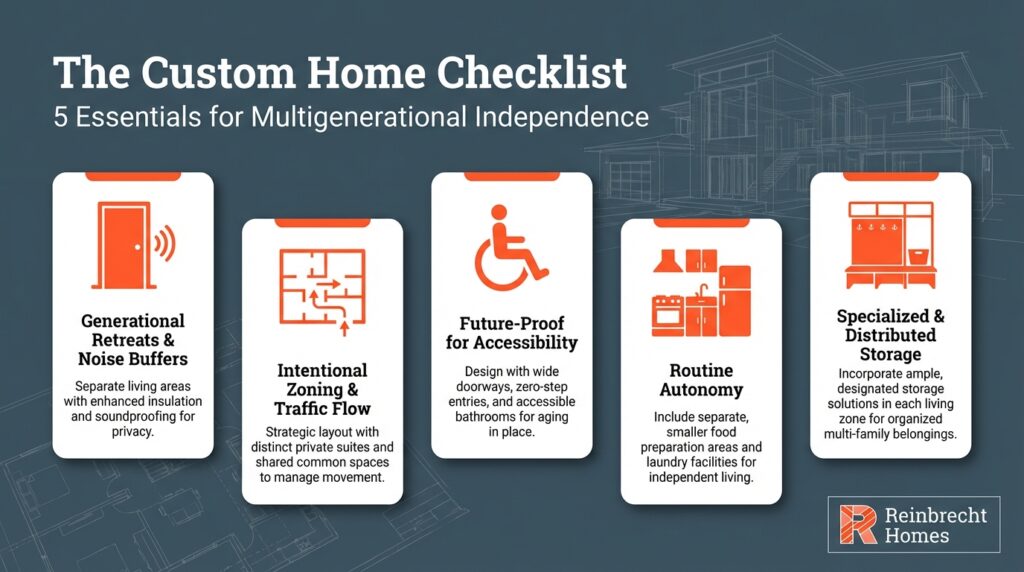
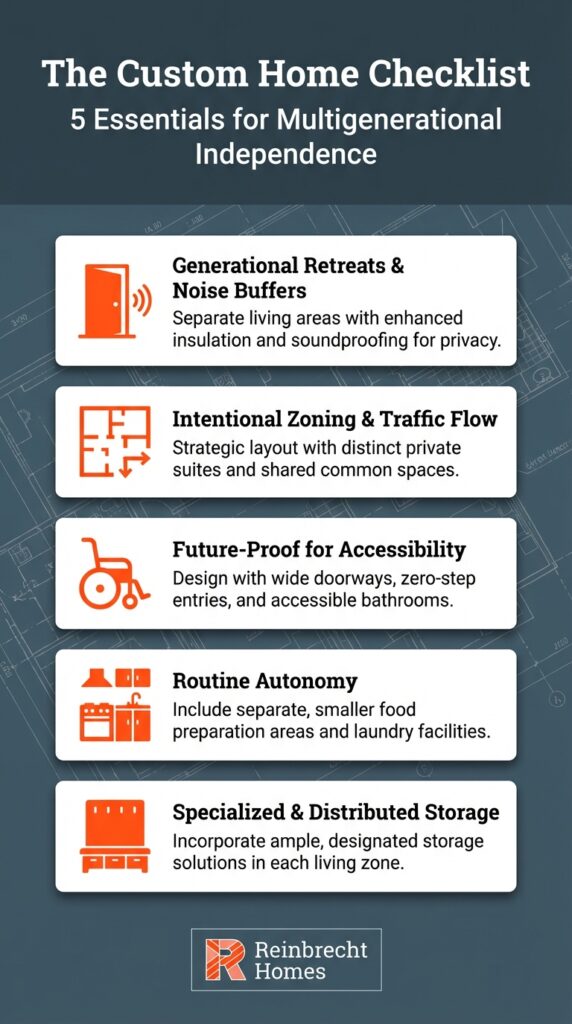
A successful multigenerational home comes down to a few core design priorities—features that protect privacy, support daily routines, and keep the home comfortable as needs change.
Privacy, Noise Control, and Independence
Multigenerational living works best when each person has space to recharge—and the home limits sound transfer between busy and quiet areas. Plan for:
- Private zones for each generation (at minimum: bedroom and bathroom)
- Optional separate entrance for a suite/wing to support independence
- Noise reduction through smart room placement (laundry/media away from suites), plus sound-dampening details like insulation and solid-core doors
- Buffer spaces (closets, baths, hallways) between suites and high-traffic rooms
Layout Zoning (Shared vs. Private Spaces)
Clear zoning helps the home feel connected without feeling crowded. Aim for:
- Central shared spaces (kitchen, great room, outdoor living)
- Separated private areas (suites, bedrooms, offices)
- Transitional spaces (mudroom, hallways, vestibules) to reduce traffic through private zones
- A layout that can adapt later (suite becomes guest space, flex room becomes caregiver room, etc.)
Accessibility and Universal Design
Universal design is simply planning ahead so the home stays safe and usable for all ages. High-impact choices include:
- No-step entry (or easy entry from garage)
- Wider halls/doors where possible
- Main-floor living options (especially a main-floor suite)
- Bathrooms planned for safety (curb-free/low-threshold shower options, blocking for future grab bars, better lighting)
Shared vs. Separate Kitchens and Laundry
This is often the biggest day-to-day quality-of-life decision. Consider a kitchenette/second kitchen when:
- Schedules and routines differ significantly
- You want a suite to feel semi-independent
- Dietary needs or caregiving require separate meal prep
For larger households, laundry also matters—either a second laundry zone or a primary laundry designed for higher volume and storage.
Storage and Daily-Living Functionality
More people usually means more “stuff,” so storage and flow can make or break the experience. Prioritize:
- A functional mudroom/drop zone
- A pantry sized for the household
- Storage near bedrooms and bathrooms (not just in one central closet)
- A smooth, logical flow from the garage to the mudroom, pantry, and kitchen to reduce daily clutter and congestion.
Best Layout Options for Multigenerational Living
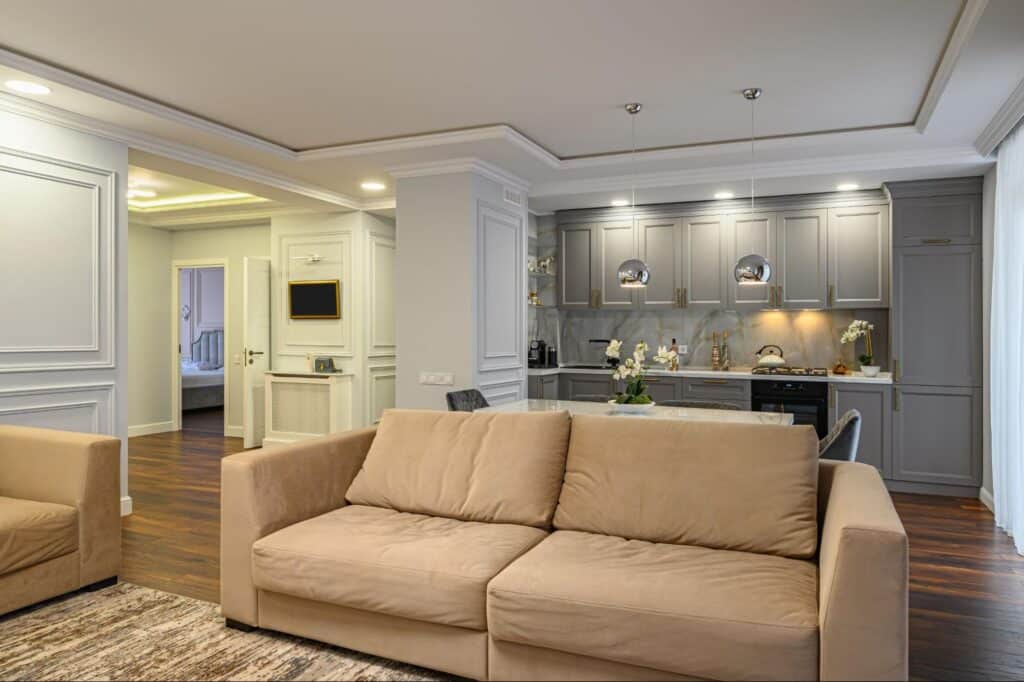
The right multigenerational layout balances connection with independence. These are three of the most effective options we see families choose when building a custom home.
Main-Floor Suite (Ideal for Aging Parents or Long-Term Guests)
A main-floor suite gives an older parent or guest a comfortable space without stairs, while still keeping them close to everyday family life.
Works well when you want:
- Easy accessibility and aging-in-place comfort
- A private retreat that still feels connected to shared spaces
Key features to consider:
- Bedroom large enough for future mobility needs
- An accessible en-suite bath (low/zero-threshold shower, space for maneuvering)
- Placement that’s close to the kitchen/living areas, but not directly adjacent to the noisiest rooms
Dual Primary Suites (Two “Owner-Style” Spaces Under One Roof)
Dual primary suites provide two highly private, fully equipped bedroom zones—often one on the main level and one upstairs, or separated on opposite sides of the home.
Works well when:
- Two generations want equal comfort and privacy
- Daily routines differ (sleep schedules, work-from-home needs, quiet time)
Key features to consider:
- Separation for noise control (distance plus buffer rooms like closets/baths)
- Comparable comfort levels so one suite doesn’t feel like an “afterthought”
- Thoughtful proximity to shared spaces so both suites feel included
Semi-Independent Wing or Apartment-Style Suite (Maximum Independence)
This layout creates a distinct living zone within the home—often with a private entry and some level of self-sufficiency—while still staying connected to the main household.
Works well when:
- Adult children are living at home
- Extended family stays for longer periods
- You want privacy similar to a small apartment without building a separate structure
Key features to consider:
- Optional private entrance and dedicated parking access
- A kitchenette or second prep area (depending on lifestyle and local requirements)
- Space for a small living area, plus bedroom and bath
- The ability to re-purpose later (guest suite, home office wing, caregiver space)
Choosing the right layout comes down to how independent each generation needs to be, both now and in the future.
A Step-by-Step Process for Planning a Multigenerational Home
Once you’ve identified the right priorities and layout approach, use the steps below to turn your goals into a buildable plan that works for every generation.
Step 1 – Define Your Household and Unique Needs
Begin by understanding your household’s current and future requirements. Identify:
- Current Occupants: Consider all who live in the home and those who might join in the future.
- Anticipated Changes: Reflect on how your family might grow or change over the next 5 to 10 years.
- Privacy versus Shared Space: Determine which family members require independent areas and which can share common spaces.
For help clarifying your objectives, take advantage of our needs assessment. Setting clear boundaries and aligning expectations early on forms the foundation for a design that works for everyone.
Step 2 – Choose the Right Layout for Your Home
With your household needs defined, the next step is selecting a layout that balances togetherness with independence.
As you compare layouts, prioritize:
- Suite placement and privacy: Can each generation have a true retreat (ideally with a bedroom and bath) without being next to the home’s noisiest spaces?
- Daily flow and access: Can everyone reach the kitchen, laundry, and main living areas without walking through someone else’s private zone?
- Flexibility over time: Can spaces shift later (guest room to caregiver suite, flex room to bedroom, wing to home office) without major remodeling?
Step 3 – Zoning for Privacy, Noise, and Comfort
Effective zoning contributes to a harmonious environment. Organizing the house into distinct public, private, and transitional areas helps balance interaction with personal space.
Defining Zones
- Public Zones: Areas like the kitchen, living room, and patios where the family gathers.
- Private Zones: Bedrooms and dedicated suites reserved for individual use.
- Transitional Zones: Hallways and entryways that smoothly connect public and private spaces.
Enhancing Flow and Reducing Noise
Design choices include:
- Wide Hallways: Ensuring ample space for accessibility and ease of movement.
- Logical Traffic Flow: Positioning busy areas centrally while isolating quieter zones.
- Soundproofing: Using insulated materials in floors, walls, and doors to minimize noise transmission.
Step 4 – Build In Accessibility and Future-Proofing
A multigenerational home should feel comfortable now—and remain safe and functional if needs change later. The best time to plan for accessibility and long-term flexibility is during the design phase, when small layout decisions can prevent expensive renovations down the road.
Plan for everyday accessibility
- No-step entry (or an easy, low-transition entry from the garage)
- Clear circulation with wider hallways and doorways where possible
- Main-floor living options, especially a main-floor suite for aging-in-place
- Smart lighting for safety in hallways, stairs, and bathrooms
Design bathrooms and kitchens for long-term use
- Low- or zero-threshold shower options and slip-resistant flooring
- Extra space in key areas for easier movement
- Blocking in walls for future grab bars (without changing the look today)
- Storage and fixtures that are easy to reach and use
Future-proof the home with built-in flexibility
- Rough-ins for potential future bathrooms, laundry, or kitchenette additions
- Multipurpose rooms that can convert into a caregiver suite, office, or bedroom
- Layout decisions that allow the home to adapt without disrupting the entire household

Step 5 – Family and Builder Alignment
Creating a multigenerational home is a collaborative process. Aligning your family’s vision with your builder’s expertise is vital to achieving a design that meets everyone’s needs.
Engage Your Builder Early
Involve your builder from the start to:
- Discuss design feasibility, relevant zoning regulations, and budget implications.
- Receive expert advice on structural requirements and innovative design solutions.
- Establish a clear communication process that minimizes surprises and builds trust.
Involve Every Generation
Seek input from all family members:
- Engage older relatives, adult children, and younger family members to understand preferences for private versus shared spaces.
- Discuss daily routines such as meal times and recreational activities.
- Use this feedback to design spaces that balance communal living and personal retreat.
Should You Build New or Remodel for Multigenerational Living?
Both new construction and remodeling can support multigenerational living—the best choice depends on your home, timeline, and how much flexibility you need.
Building new is often the best fit when you want to:
- Design the right layout from the start (suite placement, zoning, separate entrances, etc.)
- Incorporate accessibility and universal design seamlessly
- Add modern energy efficiency and long-term durability with fewer compromises
Remodeling may make sense when you:
- Love your current location or the home has strong “good bones”
- Only need targeted changes (for example, converting space into an in-law suite)
- Want to preserve sentimental or architectural features
Designing for Lifelong Harmonious Living
A well-designed multigenerational home balances togetherness with independence. When you prioritize privacy and noise control, zone the layout thoughtfully, build in accessibility, and plan for real-life routines (kitchen, laundry, storage, and daily traffic flow), you create a home that works—not just today, but for years to come.
If you’re deciding between building new or remodeling, both paths can support multigenerational living depending on your home, timeline, and goals. And if you’d like help evaluating layout options for your family, contact Reinbrecht Homes to schedule a consultation and start planning a home designed for every generation.
