
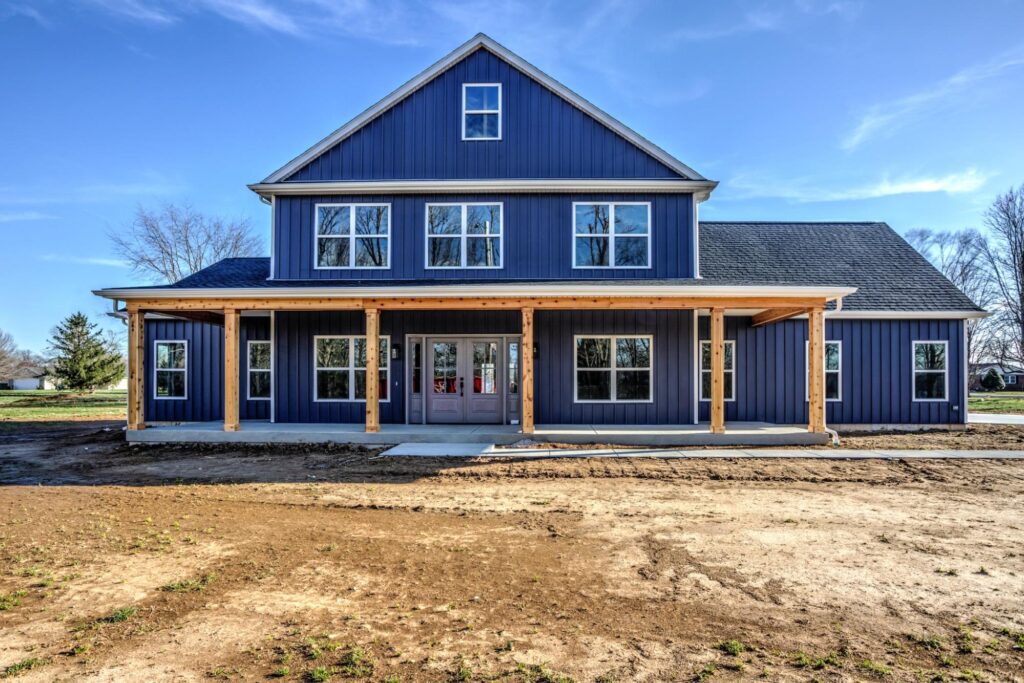
A covered porch can become the space your family uses most from spring through fall. Most covered porch ideas for new construction look similar in photos, but the meaningful differences show up in blueprint decisions that happen before framing begins. This guide walks through what to decide at the plan stage, why building a porch into a new home is cleaner than adding one later, and how Southern Indiana’s climate should shape the design.
Key Takeaways
- Building a covered porch into a new home is almost always cleaner and more cost-effective than retrofitting one later, because roof tie-in, drainage, foundation, and rough-ins are integrated during original framing.
- Porches remain the most common outdoor feature on new single-family homes in the U.S., appearing on 67.2% of single-family starts in 2024, according to analysis from NAHB’s Eye on Housing.
- 81% of home buyers want a front porch and 86% want a patio, making outdoor living the top-ranked exterior feature category in the most recent NAHB home buyer preference survey.
- The blueprint-stage decisions that matter most are roof tie-in, drainage and site grading, rough-ins for fans and outdoor kitchens, screen system, and floor material.
- In Southern Indiana, where mosquito season runs roughly May through October, a screened porch functions as a different product than an open covered porch and extends the usable season.
Why Building a Covered Porch With a New Home Is Easier Than Adding One Later
Building a covered porch into a new home during original construction is consistently cleaner and more cost-effective than adding one later. Roof, foundation, drainage, and mechanical rough-ins are integrated from the start, rather than cut into finished surfaces afterward.
Retrofitting a porch onto an existing home adds work that new construction avoids:
- Matching siding and finishes where the new structure ties in
- Cutting into an existing roof and re-flashing the wall
- Re-engineering the foundation or pouring a new one
- Opening finished walls to run electrical, gas, and plumbing
During new construction, all of that work happens once while the home is still framing. A built-in covered porch also shares rafters, columns, and footings with the main home, which produces cleaner rooflines and a finished look that reads as designed rather than added.
Missing or undersized outdoor living is a common regret after a build, which is why we cover it in our post on top floor plan regrets modern families wish they had avoided. The porch is worth putting on the blueprint alongside room layouts. For how Reinbrecht Homes approaches the build from plan to move-in, see our overview of new home construction.
Does a Covered Porch Add Value to a Home?
Yes. Covered porches rank among the most in-demand outdoor features for home buyers, and they contribute to both curb appeal and usable outdoor square footage, which supports long-term resale value.
Recent industry data backs this up:
- Porches appear on 67.2% of single-family starts in 2024: and remain the most common outdoor feature on new homes, per NAHB analysis of Census Survey of Construction data.
- 81% of home buyers want a front porch and 86% want a patio: outpacing decks and fire pits, in the most recent NAHB buyer preference survey.
- Well-built outdoor living recovers most of its cost at resale: based on deck-addition data as a directional proxy: a midrange wood deck recoups roughly 95% of cost and a midrange composite deck recoups around 89%, per the JLC 2025 Cost vs. Value Report. These figures are for decks, not covered porches, but they point in the same direction.
As NAHB economist Paul Emrath noted, “Although the share of new homes with porches edged down in 2024, porches continue to rank as the most common outdoor feature on new homes.” Front porches also drive curb appeal, which is worth thinking about alongside other ways to elevate your home’s curb appeal at the design stage.
Popular Covered Porch Ideas for New Construction Homes
The most common types of covered porches in new construction are front porches, side or rear porches, screened porches, wraparound porches, and outdoor-living-room porches that integrate kitchens or fireplaces. The right choice depends on lot orientation, how you plan to use the space, and whether you want open or insect-protected access.
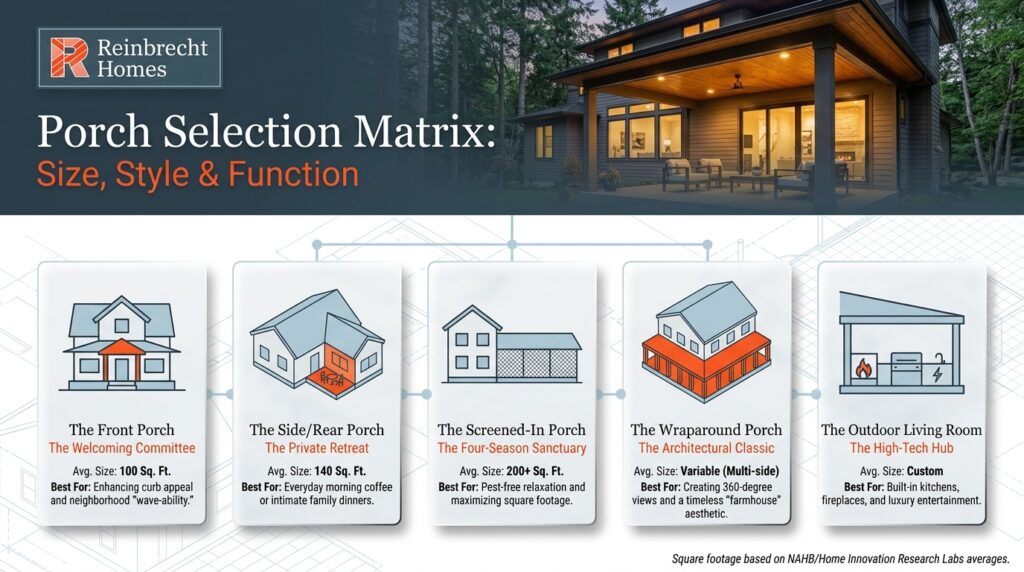
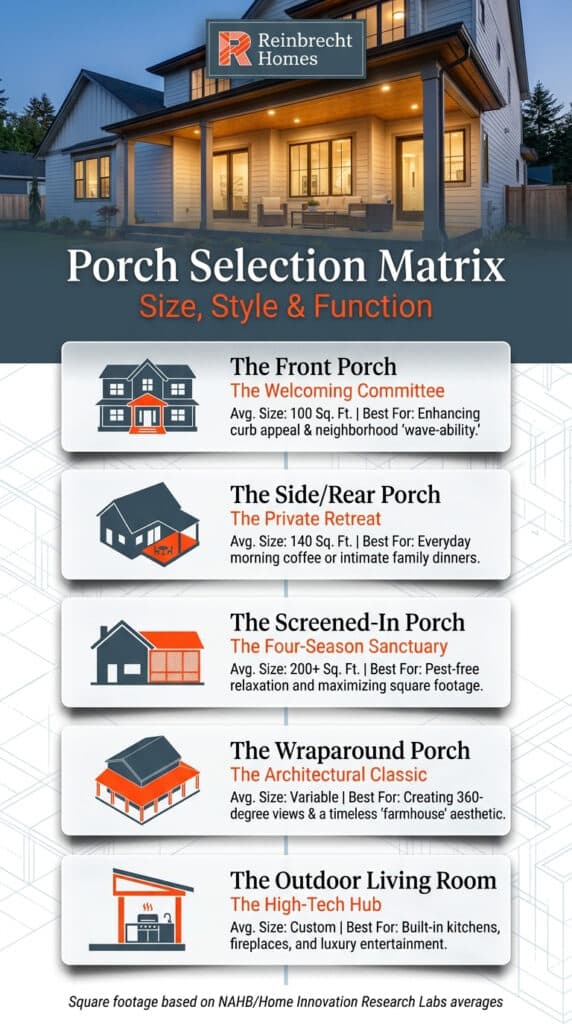
Here is how each type typically plays out, with national size averages for context:
- Front porch: averages about 100 square feet. Primary curb appeal driver, and the most visible signal that the home is finished and welcoming.
- Side or rear porch: averages about 140 square feet. Usually used more for daily living than the front porch, and often sized to fit a small dining set or lounge seating.
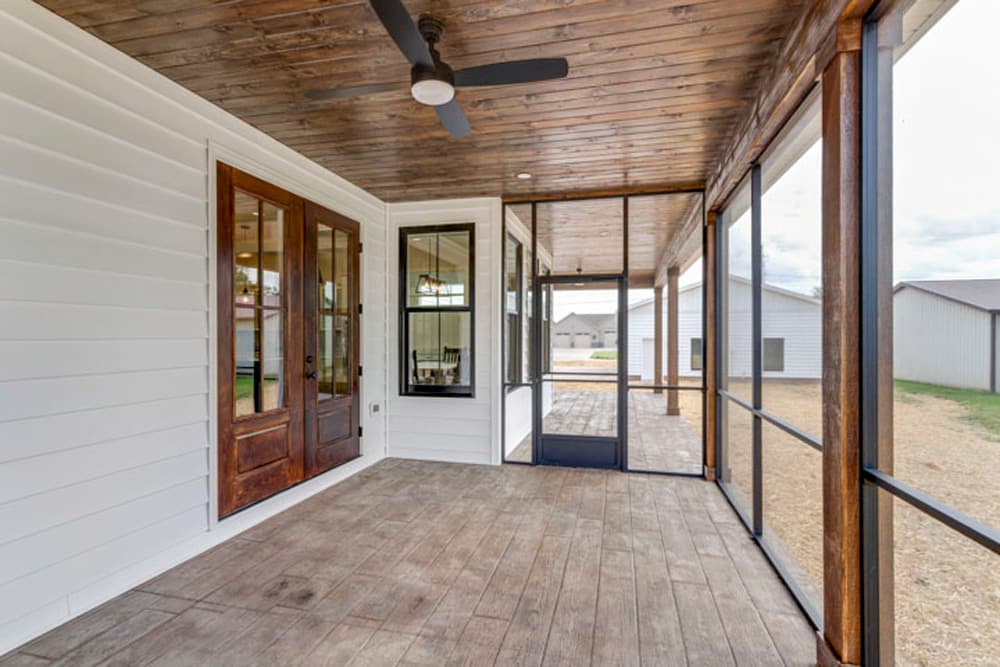
- Screened porch: averages just over 200 square feet. Larger because it doubles as an insect-protected outdoor room in warm-weather months. Strong candidate for an outdoor living space in a new home in our region.
- Wraparound porch: extends around two or more sides of the home. The aesthetic is classic, but the roof tie-in and column layout are more complex and have to be designed from the start.
- Outdoor living room porch: integrates a built-in grill, outdoor kitchen, gas fireplace, or ceiling heater. The option with the biggest rough-in implications, because gas, water, and electrical have to be planned into the original mechanical drawings.
Most buyers settle on a configuration after seeing real examples. The Reinbrecht project gallery shows how different porch styles read in person.
Porch vs. Patio vs. Deck vs. Sunroom: What’s the Difference?
Covered porches sit under the home’s roofline, so they provide shaded, weather-protected outdoor use year-round. Patios, decks, and sunrooms are structurally and functionally different products. Here is how each compares:
- Porch: a roofed structure attached to the home, usually at the front or rear. Can be open or screened. Shares the roofline of the main home.
- Patio: a ground-level paved area with no roof. Seasonal unless paired with a pergola, awning, or other shade structure.
- Deck: an elevated wood or composite platform, typically without a roof. Also weather-dependent without additional cover.
- Sunroom: a fully enclosed, heated and cooled living space. Different cost, insulation, and code requirements than a covered porch.
If a true four-season enclosed space is what you want, the planning conversation is closer to our breakdown of sunroom costs. Knowing which structure you want changes the roof design, the foundation, and the mechanical package.
Builder Decisions to Make at the Blueprint Stage
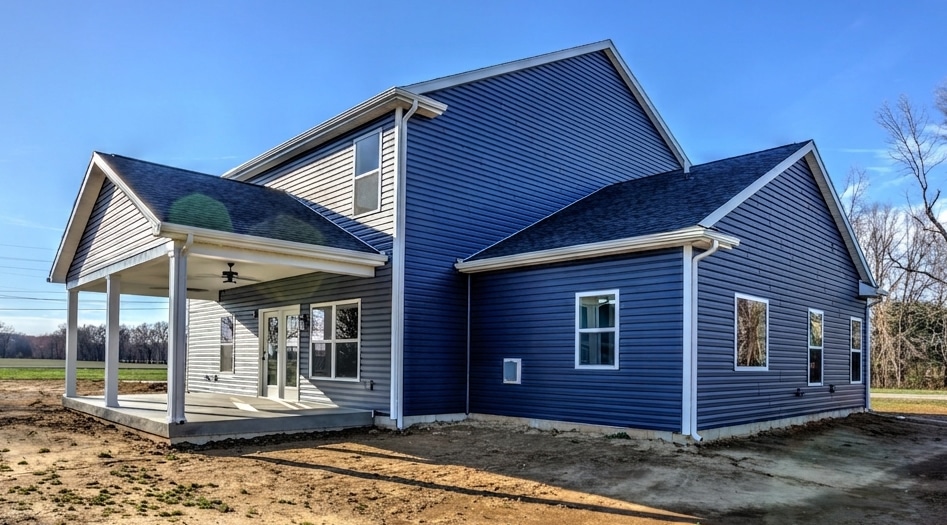
The covered porch decisions that have to be made before framing are roof tie-in, drainage and site grading, mechanical rough-ins, screen system selection if screening is planned, and floor material. Each is either dramatically more expensive to change after construction or effectively impossible without tearing into finished work.
The porch roof can be a gable that extends the main roofline, a shed roof tucked under the eave, or a fully integrated section with its own ridge. Each affects ceiling height, sightlines from inside, and how water sheds off the roof. Columns and beams also have to carry load back to footings sized and placed at the original foundation pour, which is the core reason roof tie-in is almost impossible to change cleanly after construction.
Drainage and Site Grading
A covered porch needs a floor that pitches away from the home and a site grade that carries water past the foundation. Gutters and downspouts have to be planned so runoff from the main roof does not sheet across the porch floor. On sloped lots, grading plan and porch elevation are joined at the hip, and our overview of building on sloped land covers the broader implications.
Mechanical Rough-Ins for Electrical, Gas, and Plumbing
Rough-ins are the biggest reason to design the porch you actually want now, not the one you might upgrade to later. The essentials to plan at the blueprint stage:
- Ceiling fan boxes: with proper structural support, even if you plan to install the fan later.
- Exterior outlets on switched circuits: for lamps, string lights, a small TV, or portable heaters.
- Recessed can lighting versus surface mounts: which determines rafter spacing before the ceiling is closed.
- Gas line for a grill or fireplace: routed during original plumbing rough-in.
- Water supply and drain for an outdoor kitchen sink: with a frost-protected shutoff inside the home.
Screen System Selection If Screening Is Planned
Screened porch new construction designs generally use one of three systems: traditional screen on removable frames, retractable motorized screens that disappear into a header, or vinyl or acrylic panel systems that turn the screened porch into a nearly four-season space. The screen choice determines header size, rough opening dimensions, and trim detail, and it also affects whether the porch reads as seasonal or year-round from the outside.
Porch Floor Materials
Concrete is the most-used porch floor material by square footage in the U.S., according to the same NAHB and Home Innovation Research Labs data. Other common options include stamped or stained concrete, ceramic or porcelain tile over a slab, tongue-and-groove porch board, and composite decking on elevated porches. Choice depends on elevation above grade, aesthetic preference, maintenance tolerance, and budget. Standard materials across every Reinbrecht home are laid out in our semi-custom standards guide.
Planning a Covered Porch for the Southern Indiana Climate
In Southern Indiana, Northwestern Kentucky, and Eastern Illinois, a covered porch works hardest from May through October, which aligns almost exactly with the regional mosquito season. Humidity, afternoon sun angles, and prevailing wind all matter when placing the porch on the lot.
Indiana mosquito season runs approximately May 1 through October 1, according to IndyStar. That is a five-month window where an open covered porch and a screened covered porch function as genuinely different products. An open porch is still useful during cooler shoulder months. A screened porch turns summer evenings into usable time outdoors instead of a retreat indoors.
Orientation is the other regional variable worth front-loading at the plan stage:
- West- and southwest-facing porches: get hit hard by afternoon sun, which pushes toward a ceiling fan, pull-down shades, or deeper eaves.
- East-facing rear porches: often become the default morning space because they get sun at breakfast and shade by noon.
Our guidance on build on your lot decisions covers how lot conditions shape the broader design.
Frequently Asked Questions About Covered Porches in New Construction
Do I need a permit for a covered porch?
Yes. A covered porch is a structural addition that requires a building permit in every jurisdiction in Reinbrecht’s service area across Southern Indiana, Northwestern Kentucky, and Eastern Illinois. In new construction, the porch permit is handled as part of the overall building permit, so it is not a separate step you manage.
How much does it cost to add a covered porch to an existing home?
Cost varies widely based on size, roof tie-in complexity, finishes, screen system, and rough-in scope. Reinbrecht does not use cost-per-square-foot pricing, which we consider unreliable. For a new build, the porch cost is included in the overall transparent project quote before any contract is signed, with no hidden fees. Reinbrecht is a new home builder, not a remodeler, so retrofit projects on existing homes are outside of what we take on.
Should my covered porch be in the front, rear, or both?
It depends on how you plan to use the space. Front porches drive curb appeal and neighborhood interaction, while rear porches tend to get used more for daily family living and outdoor dining. Many buyers choose a smaller front porch for street presence and a larger rear or screened porch for actual use, and wraparound porches are an option when lot and floor plan support them.
Is a screened porch worth it in Southern Indiana?
For most homeowners in the region, yes. The five-month mosquito season is the difference between a porch that sits empty on summer evenings and one that gets used most nights from late spring through early fall. Screened porches average just over 200 square feet nationally, per NAHB’s Home Innovation Research Labs data, enough room for seating and a small dining table.
Planning Your Covered Porch With Reinbrecht Homes
A well-designed covered porch is a front-of-blueprint decision. Locking the roof, drainage, rough-ins, and finishes early is the simplest path to the outcome you want.
What past customers say: “The Reinbrecht team and their sub contractors did a wonderful job bringing our dream home to reality. They delivered a home of exceptional quality on time and on budget. They were present for us every step of the way, delivering a personal and professional home building experience.”
Explore Reinbrecht’s 30+ customizable floor plans to find a layout that already includes the covered porch you have in mind, or contact the Reinbrecht team to talk through a semi-custom home tailored to your lot.
