
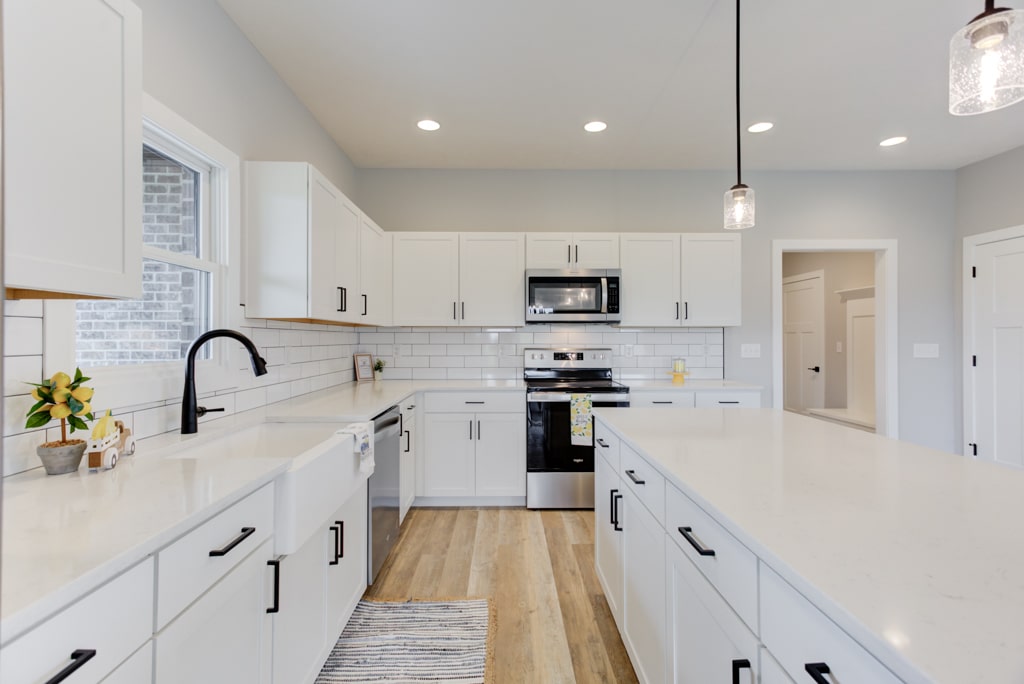
The right kitchen island size depends less on a magic number and more on the room around it. Most online advice assumes you’re fitting an island into a kitchen that already exists. When you’re building a new home, you get to flip that order, choosing or adjusting your floor plan so the island, its walkways, and its seating all fit before the foundation is poured.
Key Takeaways
- A common guideline is to keep the island under about 10% of the kitchen’s floor area, but the real limit is the clearance around it, not a fixed dimension.
- Plan at least 42 inches of work aisle around an island for one cook, and at least 48 inches when more than one person cooks.
- A pure walkway with no cooking alongside it needs at least 36 inches. That is a floor, not a target.
- Each seat needs about 24 inches of width, with knee-space depth of 18, 15, or 12 inches depending on whether the counter is 30, 36, or 42 inches high, per NKBA guidelines.
- Behind a seated diner, allow 32 inches with no passing traffic, 36 inches to edge past, or 44 inches to walk by comfortably.
- In a new build, these numbers are inputs to your floor plan, not problems you discover after the walls go up.
What Is the Standard Size for a Kitchen Island?
There’s no single standard kitchen island size. Common islands run from about 4 feet by 2 feet up to roughly 6 feet by 3 feet, but those are starting points, not rules. The size that works is the one your kitchen can hold with comfortable clearance on every side.
The real constraint is clearance, not a target dimension. A popular rule of thumb keeps the island under about 10% of the kitchen’s floor area, which is a useful sanity check. But two kitchens of the same size can support very different islands depending on where the doors, appliances, and traffic paths fall. The dimensions that matter most are the ones measured around the island, which the next section covers.
How Much Space Do You Need Around a Kitchen Island?
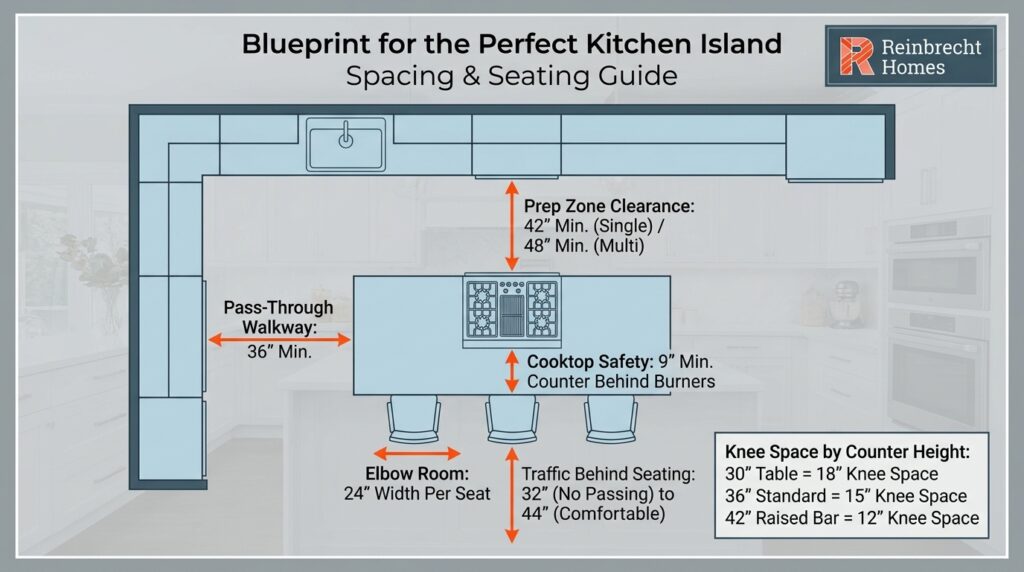
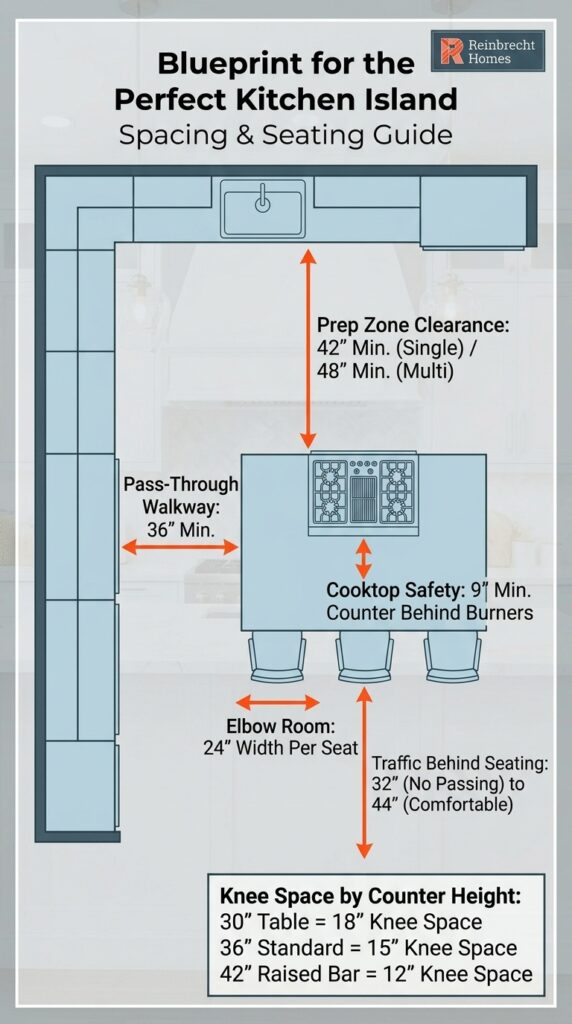
Plan at least 42 inches of work aisle around an island where one person cooks, and at least 48 inches where two or more people cook, per the recognized NKBA standard. A path with no cooking alongside it can drop to 36 inches, but that’s a walkway minimum, not a work aisle.
These are the figures that turn vague “leave some room” advice into something you can actually plan a kitchen around:
| Clearance or seating guideline | Recommended dimension (NKBA) |
| Work aisle, one cook | At least 42 inches |
| Work aisle, two or more cooks | At least 48 inches |
| Walkway (no cooking alongside) | At least 36 inches; where two walkways cross, one should be at least 42 inches |
| Seat width per diner | About 24 inches |
| Knee space, 30-inch table height | 18 inches deep |
| Knee space, 36-inch counter height | 15 inches deep |
| Knee space, 42-inch bar height | 12 inches deep |
| Clearance behind a seated diner | 32 inches (no traffic), 36 inches to edge past, 44 inches to walk past |
| Cooktop on the island | Counter extends at least 9 inches behind the cooking surface |
All dimensions above reflect the NKBA Kitchen Planning Guidelines, the established kitchen and bath planning standard.
The work-aisle versus walkway distinction is where most kitchens go wrong. A 36-inch gap feels fine on paper, but it’s tight the moment someone opens a dishwasher or oven door. Reserve 42 to 48 inches anywhere cooking happens, and save 36 inches for true pass-through paths.
How Many Seats Fit at a Kitchen Island?
Plan about 24 inches of width for each seat, so a 6-foot island seats roughly three people across one side. Each diner also needs knee space behind the overhang: 18 inches at a 30-inch table height, 15 inches at a 36-inch counter, and 12 inches at a 42-inch bar, according to the same NKBA guidelines.
As a rough guide for an island with seating (a common rule of thumb, not a fixed standard):
- About 4 feet of usable island length seats one person comfortably.
- About 6 feet seats two.
- About 8 feet seats three to four.
Two more numbers protect the experience. A common guideline is 10 to 15 inches of countertop overhang so knees clear the cabinets below. And behind each stool, you want 32 to 44 inches of clearance depending on whether anyone walks past. Seating usually sits away from the cooking zone, keeping the work aisle clear.
The Floor-Plan-First Advantage: Sizing the Room to the Island
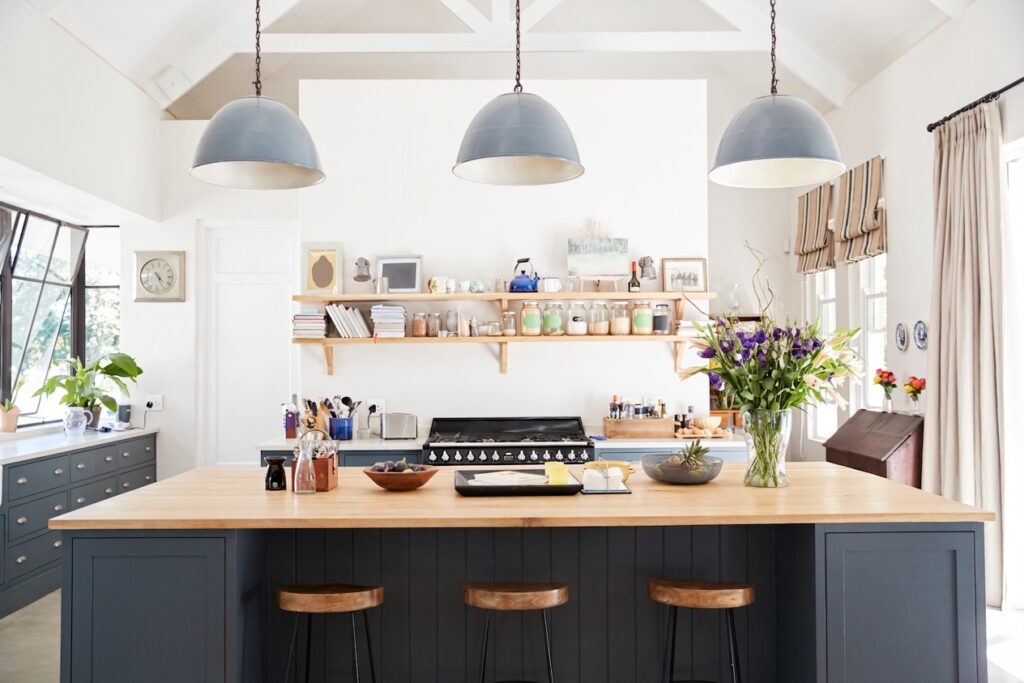
When you build new, you don’t have to squeeze an island into a fixed room. You can choose or adjust a floor plan so the kitchen is sized around the island you want, with full work aisles and seating built in. That’s the real difference between planning an island for a new home and retrofitting one into an existing kitchen.
It also sidesteps the most common island mistake. As Matthew Andrews, head of design at Cor Domi, has observed, a poorly proportioned island can dominate smaller spaces or interrupt traffic flow. In a new build, proportion is a choice you make on paper, not a problem you inherit after the walls are framed.
The practical move is to start with the plan and personalize from there. You can browse and filter floor plans by size and layout, then see what a semi-custom home lets you adjust, like widening the kitchen so the island lands with the right clearances. The same plan-first thinking pays off elsewhere too, such as getting your master bedroom dimensions right before construction starts.
When a Kitchen Island Doesn’t Fit: Peninsulas and Other Layouts
If your kitchen can’t hold an island with at least a 42-inch work aisle on the cooking side and 36 inches everywhere else, an island will crowd the room rather than improve it. A peninsula, a galley layout, or a larger kitchen footprint is usually the better answer.
A peninsula is the honest alternative most island guides skip. Because it connects to a wall or a cabinet run, it adds prep space and seating without needing clearance on all four sides, which suits narrower kitchens. And while you’re still planning, you can choose a different layout or a larger kitchen, part of what semi-custom and custom new home construction makes possible, whether you build in a Reinbrecht neighborhood or on your own land.
Designing Your Island Around How You Cook and Gather
Beyond size, an island earns its space when it matches how you use the kitchen. Decide early whether it’s mainly a prep zone, an appliance spot, a seating spot, or a mix, because each choice changes its depth, clearances, and finishes.
Three common roles drive most of those decisions:
- Prep and storage: the most flexible use, which calls for generous counter depth and base cabinets or drawers below.
- A cooktop or sink: adds ventilation or plumbing, and a cooktop needs the counter to extend at least 9 inches behind the burners for safety, which deepens the island.
- Seating: turns the island into a gathering spot, which sets the overhang and the knee space you plan for.
Finishes are where the island becomes yours. The cabinetry, countertop, and color set the tone, and it helps to coordinate them with the rest of the kitchen, from the warm wood cabinet trends shaping new kitchens to the way cabinet colors work with your flooring. Reinbrecht’s kitchen design has earned recognition too, including a Best Kitchen honor among its six Best Feature Awards at the 2018 Parade of Homes.
That selection process is hands-on. One customer recalled that the Reinbrecht team “helped us make decisions and even took us to the cabinet maker on an icy, winter day,” with quotes that were “specific and based on what we said we wanted.”
The project gallery shows completed Reinbrecht kitchens and islands in real homes rather than staged stock photos.
Frequently Asked Questions About Kitchen Island Size
What is the minimum size for a kitchen island?
A small island can work at roughly 3 to 4 feet long and about 2 feet deep, but the minimum that matters most is the space around it. You want at least a 42-inch work aisle on the cooking side and 36 inches for a walkway. If those clearances don’t fit, the island is too big for the room, no matter how compact the island itself is.
Is 36 inches enough space around a kitchen island?
36 inches is the NKBA minimum for a walkway with no cooking happening alongside it, not a work aisle. Where you’ll be cooking, plan at least 42 inches for one cook and 48 inches for two. Treat 36 inches as the floor for pass-through paths only, not as the goal for the whole kitchen.
What is the best height for a kitchen island?
A standard kitchen island matches counter height at about 36 inches, while a raised bar runs about 42 inches. The height you choose changes the knee space each seat needs, 15 inches at a 36-inch counter and 12 inches at a 42-inch bar. Choose the height around how you plan to use the island, then size the seating to match.
How much overhang do you need for island seating?
A common guideline is 10 to 15 inches of overhang so diners have room for their knees. Pair that with about 24 inches of width per seat, and confirm the counter height matches the knee-space depth you’re planning for.
Can a kitchen island be too big?
Yes. An island that leaves less than a 42-inch work aisle or blocks the path between key work areas makes the kitchen harder to use, not better. In a new build, the fix is to size the room to the island during planning rather than oversizing the island for the space you happen to have.
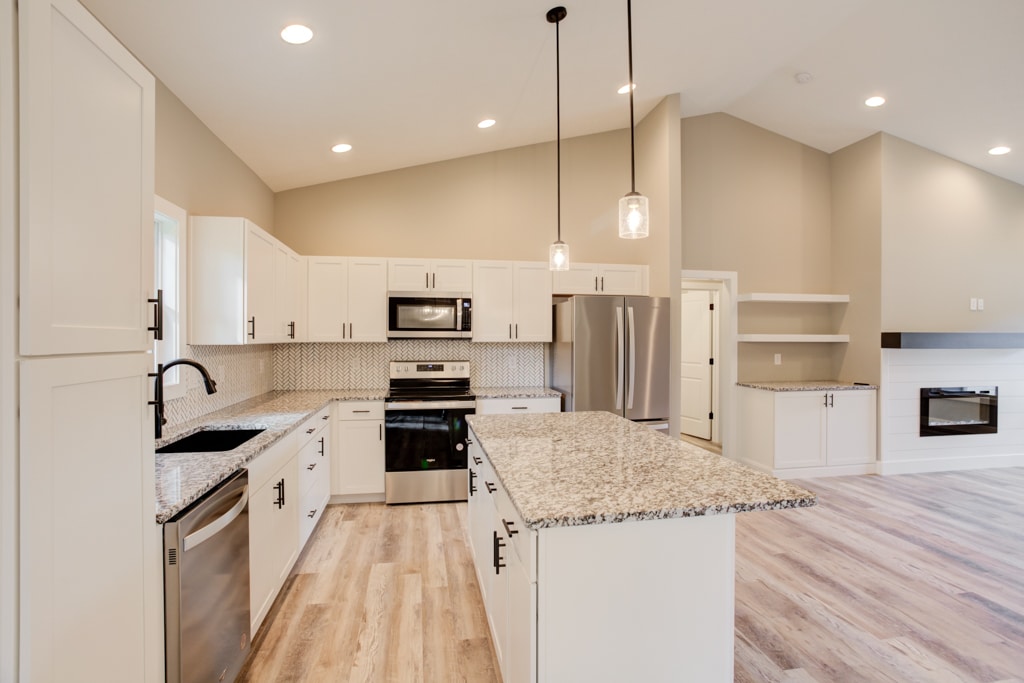
Plan Your Kitchen Around the Island You Want
The best time to get your kitchen island size right is before the plan is final, while clearances and seating are still easy to adjust. The Reinbrecht team can help you choose or personalize a floor plan so the island, the work aisles, and the seating all fit the way you cook and gather. Contact Reinbrecht Homes to start planning your new home.
