
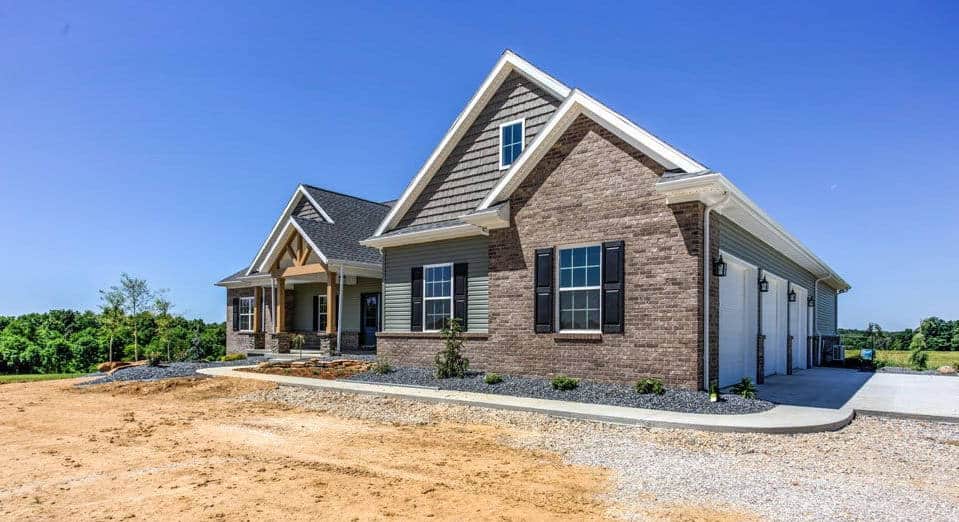
Building a new home on well water means drilling and maintaining a private groundwater well on your property instead of connecting to a municipal water line. If the lot you have your eye on sits outside city limits, there’s a good chance this applies to you. Here’s what changes when you’re building a new home with well water: the site evaluation, the county permit process, realistic costs, and when the well actually gets drilled.
Key Takeaways
- Well water served an estimated 37.29 million people in the contiguous U.S., about 12.2% of that region’s population, as of the most recent USGS estimate, from 2010.
- Indiana’s Recommended Standards for Private Water Wells call for at least 50 feet of separation from a septic system, at least 15 feet from any property line, and a well casing that extends at least 25 feet below ground surface. If a lot can’t meet those distances, the county health department may allow lesser separations case by case.
- Your county health department issues the well permit and sets its own fee and review timeline, so the exact process and cost vary depending on where you build.
- Well drilling typically costs several thousand dollars, depending on depth and local geology. Reinbrecht’s own guide to land development costs puts the typical range for Southern Indiana sites at $3,000 to $9,000.
- For a new build, the well is usually drilled before or early in construction, not after, so water is on site for the trades and testing that need it before you move in.
New-Construction Well Timeline: From Site Evaluation to Move-In
Building on well water follows a fairly predictable sequence once you know the steps. Here’s how it typically unfolds, from the first site evaluation to your first annual water test.
| Phase | What Happens | Typical Timing | Who’s Responsible |
|---|---|---|---|
| 1. Site evaluation & siting | Confirm soil conditions and the well’s distance from septic systems, lot lines, and other contamination sources before the home design is finalized. | Before or during site planning, ahead of home design finalization | Licensed well driller or surveyor; county health department reviews the site drawing |
| 2. Permit application | Owner or builder submits a site drawing and permit fee to the county health department, which reviews it against state and local standards. | Before drilling begins; fee and review time are set locally and vary by county | Property owner/builder; county health department |
| 3. Drilling & casing | The well is drilled and cased to the required minimum casing depth. | Recommended before or early in home construction, not after | Licensed well driller |
| 4. Disinfection & initial testing | The driller disinfects the new well. The owner has the water tested before it’s used for drinking. | Shortly after drilling, before the well is used for drinking water | Driller and property owner |
| 5. Final approval | The county health department reviews the results and approves the well for use. | Before the well water is used for drinking | County health department |
| 6. Ongoing testing | The homeowner retests the well at least annually; a local IDOH-certified lab can advise which parameters, such as bacteriology, nitrate-nitrite, arsenic, lead and copper, or fluoride, apply to your well. | At least annually after move-in (more often with young children or elderly residents, or after flooding or nearby construction) | Homeowner |
Well Water vs. City Water for New Construction: What to Know Before You Build
The biggest practical difference between the two is who’s responsible for the system. With well water, you own and maintain a private water source on your own property. With municipal water, the local utility maintains the system and sends you a monthly bill. Each comes with different upfront costs, ongoing costs, and water quality responsibilities.
- Upfront cost: Drilling a well typically runs several thousand dollars, depending on depth and geology. Connecting to municipal water involves a tap fee and, if your lot sits far from the water main, the cost of a line extension.
- Ongoing cost: A well has no monthly water bill, but budget for periodic testing and eventual pump or equipment maintenance. Municipal water comes with a recurring utility bill, but little else for the homeowner to maintain.
- Water quality: Municipal water is treated and monitored by the utility. Well water is the homeowner’s responsibility to test, and the Indiana Department of Health recommends at least annual testing; ask your local IDOH-certified lab which parameters, such as bacteriology, nitrate-nitrite, arsenic, lead and copper, or fluoride, apply to your well.
- Maintenance: Wells need periodic water testing and occasional pump servicing. Municipal systems need little homeowner upkeep beyond paying the bill on time.
Site Evaluation and Well Siting Happen Before Your Home Design Is Finalized
Before your home design is finalized, a licensed well driller or surveyor needs to confirm your lot can support a well at a safe distance from septic systems, lot lines, and other contamination sources. This step happens during site planning, not after your foundation is poured, because it can affect where your home, septic system, and driveway end up on the lot. Reinbrecht’s guide to choosing the best building site covers this kind of general site evaluation in more depth.
How Far Must a Well Be From a Septic System or Lot Line in Indiana?
Indiana’s Recommended Standards for Private Water Wells set the baseline setback distances every county builds its own well permitting on. A new private well should sit at least 50 feet from a septic tank, absorption field, or similar wastewater source, at least 15 feet from any property line, and be cased to a depth of at least 25 feet below ground surface. If your lot can’t meet those distances, your county health department, whether that’s Vanderburgh, Warrick, Gibson, Posey, Pike, Knox, Dubois, or another county in Reinbrecht’s Southern Indiana service area, may allow lesser separations on a case-by-case basis, so confirm the exact figures for your site before you finalize your site plan.
What Is the Water Well Permit Process in Indiana?
Indiana sets statewide recommended standards for private wells, but your county health department administers the actual permit, which means the application steps, fee, and review timeline are set locally and vary from county to county. In general, you or your builder submit a site drawing and permit fee to your county health department before drilling begins, and the department reviews it against the state’s recommended setback and construction standards, or its own local ordinance if the county has one, before approving the well.
If you’re building through Reinbrecht’s Build On Your Lot program in Vanderburgh, Warrick, Gibson, Posey, Pike, Knox, Dubois, or another Southern Indiana county, your project contact can help you confirm which county health department has jurisdiction over your site and what that county’s fee and timeline look like.
Drilling the Well Early Keeps Your Construction Schedule on Track
Drilling the well before or early in construction, rather than after, keeps water on site for the trades that need it during the build and leaves time to complete disinfection and initial testing well before move-in. Waiting until later in the schedule can create delays if a site turns out to need a different well location or a deeper bore than expected.
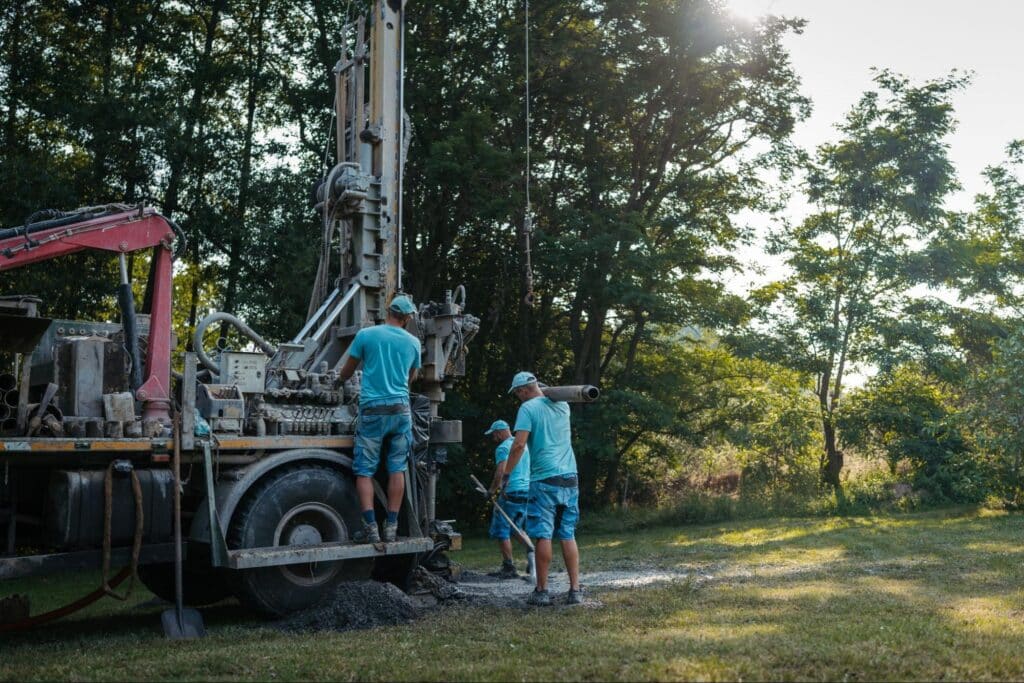
How Much Does It Cost to Drill a Well for a New Home?
Well drilling costs vary widely depending on depth, local geology, and casing requirements, which is why online estimates for this cost are all over the map. Reinbrecht’s own guide to land development costs puts the typical range for Southern Indiana sites at $3,000 to $9,000, though your final number depends on your specific site. Because the range is wide, it’s worth getting a quote from a local licensed driller once your site evaluation is complete, rather than budgeting to a single number from a national source. As you work out your overall build budget, it’s also worth asking your project contact how well and site development costs fit into Reinbrecht’s free construction financing, which covers up to $250,000 of the build price.
Testing New-Construction Well Water Before Move-In
Before you move in, test your new well using Indiana’s recommended well testing guidance: at minimum, an annual test. Ask your local IDOH-certified lab which parameters apply to your well, such as bacteriology, nitrate-nitrite, arsenic, lead and copper, or fluoride. The EPA also recommends testing more often if your household includes young children or elderly residents, and right away after flooding, nearby construction, or any repairs to the well itself.
When a Lot Doesn’t Have a Good Well Site or Municipal Water
A small number of lots can’t support a safe well location and don’t have access to a municipal line either. In those cases, some buyers look into shared wells or cisterns, though both come with their own maintenance needs and local regulatory requirements, and they’re worth discussing with your county health department before you commit to a lot. If you’d rather skip well and septic planning altogether, take a look at Reinbrecht’s active neighborhoods and ask your project contact which communities already have municipal utilities in place.
Who Needs to Plan for Well Water When Building a New Home?
This mostly affects buyers building on rural or acreage lots outside municipal utility service areas, including many Reinbrecht Homes buyers building through the Build On Your Lot program. If your lot is inside one of Reinbrecht’s established neighborhoods, ask your project contact whether municipal utilities are already in place for that community, since this can vary by neighborhood.
Frequently Asked Questions About Building a New Home with Well Water
Can I get city water instead of a well?
It depends on how close your lot is to an existing municipal water line. If a line runs near your property, connecting to it may be possible, though you’ll likely pay a tap fee and, if the line is some distance away, the cost of extending it. If no municipal line is nearby, a private well is typically the only option.
What’s the difference between well and septic vs. city water and sewer?
Well and septic means your property has its own private water source and its own on-site wastewater system, both of which you maintain. City water and sewer means a municipal utility supplies your water and treats your wastewater, and you pay for both through a utility bill. Reinbrecht’s guide to septic vs. sewer systems covers the wastewater side of this comparison in detail.
Do I need a permit before I drill a well in Indiana?
It depends on your county. Indiana’s Recommended Standards for Private Water Wells note that several local health departments require a permit before a well is drilled. Confirm the exact requirement, fee, and process with your own county health department before you begin, since skipping this step can delay your final approval and your ability to use the water for drinking.
How long does it take to get a well permitted and drilled?
Permit fees and review timelines are set locally, so they vary from county to county across Indiana, and your county health department is the only reliable source for both. Add time for drilling, disinfection, and water testing before final approval, and the full process from permit application to a usable well often spans several weeks, depending on your county’s process and your driller’s schedule.
What happens if my lot doesn’t have a good well site?
Your site evaluation may turn up a lot that can’t safely support a well at the required setbacks. If that happens, you’ll want to discuss alternatives like a shared well or cistern with your county health department, or look at a different lot that already has municipal utilities or a workable well site.

Ready to Start Planning Your Well Water Site?
Building on well water takes a bit more planning, but it’s a normal part of building outside city limits, and the Reinbrecht team walks you through the site evaluation and permit process along the way. Contact the Reinbrecht team to talk through your lot and start planning your new home.
