
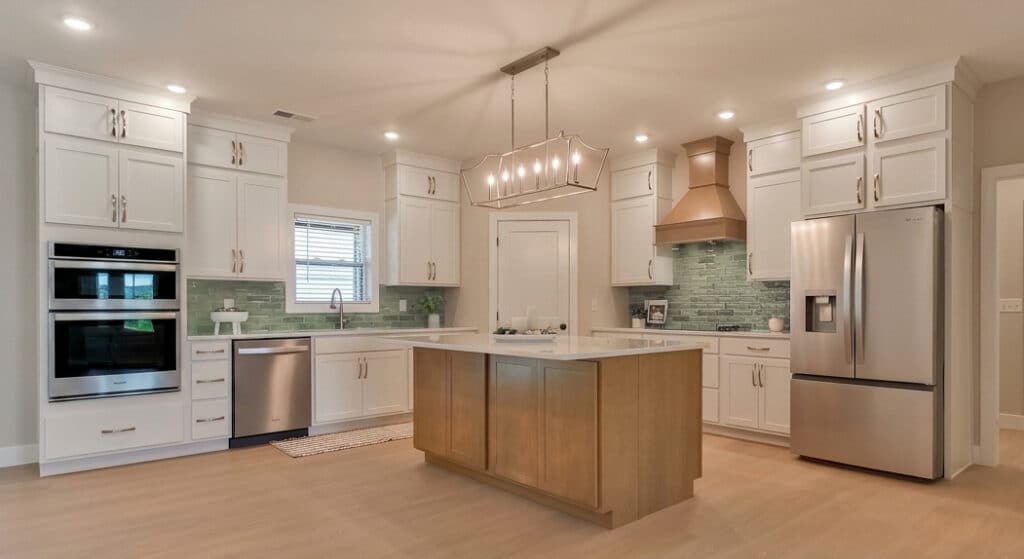
Building a new home means dozens of choices about flooring, cabinets, lighting, and more, and most builders handle those choices with something called an allowance. Builder allowances keep your project moving before every selection is final, but a low or vague one can quietly stretch your budget after you have signed. Here is how allowances work, how to spot a fair one, and a simpler alternative that removes the guessing.
Key Takeaways
- A builder allowance is a placeholder dollar amount in your contract for an item you have not chosen yet, such as flooring or lighting, and it is trued up once you make your final selection.
- Allowances cover materials and equipment only. Labor, installation, overhead, and profit sit in the contract sum, not the allowance, a distinction many buyers miss.
- Choose a selection above the allowance and the difference is added to your price by change order. Choose below it and you should get a credit.
- Interior finishes are the largest stage of construction cost, 24.1% of the total, so the categories allowances cover are exactly where a budget is won or lost.
- The most transparent pricing is not needing allowances at all. Some builders, including Reinbrecht Homes, quote straight, fixed costs so you know the exact price before you sign.
How to Vet a Builder’s Allowances: The Transparency Checklist
The fastest way to judge a builder’s allowances is to ask what each figure is based on. A transparent allowance ties to a real product level and a current price, not a round number with nothing behind it. Use the checklist below to pressure-test any builder’s allowances before you sign.
| Allowance category | Ask your builder | Green-flag (transparent) answer |
|---|---|---|
| Flooring | What price per square foot does this allowance assume, and for which product level? | A specific per-square-foot figure tied to a real product grade, matched to the look you discussed, not a round number with no product behind it. |
| Cabinets & countertops | Does this cover stock, semi-custom, or custom, and which countertop material? | A named cabinet line and countertop material (for example laminate vs. quartz), so the allowance matches your expectation. |
| Lighting & plumbing fixtures | Is this a per-fixture budget or a whole-house number, and does it include the fixtures I have pinned? | A per-room or per-fixture breakdown, not one lump figure that hides how far it stretches. |
| Appliances | Is an appliance package included, and at what level, or is it “customer provided”? | A written appliance allowance at a stated level, never buried fine print that shifts the whole cost to you. |
| Tile | Does this cover material only, or material and installation? | A clear statement of material-only vs. installed, since under A201 the allowance covers materials and labor sits in the contract sum. |
| Every allowance | Where did these figures come from, and do I get a credit if I come in under? | Figures traced to current supplier quotes or recent comparables, with credits for under-spend confirmed in writing. |
| The straight-cost alternative | Do I have to use allowances at all, or can I get a fixed price with selections locked before signing? | The strongest transparency is not needing allowances at all. Some builders (Reinbrecht included) quote straight, fixed costs, so there is no allowance to over- or under-run and the price is known before the contract is signed. |
Why this matters: Interior finishes are the largest single stage of construction cost, about 24.1% of the total, so these categories are where your budget is won or lost.
What Is a Builder Allowance?
A builder allowance is a specific dollar amount in your contract as a placeholder for materials or equipment you have not selected yet. It lets the contract move forward before you have picked, say, your exact flooring or light fixtures. When you choose, the actual cost replaces the placeholder and your price adjusts up or down to match.
A placeholder, not a promise: an allowance is not a locked price. It is an estimate that gets settled later, which is why the number behind it matters so much. This setup is common for semi-custom home buyers who personalize finishes plan by plan.
What Builder Allowances Usually Cover, and Why They Carry the Most Budget Risk
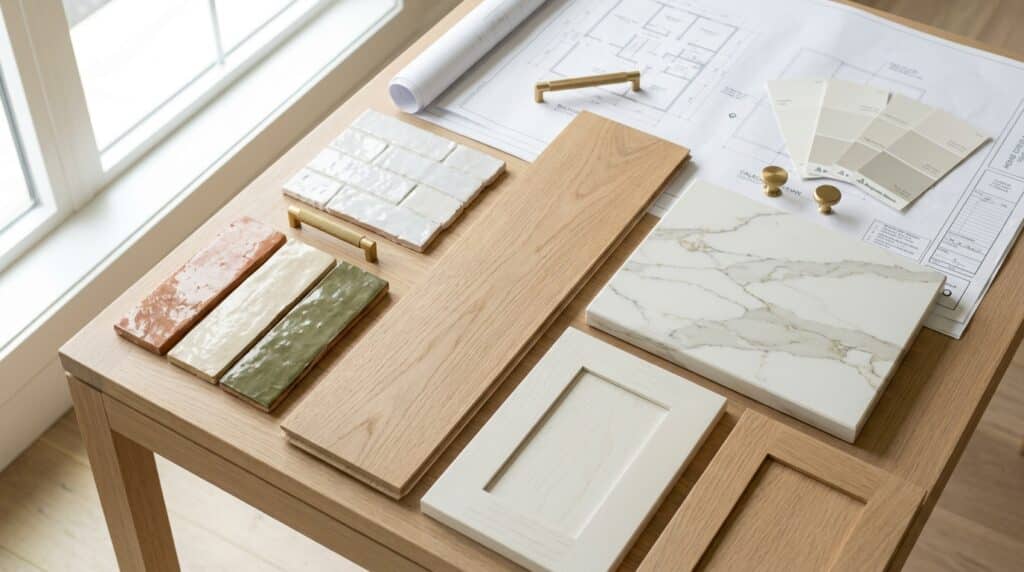
Allowances usually cover the finish items you personalize: flooring, cabinets and countertops, lighting, plumbing fixtures, appliances, and tile. These are also the costliest part of a build. Interior finishes make up 24.1% of total construction cost, the largest of the eight construction stages, so a shaky allowance here does outsized damage.
Within interior finishes, the national cost data breaks down like this:
- Cabinets and countertops lead the category at 4.5% of construction cost.
- Flooring follows at 3.6%, an early place allowances tend to run short.
- Plumbing fixtures add 1.9% across a whole home.
- Appliances are 1.8%, sometimes listed as customer provided.
- Lighting is 1.3%, small per fixture but quick to total up.
New homes are also big and finish-heavy. The median new single-family home completed in 2025 was 2,142 square feet, with a median contractor-built contract price near $404,000 nationally, so small gaps add up across every allowance category.
These are also the finishes buyers care most about: hardwood on the main level rates essential or desirable for 81% of buyers and ENERGY STAR appliances for 80%. They are the last place you want a vague number.
How Builder Allowances Work: Materials, Labor, and Change Orders
An allowance is only a placeholder, so the real numbers get settled after you choose. Under the AIA A201 contract standard, it covers materials and equipment, and any gap between the allowance and the actual cost is reconciled by change order. A few specifics decide how much that helps or hurts you.
Do Builder Allowances Include Labor, or Just Materials?
Allowances cover materials and equipment only, including taxes and less trade discounts. Labor, installation, overhead, and profit sit in the contract sum, not the allowance. So an allowance that looks generous can still fall short once installation is priced in, which is a common misunderstanding.
What Happens If Your Selections Cost More or Less Than the Allowance?
Selections above the allowance are added to your contract price; selections below it should lower your price. On a $10,000 flooring allowance, flooring at $12,000 raises your contract sum by $2,000, while flooring at $8,500 lowers it by $1,500. The mechanics are simple; the risk is a starting number that was never realistic.
Who Chooses the Products an Allowance Covers?
You do. The owner selects the items and vendors an allowance covers, and the contractor can object to a vendor only for reasonable cause. The trade-off is timing: you must make selections on schedule, because late choices can hold up the build.
Allowance vs. Contingency: What Is the Difference?
They are not the same. An allowance is a known item with an unknown final price, like flooring you have not picked. A contingency is a reserve for costs that may or may not happen at all, like an unexpected site issue. Confusing the two distorts how padded, or how exposed, a budget looks.
How to Tell If a Builder’s Allowance Is Set Too Low
An allowance is too low when the dollar figure does not match the product level you actually want. The warning sign is a round, tidy number with no product or price behind it. A too-low allowance can win a bid on paper, then climb once you choose real finishes, so test the figure before you sign, not after.
The Transparency Checklist above is built for exactly this. In short:
- Match the number to a real product grade. A round figure with no product behind it is the warning sign.
- Compare it against finishes you actually like. Then get the basis in writing, with under-spend credits confirmed on paper.
The Straight-Cost Alternative: Know Your Price Before You Sign
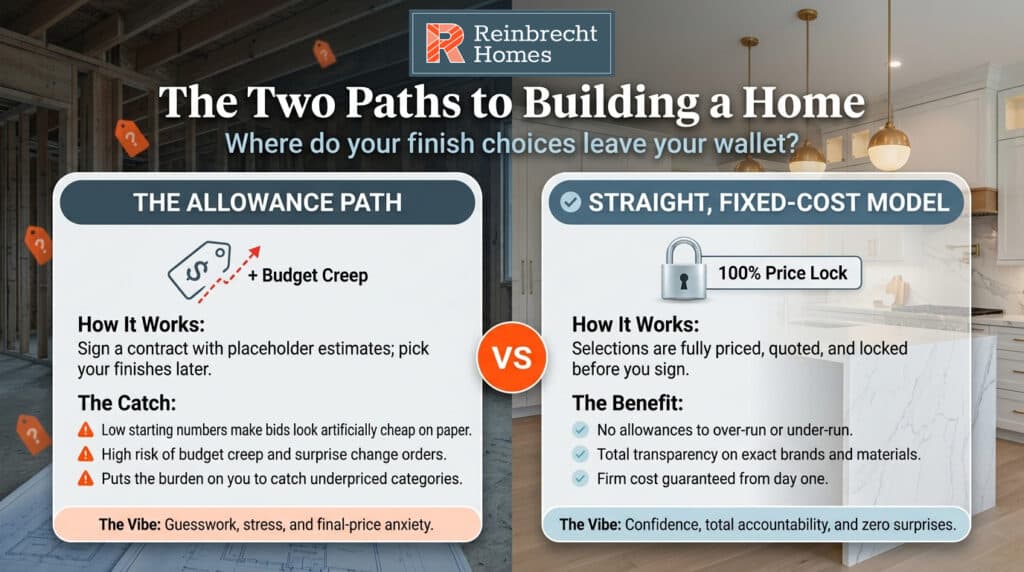
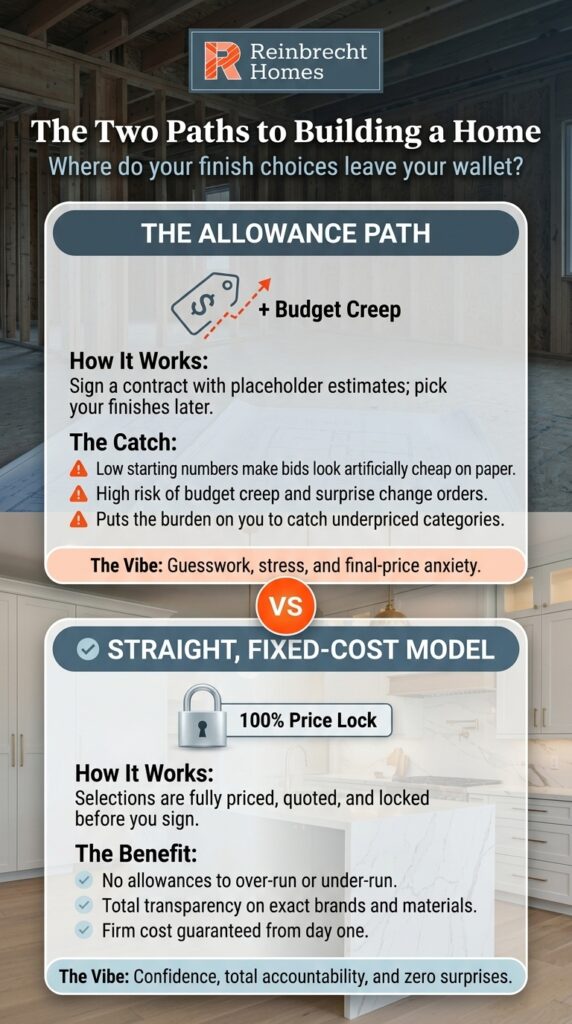
The surest way to avoid an allowance surprise is to not carry allowances at all. Instead of placeholders, some builders quote straight, fixed costs, so your selections are priced and locked before you sign and you know the exact cost with no hidden fees. Reinbrecht Homes builds this way.
Rather than handing you allowances to manage, Reinbrecht prices your choices up front and shows you what goes into the price of a semi-custom home before the contract is signed. That reflects the company’s values of Total Transparency, Builder Accountability, and No Surprises, starting from the brands and materials it includes as standard on every home.
Locking selections early is the heart of it. Navigating the selection process up front is where straight-cost line items get set, so nothing is left to true up later. It is also why Reinbrecht avoids cost per square foot as a way to compare builders, which is unreliable because there is no standard for what counts as a square foot.
This is the model for Reinbrecht’s semi-custom homes, and if budget is the concern, the team also offers construction financing options that keep upfront costs low. In the rare case a buyer cannot finalize selections in time, an allowance can serve as a stopgap, but it is the exception, not the model.
Frequently Asked Questions About Builder Allowances
Are Builder Allowances a Bad Thing?
Not by themselves. An allowance is a normal budgeting tool that lets a build start before every finish is chosen. The risk is a lowball allowance set to make a bid look cheap, which grows once you pick real products. A fair, well-documented allowance is fine; a vague one is not.
What Is the Difference Between a Builder Allowance and an Upgrade?
An allowance is a placeholder for a category you have not chosen yet, trued up to your actual selection. An upgrade is a choice above a builder’s standard spec that adds to your price. On the final bill they can feel similar, but they start from different places in the contract.
Do I Get a Credit If My Selections Cost Less Than the Allowance?
Yes. If your selection comes in under the allowance, your price should drop by the difference. Make sure the contract spells out that under-spend is credited back to you, and get it in writing before you sign.
How Should Allowances Be Documented in My Contract?
Every allowance should appear as a named line item with its dollar figure, what it covers, and how over- or under-spend is handled. The gap between allowance and actual cost is settled by a written change order. If a builder cannot show where the figures came from, treat that as a red flag.
Can I Build a New Home Without Using Allowances?
Yes. Some builders skip allowances entirely and quote straight, fixed costs, with selections priced and locked before you sign. That is how Reinbrecht builds across Southern Indiana, Northwestern Kentucky, and Eastern Illinois, so there is no allowance to over- or under-run.
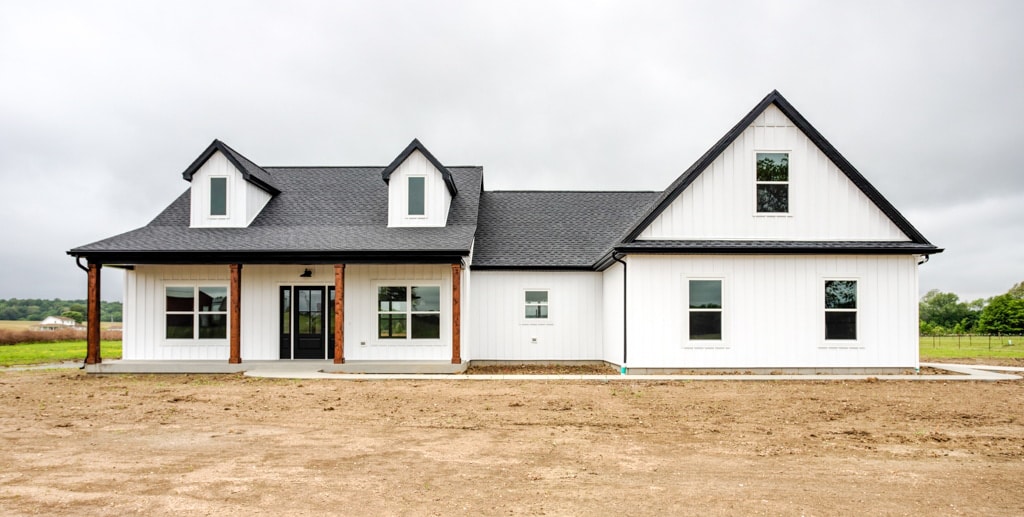
Building With Confidence Instead of Guesswork
Allowances are not the enemy, but they put the burden on you to catch a number that is too low before it becomes your problem. The simpler path is a builder who prices your choices up front and hands you a firm cost before you sign.
Ready to build without the guesswork? Reach out to the Reinbrecht team to start the conversation, or explore Reinbrecht’s floor plans to find a layout that fits your family.
