
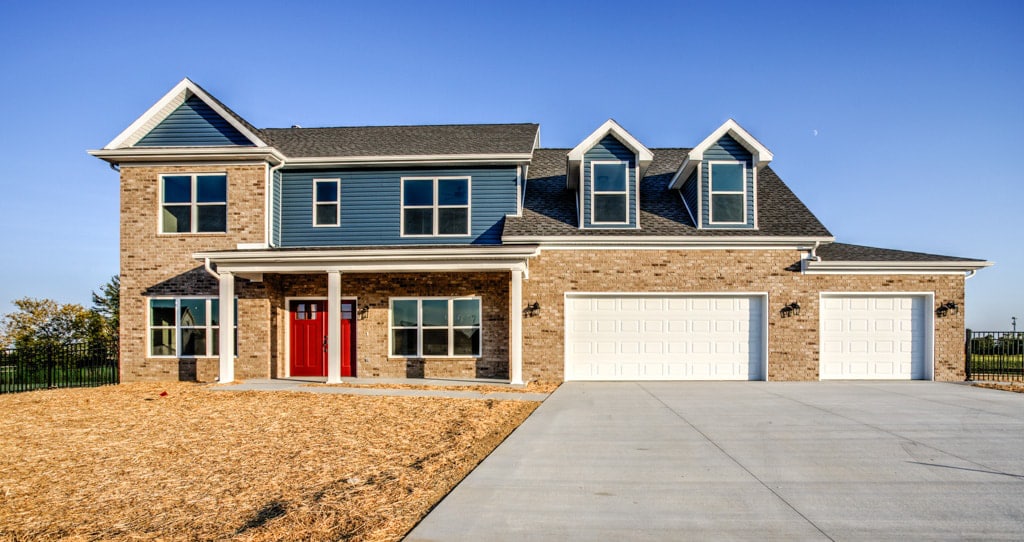
Choosing between brick vs vinyl siding is one of the first big exterior decisions you’ll make when building a new home, and the right answer depends as much on Southern Indiana’s weather as on your budget and taste. Brick, vinyl, and fiber cement all show up across the Evansville tri-state, and each handles our freeze-thaw winters, humid summers, and spring storm season a little differently. Here’s how the three compare, and what that means when you sit down to plan a home with Reinbrecht Homes.
Key Takeaways
- Brick offers the longest life and lowest maintenance of the three materials. Brick and fiber cement are rated to last a lifetime, and vinyl roughly 60 years; vinyl is the most budget-friendly upfront, and fiber cement sits in between on cost.
- Vinyl siding material runs roughly $3 to $12 per square foot, and fiber cement roughly $5 to $14 per square foot, with brick the most expensive of the three.
- At resale, vinyl siding replacement recoups about 97% of its cost nationally, and fiber cement about 114%, based on the 2025 Cost vs. Value Report.
- In Southern Indiana’s freeze-thaw and storm climate, brick shrugs off temperature swings and impact, modern fiber cement won’t rot or warp, and quality vinyl resists moisture well.
- A Reinbrecht home comes with a brick exterior or vinyl siding. Fiber cement is common in the wider market but is not part of Reinbrecht’s exterior selections.
- The siding you see matters for looks and upkeep, but the insulation behind it does most of the work for energy efficiency.
Brick vs. Vinyl vs. Fiber Cement: The Three Exterior Materials You’ll See Across the Tri-State
Across Southern Indiana, Northwestern Kentucky, and Eastern Illinois, three exterior materials dominate new and existing homes: brick, vinyl siding, and fiber cement. Each is a legitimate choice, and the best one for you comes down to budget, the look you want, and how much maintenance you’re willing to take on. Here’s a one-line definition of each:
- Brick: A masonry exterior, usually brick veneer over a wood frame, prized for permanence, fire resistance, and a classic look that needs almost no upkeep.
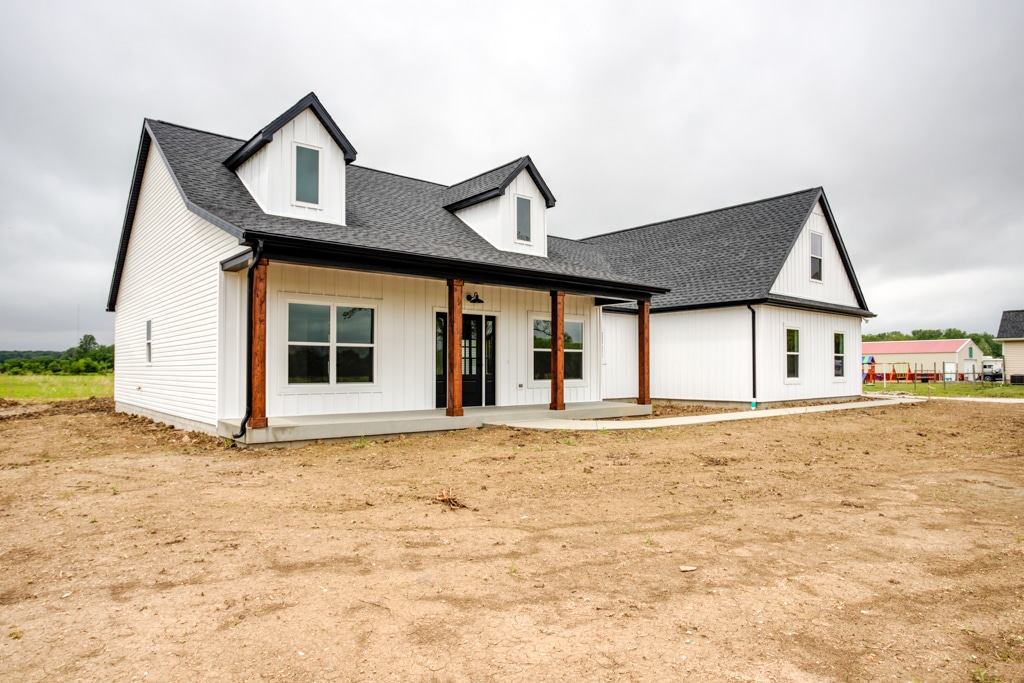
- Vinyl siding: Molded PVC panels that lock together over the wall sheathing, offered in many colors and profiles. It’s the most affordable option and the easiest to maintain.
- Fiber cement: A composite of cement, sand, and cellulose fibers that is non-combustible and resists rot and warping.
Here’s how the three stack up on the factors that matter most to a new-home buyer:
| Material | Look and upkeep | Upfront material cost, installed | How it handles the climate | Resale ROI (national) |
| Brick (veneer) | Classic, timeless look; very low maintenance | Highest of the three | Excellent; stable through freeze-thaw, and rated to last a lifetime | Strong reputation, valued for permanence |
| Vinyl siding | Many colors and profiles; low maintenance | About $3 to $12 per square foot | Sheds moisture well; can crack or warp in temperature extremes | About 97% recouped |
| Fiber cement (market option) | Wood-grain or smooth; paintable | About $5 to $14 per square foot | Non-combustible; resists rot and warping | About 114% recouped |
Whatever you choose, the exterior is the first thing buyers and guests notice, so it’s worth weighing alongside other ways to elevate your home’s curb appeal.
Is It More Expensive to Brick a Home or Side It with Vinyl?
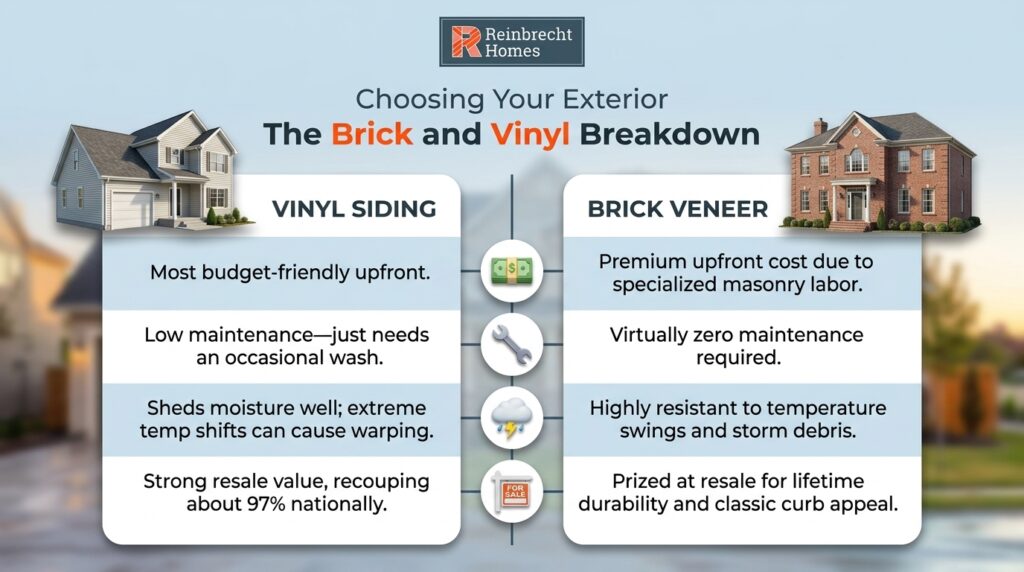
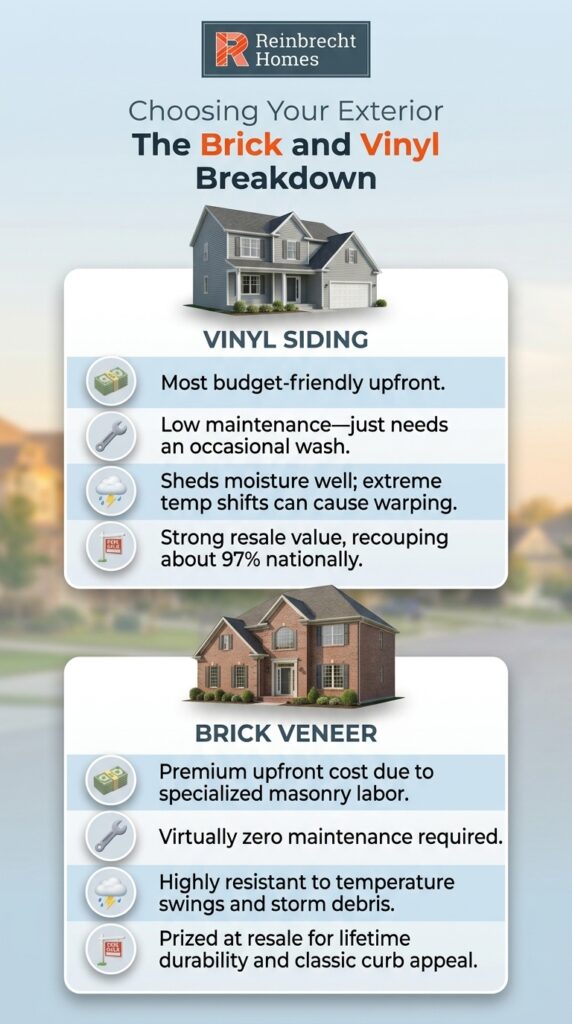
Brick is the most expensive of the three exteriors, and vinyl is the most affordable. As a rough material guide, vinyl runs about $3 to $12 per square foot and fiber cement about $5 to $14 per square foot, while brick sits above both because of the masonry labor involved.
Those figures are siding material costs, not the price of a finished home. When you build with Reinbrecht, the exterior is one line in a clear, upfront quote for the whole home, with no hidden fees and no unreliable cost-per-square-foot estimating. You know the full cost before you sign anything.
Which Exterior Holds Up Best in Southern Indiana’s Climate?
All three materials can perform well here, but they handle our specific stresses differently. Winters bring freeze-thaw cycles, summers bring heat and humidity, and spring brings storms. Brick handles temperature swings and impact best, fiber cement resists rot and moisture, and quality vinyl sheds water well but should be installed with care for temperature extremes.
- Freeze-thaw winters: Brick and fiber cement stay dimensionally stable through repeated freezing and thawing. Vinyl can crack or warp in temperature extremes, so panel quality and proper installation matter.
- Heat and humidity: Fiber cement resists rot and warping, brick breathes well, and vinyl sheds water easily as long as it sits over a sound moisture barrier.
- Storm season: Brick stands up to wind-driven debris. Vinyl and fiber cement panels can be dented or cracked by large hail or flying debris, and may need section repairs afterward.
Longevity is one place brick leads, though the gap is smaller than many buyers expect. With proper installation and upkeep, brick and fiber cement are rated to last the lifetime of a home, and vinyl roughly 60 years, with brick veneer the most enduring. Those are maintenance-based estimates, not guarantees, so installation quality and seasonal upkeep still matter.
Your exterior is only one layer of storm protection. For the rest, see our guide to protecting your home from storm damage.
Does a Brick Home Have Higher Resale Value?
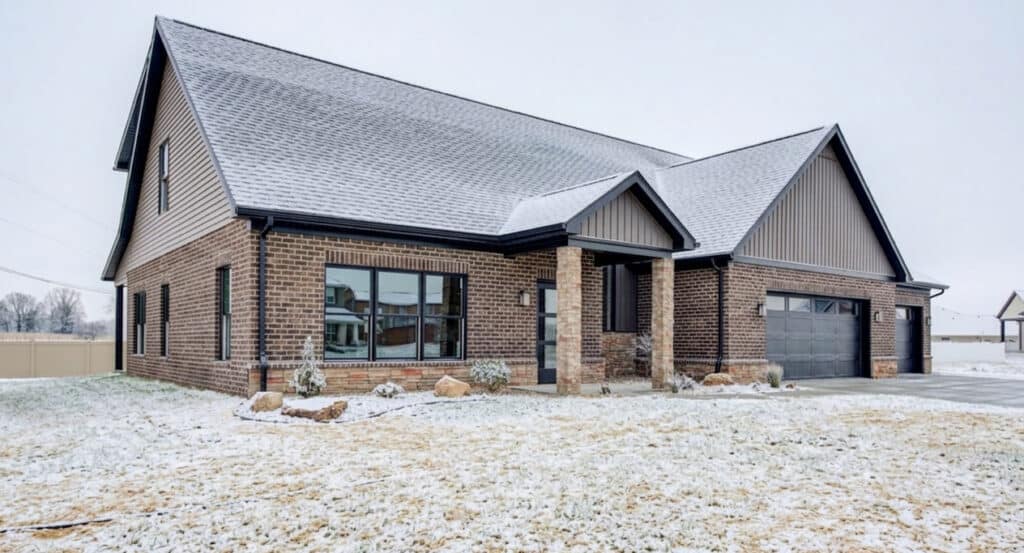
Brick has a long-standing reputation for holding value, thanks to its permanence and low upkeep, but the hard data on siding actually favors the lower-cost materials on pure return. Nationally, fiber cement siding replacement recoups about 114% of its cost at resale, and vinyl about 97%, according to the 2025 Cost vs. Value Report.
Exterior work dominates the return rankings overall. Eight of the top ten highest-ROI remodeling projects in that report were exterior projects, and a vinyl siding job averaging $17,950 returned $17,313 in added value. Brick is rarely “replaced,” so it isn’t ranked the same way; its resale strength comes from durability and curb appeal rather than a replacement-cost figure.
If long-term value is a priority, it pays to plan for it from the first set of drawings. We cover that in more detail in building a new home with resale value in mind.
Which Is More Energy Efficient, Brick or Vinyl Siding?
For energy efficiency, the gap between brick and vinyl siding is smaller than most buyers expect, because the siding itself is not the main barrier against heat loss. Brick’s thermal mass can moderate temperature swings, and insulated vinyl adds a little R-value, but in a new home, the insulation and air sealing inside the walls do the most to lower energy bills, not the exterior material.
That’s why Reinbrecht builds efficiency from the inside out, with sprayed-in fiberglass insulation on every exterior wall and spray foam on the band boards rather than relying on the siding. You can read about the full approach in how we build energy efficient homes.
What a Reinbrecht Exterior Looks Like: Brick or Vinyl Siding
Reinbrecht Homes has built more than 500 homes across Southern Indiana, Northwestern Kentucky, and Eastern Illinois since 1995, so the team knows how brick and vinyl hold up in this climate. When you build a Reinbrecht home, your exterior is a brick exterior or vinyl siding. The vinyl options include the Exterior Portfolio and Premium Point lines in a Double 4″ profile, and brick exteriors are available across Reinbrecht’s floor plans. Fiber cement is widely used in the market, but it is not one of Reinbrecht’s exterior selections.
Picking your exterior is part of Reinbrecht’s semi-custom homes process: you start from a floor plan, then personalize finishes, fixtures, and the exterior with guidance from the Reinbrecht team. It’s the middle ground between move-in ready and full custom, with more room to make the home yours and a simpler path than designing from scratch.
Throughout that process, every decision is mapped to a clear, itemized budget, right down to the finishes:
Want to see how brick and vinyl exteriors look on finished homes? Browse the project gallery for real Reinbrecht exteriors across the tri-state.
Frequently Asked Questions About Brick vs. Vinyl Siding
What is the cheapest way to side a house?
Vinyl siding is the most budget-friendly mainstream exterior, at about $3 to $12 per square foot. It delivers a clean look and low maintenance for the lowest upfront cost, which is why it’s the most common choice in new construction.
How often does vinyl siding need to be replaced?
Vinyl siding has a life expectancy of about 60 years, so most homeowners will never need to fully replace it. Cheaper panels are more likely to crack or warp in temperature extremes, including repeated freeze-thaw cycles, so panel quality and a careful installation are the biggest factors in how long it lasts.
Is brick veneer considered real brick?
Yes. Brick veneer is full clay brick laid as a single outer layer over a wood-framed, insulated wall, rather than the structural double-wall brick of a century ago. It looks and weathers like traditional brick because it is real brick; the framing behind it carries the structural load. Most brick homes built today use veneer.
What siding is best for a new home in an Indiana climate?
There’s no single best answer; all three perform well in Southern Indiana when installed correctly. If you want the longest life and the least maintenance, brick leads. If you want the best value upfront, vinyl leads. The right pick depends on your budget, the look you want, and how hands-off you’d like your exterior to be.
Plan Your Brick or Vinyl Exterior with Reinbrecht
Choosing your exterior is one of the more enjoyable parts of planning a new home, and you don’t have to make the call alone. Explore Reinbrecht’s customizable floor plans to picture your brick or vinyl exterior, or contact the Reinbrecht team to start planning your build.
