
Meta description: Deciding between a garden tub vs walk-in shower for your primary bathroom? See real usage data, costs, and what to ask your builder.
For decades, the garden tub was the centerpiece of every primary bathroom. Builders included them as a standard luxury feature, and buyers expected them. But here’s the uncomfortable truth: most garden tubs don’t get used. They sit there taking up valuable floor space while you shower next to them every morning, wondering why the bathroom feels so cramped.
That’s changing. Homeowners and builders across Southern Indiana and beyond are rethinking the spa shower primary bathroom layout, replacing oversized tubs with walk-in showers designed for daily comfort rather than occasional guilt. If you’re planning a new home build, this is one of the most impactful decisions you’ll make for your primary bathroom, and it’s worth understanding the real costs, real usage patterns, and real tradeoffs before you commit.
Key Takeaways
- Over 55% of homeowners now prioritize a larger shower over keeping a bathtub in the primary bathroom, according to recent national bathroom design research cited by multiple industry sources.
- Garden tubs require roughly 50–70 gallons per fill and take 15–20 minutes to fill, which is why most owners use them fewer than a handful of times per year.
- A well-designed spa shower with features like a rainfall head, bench seating, and body jets delivers daily luxury rather than an annual soak.
- Building new is the best time to include spa shower upgrades. Features like body jets, heated floors, and thermostatic valves cost a fraction of what they’d cost as a retrofit.
- Keeping at least one bathtub elsewhere in the home protects resale value while giving you the freedom to optimize the primary bathroom for how you actually live.
Why Garden Tubs Are Losing Favor
The garden tub had a long run. From the late 1980s through the 2000s, jetted and soaking tubs were marketed as the ultimate sign of a luxury primary bathroom. The problem wasn’t the idea. It was the reality. Large soaking tubs require 50 to 70 gallons of hot water per fill. That’s a 15–20 minute wait before you even get in, and your water heater takes a hit every time.
The result? According to Houzz bathroom trends research, about one in four homeowners who renovated their primary bathroom chose to remove the bathtub entirely. Among those who did, 91% made the switch specifically to create space for a larger shower.
This isn’t just a renovation trend. It’s reshaping new construction too. Zillow’s 2026 Home Trends Report found that spa-inspired bathroom features are appearing 22% more frequently in home listings, with mentions of wellness features up 33% year over year. Buyers aren’t asking for bigger tubs. They’re asking for better showers.
What Makes a Shower a “Spa Shower”?
A spa shower isn’t just a bigger version of a standard shower stall. It’s a deliberately designed space built around daily comfort and relaxation. When you’re building a new home, you have the advantage of designing this from the ground up rather than retrofitting it, which means better results at a lower cost.
The features that define a spa shower experience include:
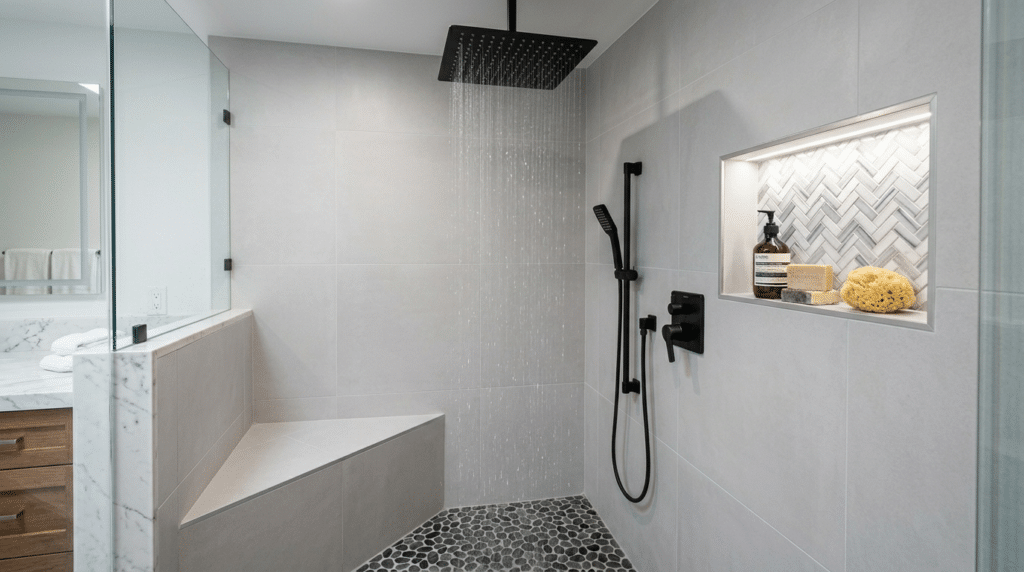
- Rainfall showerhead. Mounted overhead (ceiling or high wall), a rainfall head provides full-body coverage with a gentle, even flow. Ceiling-mounted options create the most natural feel.
- Handheld wand. Essential for rinsing, cleaning the shower, bathing kids who wander in, and aging-in-place flexibility. This is a practical must-have, not just a luxury add-on.
- Built-in bench or seat. Useful for shaving, relaxing under the water, and long-term accessibility. A tiled bench integrated into the shower design looks intentional, not aftermarket.
- Body jets (optional). Wall-mounted spray jets at torso and hip height provide a massage-like experience. They require additional plumbing during rough-in but are far easier and cheaper to include in new construction than to add later.
- Thermostatic valve. Maintains a precise, consistent water temperature. No more flinching when someone flushes a toilet elsewhere in the home.
- Recessed niches. Built-in shelving for shampoo and soap keeps the shower clean and eliminates the need for hanging caddies.
When you’re working with a builder to customize your floor plan, many of these features can be incorporated during the design phase. That’s one of the advantages of building semi-custom or custom. You’re not limited to what a previous owner chose.
Don’t Forget the Floor
One upgrade that pairs naturally with a spa shower is radiant heated flooring. If you’ve ever stepped out of a warm shower onto cold tile in a Southern Indiana January, you already understand the appeal. Electric radiant floor heating uses thin cables or mats installed beneath the tile during construction. Materials typically cost $6–$15 per square foot, and operating costs run just a few cents per hour. The key is timing: installing during new construction is significantly cheaper than a retrofit because the subfloor is already exposed. No demolition, no height adjustment issues. It’s the kind of upgrade that sounds extravagant but gets used every single day.
What About Resale Value?
This is the question that keeps the garden tub alive in many floor plans, and it’s worth addressing directly.
The National Association of Home Builders (NAHB) found in their 2024 What Home Buyers Really Want study that 78% of buyers rated having both a shower stall and tub in the primary bath as essential or desirable. That’s a significant number, and it shouldn’t be dismissed.
However, context matters. The National Association of Realtors notes that as long as the home has at least one bathtub, removing the tub from the primary bathroom typically doesn’t hurt resale. For families with young children or buyers who value a soaking tub, having a tub in a secondary or kids’ bathroom covers that need.
The practical approach for new construction:
- Keep a standard tub or tub/shower combo in at least one secondary bathroom. This satisfies families, pet owners, and buyers who want the option.
- Invest in a well-designed spa shower for the primary bathroom. This is the space you’ll use every day, and a high-quality walk-in shower with modern features is increasingly what buyers expect to see in a primary suite.
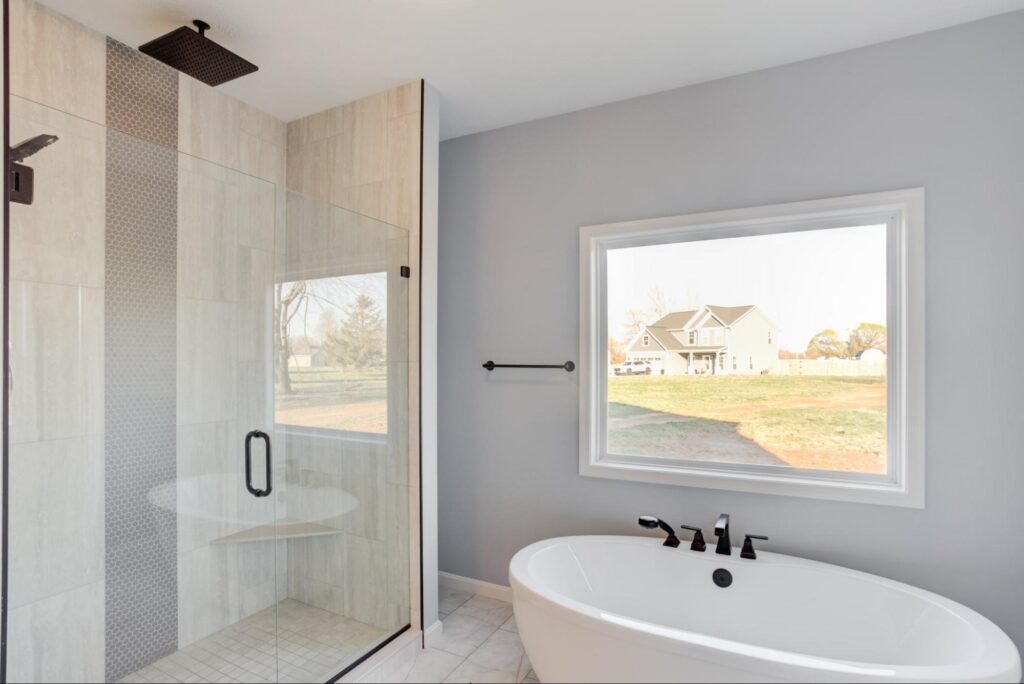
- If space allows, a freestanding soaking tub in the primary bathroom can serve as a visual focal point without consuming the footprint of a traditional built-in garden tub. This is common in custom home designs where the bathroom layout accommodates both features.
As one Reinbrecht homeowner shared: “Our home started with a good plan, then moved on to a budget that included everything from concrete and fill rock to towel bars! Matt Reinbrecht helped us make decisions and even took us to the cabinet maker on an icy, winter day. The quotes were specific and based on what we said we wanted. Thanks to everyone who helped us!” That kind of detail-level guidance applies directly to bathroom design decisions.
Why New Construction Is the Best Time to Make This Choice
Converting a garden tub to a walk-in shower in an existing home typically costs $1,500–$8,000 or more, depending on plumbing changes, tile work, and whether the shower footprint expands beyond the original tub location. It’s a disruptive project that involves demolition, potential subfloor work, and weeks of downtime.
Building new eliminates all of that. When you’re designing a custom home or selecting from semi-custom floor plans, the plumbing, waterproofing, and layout are planned from the start. Features that are expensive to retrofit cost a fraction when included during construction:
- Body jet plumbing runs during rough-in alongside standard shower plumbing.
- Heated floor mats install beneath tile before it’s laid, with no demolition or height adjustments.
- The bench gets framed and waterproofed as part of the shower build, not bolted on later.
This is one of the key benefits of the semi-custom approach: you get to personalize your primary bathroom layout, finishes, and fixtures during the design process while the builder handles the technical coordination. Reinbrecht’s Semi-Custom Standards Guide outlines the standard selections for every component in the home. From there, you can upgrade where it matters most to you.
Kenny Reinbrecht put it this way: “I love the process of taking somebody’s dream home from start to finish. It’s what I enjoy most about this business. You can help a family get where they want to be, and I take a lot of pride in helping them get there.” That includes the bathroom decisions that shape how comfortable you feel in your home every single day.
What to Ask Your Builder About Your Primary Bathroom
If you’re leaning toward a spa shower over a garden tub, here are the questions to bring to your first builder meeting:
- Can we expand the shower footprint in this floor plan? Many semi-custom plans can be adjusted to reallocate the tub footprint to the shower.
- What’s the cost difference between a standard shower and a spa-style upgrade? Get a specific number, not a range. Reinbrecht provides transparent, upfront pricing with no hidden fees.
- Can heated floors and body jets be added during the build? The answer is almost always yes in new construction, and the cost is much lower than retrofitting.
- Where will the secondary tub go? If you’re removing the tub from the primary bathroom, confirm there’s a tub in another bathroom to maintain resale flexibility.
You can start exploring layout options by browsing Reinbrecht’s customizable floor plans or downloading the Home Purchasing Guide for a step-by-step overview of the entire build process.
Frequently Asked Questions About Spa Showers vs. Garden Tubs
Does removing the garden tub from the primary bathroom hurt resale value?
Not if you keep at least one bathtub elsewhere in the home. The National Association of Realtors has noted that buyers typically don’t penalize a home for lacking a tub in the primary bathroom as long as one exists in another bathroom. A well-designed walk-in shower can actually be a selling point, especially as buyer preferences continue shifting toward spa-style primary bathrooms.
How much does a spa shower cost compared to a garden tub in new construction?
Costs vary by builder and by the specific features you choose, so it’s best to get a detailed quote rather than rely on ballpark figures. In many cases, a spa-style shower (rainfall head, bench, niches, thermostatic valve) costs roughly the same as or slightly more than a garden tub installation. The difference is you’ll use the shower every day. Body jets and heated floors add to the total but are most affordable when included during the original build.
Are heated bathroom floors worth it?
For most homeowners, yes. Electric radiant floor heating materials typically cost $6–$15 per square foot, and operating costs run as little as a few cents per hour. In a climate where winter mornings regularly drop below freezing, heated floors eliminate the cold-tile shock after every shower. They’re one of the most-used and least-regretted upgrades you can add during construction.
Can I have both a spa shower and a freestanding tub in the primary bathroom?
Yes, if your floor plan has the space. A freestanding soaking tub takes up less room than a traditional built-in garden tub with a surrounding deck, so it’s possible to include both in a larger primary bathroom layout. This gives you the daily luxury of a spa shower and the occasional relaxation of a soak without the wasted space of an oversized built-in tub.
What’s the best way to start planning my primary bathroom layout?
Start by reviewing floor plans to understand how the primary bathroom is laid out in different home designs. From there, meet with your builder to discuss modifications. A good builder will walk you through the options and provide a specific quote so you know exactly what each upgrade costs before you commit.
Build a Bathroom You’ll Actually Use Every Day
Your primary bathroom should work for your life, not look good in a catalog. If you’re building a new home in Southern Indiana, this is the time to get the details right, and the bathroom is one of the details that matters most.
Ready to start planning your new home? Contact the Reinbrecht team to schedule your first meeting. Or explore Reinbrecht’s 30+ floor plans to find the right fit for your family.
