
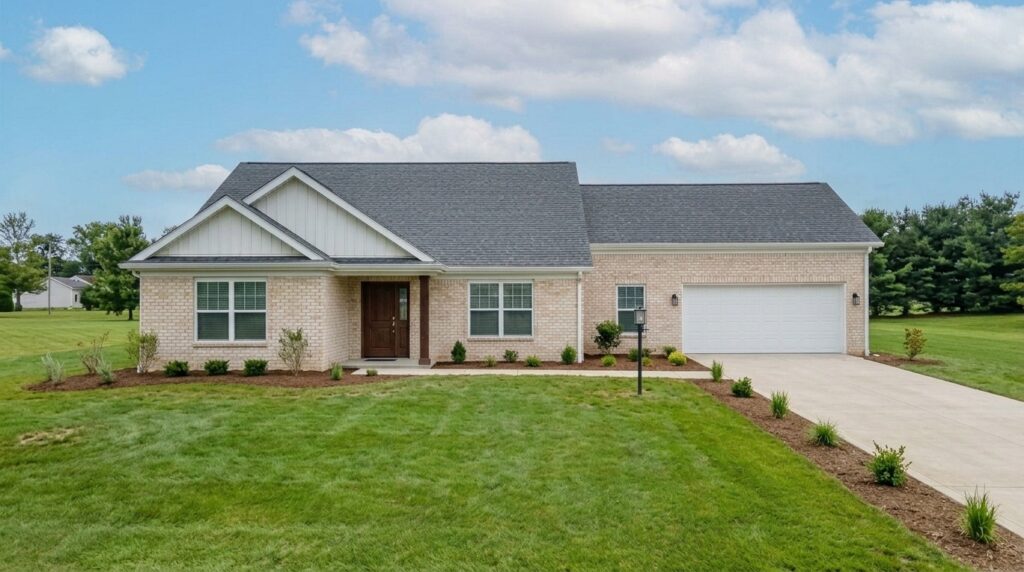
If you’re thinking about building your last home in Southern Indiana, aging in place home design in Indiana is a conversation worth having before a single wall goes up. The decisions made at the floor plan stage cost a fraction of what they cost as renovations later, and Reinbrecht’s semi-custom process is built for exactly this kind of planning.
Key Takeaways
- Three-quarters of adults aged 50 and older want to remain in their own homes as they age, according to the AARP 2024 Home and Community Preferences Survey.
- Building aging-in-place features into a new home costs a fraction of retrofitting them later and eliminates the need for disruptive future renovation.
- The national average annual cost of assisted living is $64,200; a private nursing home room averages $116,800 per year (Hartford Funds).
- Reinbrecht’s semi-custom model lets buyers incorporate universal design features before a single wall goes up, when changes cost the least.
- Single-story floor plans, wider doorways, and zero-threshold showers are design choices that improve the home for everyone in the household, not just for aging.
What Is Aging in Place?
Aging in place means remaining in your own home safely and independently as you grow older, by designing the home to accommodate your changing physical needs over time rather than moving to assisted living or a care facility. The best time to plan for it isn’t when you need it. It’s before your home is built.
The numbers make the case. The 65-and-older population in the United States is projected to grow from 58 million in 2022 to 82 million by 2050, a 42% increase. Three-quarters of adults 50 and older want to stay in their homes as they age. But most of those homes weren’t built with that goal in mind. Building new is the opportunity to close that gap from the start.
New Construction Is Your Best Opportunity to Build for Life
Building these features into a new home is fundamentally different from adding them to an existing one. A zero-threshold shower in a new build is a specification you make on the floor plan. In an existing home, it’s a demolition and replumbing project. Blocking bathroom walls for future grab bars costs almost nothing at the framing stage and a few hundred dollars to install whenever you’re ready.
Retrofitting existing homes for aging in place is expensive, disruptive, and structurally limited by what’s already been built. New construction removes those limits entirely. Building new means making these decisions at the moment they cost the least, with the most options available.
Those decisions include things like:
- Whether the master bedroom, full bathroom, and laundry are all on the main floor
- Doorway and hallway widths, set at the framing stage rather than modified later
- A home designed to work just as well at 75 as it does today, without looking like it was designed for 75
One Reinbrecht homeowner described the planning process this way: “Our home started with a good plan, then moved on to a budget that included everything from concrete and fill rock to towel bars! Matt Reinbrecht helped us make decisions and even took us to the cabinet maker on an icy, winter day. The quotes were specific and based on what we said we wanted.” That same specificity applies when long-term livability is part of the conversation.
What Features Does an Aging in Place Home Need?
A home designed for aging in place includes specific structural and design elements that remove barriers and allow the home to adapt as your needs change. These aren’t optional upgrades added at the end of construction. They’re decisions made during the floor plan and framing stages, when changes are easiest and least expensive to incorporate.
Core features to build in from the start:
- No-step entry: At least one entrance without steps, incorporated during grading and foundation planning so it feels natural, not added on.
- Wider doorways and hallways: A minimum of 36 inches for doorways accommodates changing mobility without requiring future wall modification.
- Main-floor living: Bedroom, full bathroom, and laundry all on a single level, so stairs never become a limiting factor in daily life.
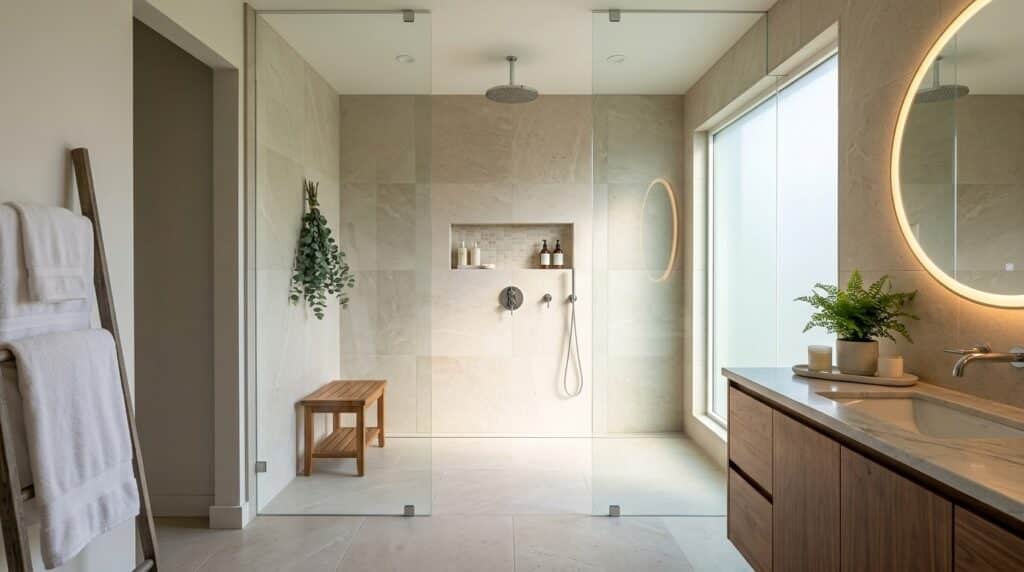
- Zero-threshold showers: Walk-in showers with no curb to step over. These look like high-end spa finishes and function beautifully for every member of the household.
- Blocking in bathroom walls: Reinforcing interior walls during framing so grab bars can be added later without structural work or tile replacement.
- Lever-style door handles: Easier to operate than round knobs, and they feel modern rather than clinical.
- Improved lighting: Brighter, well-placed fixtures in hallways, closets, and bathrooms reduce fall risk and improve daily comfort for everyone.
- Flex rooms: Spaces designed to serve different purposes over time, such as a home office that converts to a guest suite or a den that becomes a first-floor bedroom.
The AARP aging in place checklist is a helpful resource for thinking through which features matter most for your specific household.
Universal Design Looks Like Quality, Not Accommodation
Universal design means building features that work for all ages and abilities without looking institutional or medical. The key is that these features blend into the design because they are the design. A few examples:
- Zero-threshold showers don’t announce themselves as an accessibility feature. They look like high-end spa bathrooms.
- Wider hallways feel open and spacious, not clinical.
- Lever handles read as intentional and contemporary, not medical equipment.
The best aging-in-place choices are simply good design choices. They don’t compromise a home’s comfort or aesthetics. They improve both.
Planning for long-term livability isn’t about anticipating decline. It’s about building smart. The same mindset drives how Reinbrecht approaches energy efficiency in every home: features that reduce long-term costs and improve daily comfort are built into the core of the home, not treated as optional add-ons. Universally designed homes hold their functionality and their appeal, which is good for daily life and good for resale value.
Can You Build an Aging in Place Home With Reinbrecht?
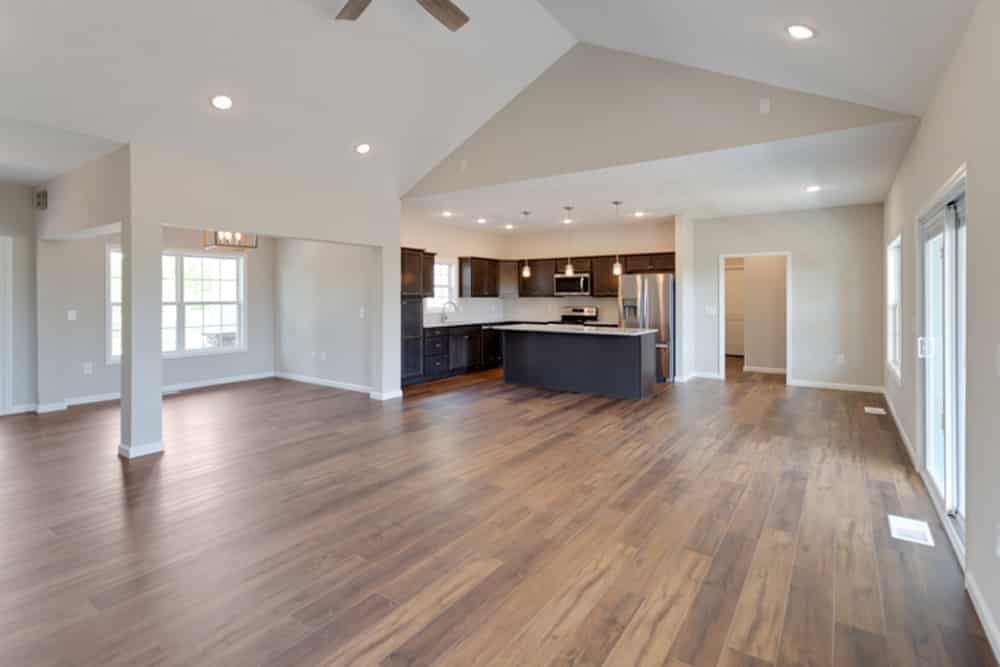
Yes. Reinbrecht’s semi-custom homes model is specifically suited for this kind of planning. Before construction begins, you work through a floor plan together, choosing from more than 30 customizable plans and adjusting the layout to fit your priorities. That’s the moment when aging-in-place features are easiest and least expensive to incorporate.
Common modifications buyers make at the planning stage:
- Main-floor master suite: Specified at the floor plan stage, not retrofitted later.
- No-step entry: Incorporated during grading and foundation planning.
- Wider doorways and hallways: Set at the framing stage, when wall placement is still flexible.
- Bathroom wall blocking: Reinforced during framing so grab bars can be added later without structural work.
The earlier this conversation happens, the more options are available and the lower the cost. The choice between a one-story and two-story home is a natural starting point. Single-story layouts are the most common foundation for aging-in-place design because they eliminate stairs entirely and keep all daily living on one level. Explore Reinbrecht’s floor plans to see which layouts best support long-term livability.
If you’re also planning a home that needs to accommodate multiple generations under one roof, Reinbrecht’s guide to multigenerational home design addresses that conversation separately.
Is It Cheaper to Age in Place or Move to Assisted Living?
Aging in place is substantially less expensive than assisted living, and building a home designed to support aging in place is far less expensive than retrofitting an existing one. According to Hartford Funds, the national average annual cost of assisted living is $64,200; a private nursing home room averages $116,800 per year.
Building aging-in-place features into a new home is a one-time planning decision, not an ongoing annual cost. The zero-threshold shower you specify during construction doesn’t add $64,200 to your household expenses every year. The wider doorways you choose at the floor plan stage don’t generate a monthly bill. When you build right from the beginning, the financial case for aging in place is clear.
This is why the aging-in-place conversation belongs at the start of the home-building process, not after the home is already built.
Frequently Asked Questions About Aging in Place
What’s the difference between aging in place and universal design?
Aging in place is the goal: remaining in your own home safely and independently as you get older. Universal design is the method: building features that work for all ages and abilities from the start. A home with good universal design makes aging in place more achievable without sacrificing aesthetics or comfort.
Do aging-in-place features affect resale value?
Generally, yes, and favorably. Open floor plans, no-step entries, and main-floor master suites appeal to a broad range of buyers at every stage of life. As the 65-and-older population continues to grow, these features are becoming more sought after. Homes built with universal design in mind tend to attract a wider pool of buyers when the time comes to sell.
Can I add aging-in-place features to a floor plan I already like?
Yes. Reinbrecht’s semi-custom process is designed for exactly this. Start with any of the available floor plans and discuss which modifications make sense for your priorities. Changes like specifying wider doorways, adding main-floor laundry, or planning the master suite on the ground floor are easy to incorporate before framing begins. A consultation is the best first step for understanding what’s possible with a specific plan.
How do I start the conversation with Reinbrecht?
Contact Reinbrecht to schedule a first meeting. The team will walk through available floor plans, discuss your priorities, and provide complete project pricing before you sign anything. Pricing is specific to your plan and selections, with no hidden fees. You’ll know the full cost before construction begins.
Start Planning the Home You’ll Live in for Decades
“I love taking somebody’s dream home from start to finish,” says Kenny Reinbrecht, Founder of Reinbrecht Homes. “You can help a family get where they want to be, and I take a lot of pride in helping them get there.”
That’s just as true for the couple building their last home as it is for first-time buyers. If you’re thinking about building in Southern Indiana or Northwestern Kentucky and want to design for the long term, the time to have this conversation is before construction begins, not after.
Explore Reinbrecht’s new home construction process to understand how the planning works. Or schedule a consultation to talk through your priorities directly with the Reinbrecht team.
