
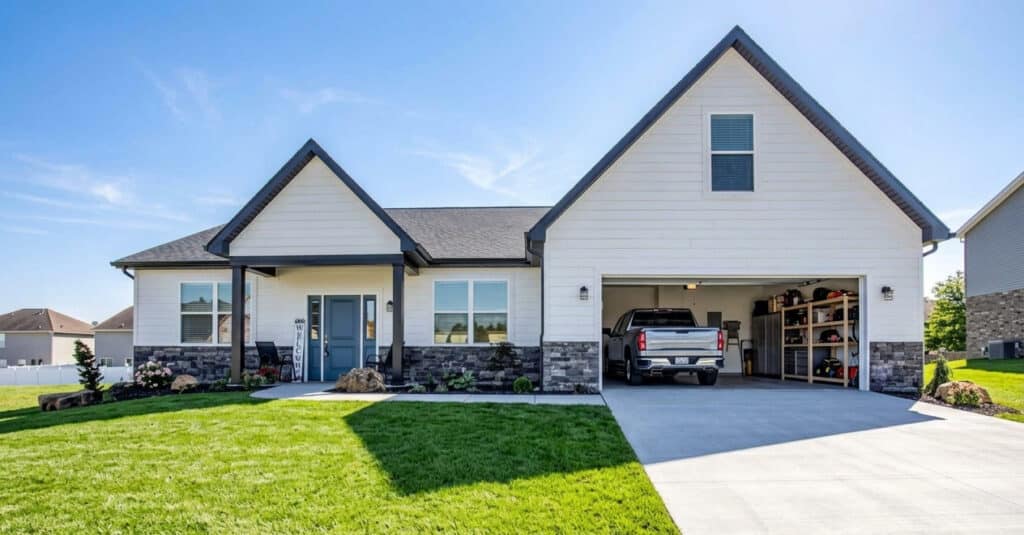
Garage size is one of the easier decisions to get wrong and one of the hardest to fix later. Most buyers start by searching 2 car garage dimensions, but the number that actually matters is whether the space fits your vehicles, your equipment, and your life once you move in. As a home builder, the best time to size a garage is before the foundation is poured.
Key Takeaways
- Two-car garages are the new-home default. In 2024, 65% of newly completed single-family homes had a two-car garage, while 15% had three or more and 9% had a single-car garage.
- A standard two-car garage commonly runs from about 20 by 20 feet to 24 by 24 feet. These are general industry guidelines, not fixed rules, and the right size depends on your vehicles and storage.
- Depth is where most garages fall short. The best-selling US pickup, in its popular four-door cab, is just over 20 feet long, so a shallow garage can leave a truck’s tailgate against the door.
- Southern Indiana skews toward bigger garages. In the East North Central region that includes Indiana, three-or-more-car garages reach 28% of completions, the second-highest share of any region and well above the 15% national average.
- Garage size is a pre-foundation decision. Adding depth, width, or a third bay during design is far cheaper than expanding a garage after the home is built.
- Garage storage is a top buyer priority. Industry research ranks garage storage among the most-wanted features for buyers of all generations.
What Are the Standard Dimensions of a 2 Car Garage?
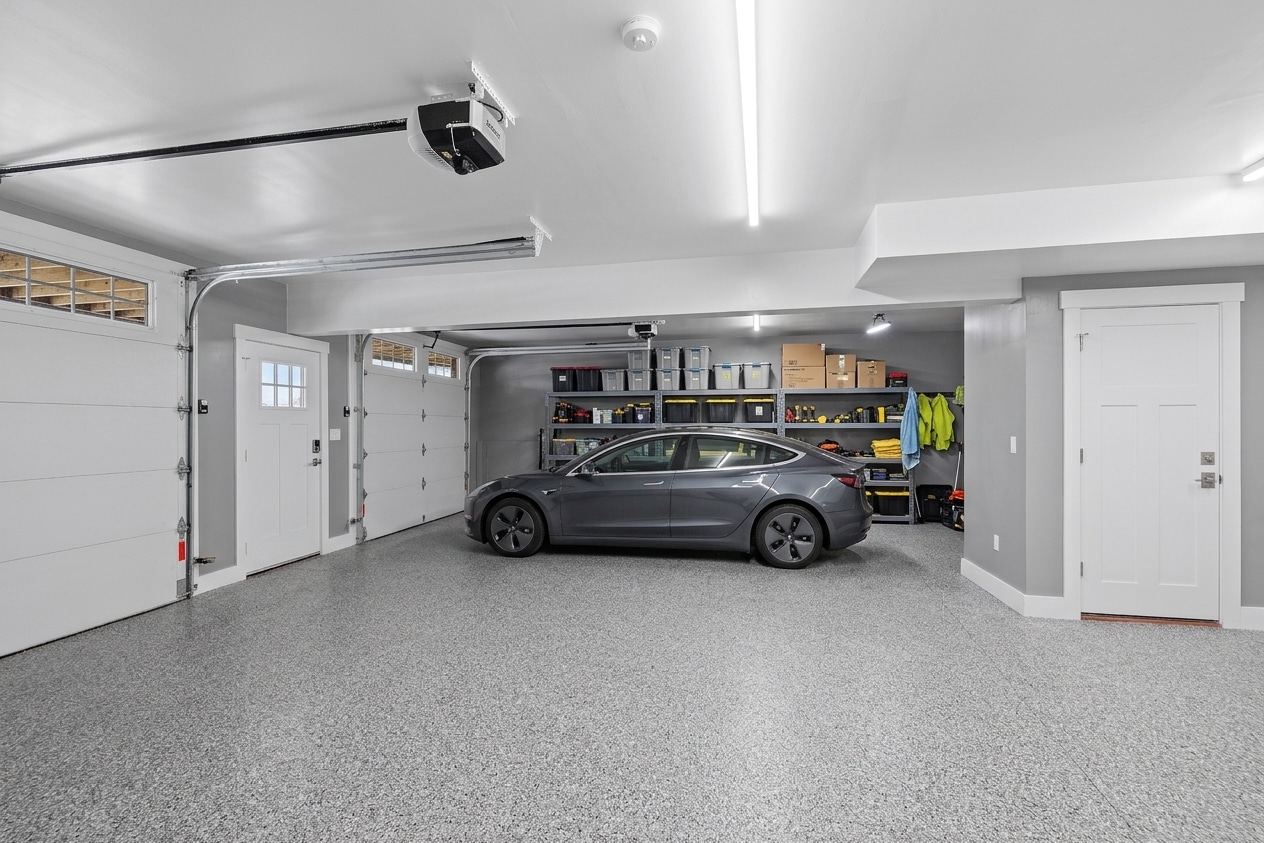
A standard two-car garage is most often built between 20 by 20 feet and 24 by 24 feet, with 24 feet of width treated as the comfortable target for two full-size vehicles plus walking room. Those numbers are general industry guidelines, not fixed standards. The size that fits your household matters more than any default.
Two cars is also what most people build. The two-car garage is the most common configuration in new homes, at 65% of 2024 completions. That makes it the right starting point for sizing, but not the finish line, because how you use the space changes how much of it you need.
Here is how the common configurations compare. Treat these as general industry guidelines rather than fixed standards. Actual dimensions vary by floor plan and by how you intend to use the space.
| Configuration | Typical footprint (W x D) | Roomier target for trucks, storage, or a workspace | Notes |
| Single-car garage | About 12 x 22 ft | About 14 x 24 ft | Fits one vehicle with limited room for storage or movement. |
| Two-car garage | About 20 x 20 ft | About 24 x 24 ft | The new-home default. The extra width adds walking room and door clearance between two vehicles. |
| Three-car garage | About 32 x 22 ft | About 36 x 24+ ft | The third bay often holds a truck, a boat, or a workshop rather than a third daily driver. |
Two more dimensions are easy to overlook when you focus only on the footprint:
- Garage door width: a single door is typically 8 to 9 feet wide, and a double door is about 16 feet. Wider doors make it easier to pull in without clipping a mirror.
- Garage ceiling height: most garages have 8-foot ceilings, though 9 to 10 feet is increasingly common in new construction and leaves room for overhead storage racks or a vehicle lift.
Is 20×20 Big Enough for a 2 Car Garage?
A 20 by 20 foot garage fits two compact or midsize cars, but it leaves little room to open doors, walk between vehicles, or store anything. For two full-size vehicles, especially trucks or SUVs, 20 by 20 feet is tight. It is best treated as a minimum, not a target.
Most new homes sit right in two-car territory. The median completed single-family home in 2024 was 2,146 square feet, and the two-car share peaks at 82% for homes between 2,000 and 2,399 square feet. The catch is that vehicles have grown. The best-selling US pickup is just over 20 feet long, so a 20-foot-deep garage can put the bumper against the closed door with nothing to spare. If you drive larger vehicles or want any storage, plan for more width and depth.
How Deep Should a Garage Be for a Truck?
Depth is the dimension trucks care about most. The best-selling US pickup, in its popular four-door cab, is just over 20 feet long, so a garage built to a 20-foot depth leaves almost no clearance once the door is down. For a truck plus a little breathing room, plan for 24 feet of depth or more.
Building that extra depth in from the start is also one of the cheapest upgrades you can make. A recognized custom home builder of more than 20 years puts it plainly:
His point, explained in his garage design guidance, is that unfinished garage space is among the least expensive parts of a home to build. Paying for a few more feet during construction usually beats years of off-site storage fees or the frustration of a garage that never quite fits.
How Big Should a 3 Car Garage Be?
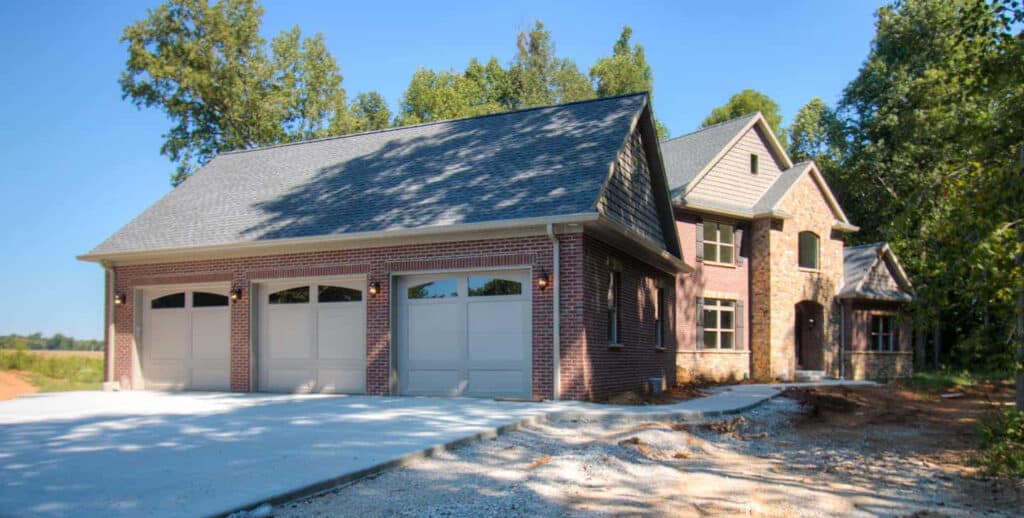
A three-car garage typically runs about 32 feet wide by 22 feet deep, expanding to 36 feet or more when the third bay needs to hold more than a compact car. In practice, the third bay is as much about storage and workspace as it is about a third daily driver.
A third bay usually earns its space in one of a few ways:
- A second full-size vehicle: a truck or SUV that needs its own depth and width rather than sharing a bay.
- A boat, camper, or trailer: seasonal equipment that is awkward or costly to store outdoors or off-site.
- A workshop or hobby space: room for a workbench, tool storage, or projects without giving up a parking spot.
That extra bay is more common here than in most of the country. In the East North Central region that includes Indiana, three-or-more-car garages reach 28% of completions, the second-highest regional share in the country, well above the 15% national average. And as homes get larger, the trend accelerates: among homes over 5,000 square feet, three-or-more-car garages make up 70% of completions.
Bigger garages also tend to show up on bigger lots. If you are building on your own land, an oversized or third-bay garage is often easier to plan from the start, where it can match the scale of a rural or acreage property. It helps to see how garages fit into completed homes before you settle on a configuration.
How to Size Your Garage During Your New Home Build
The best time to size a garage is during the home’s design phase, before the foundation is poured. Once the slab and walls are in, adding width or depth means structural changes that are expensive and disruptive. Sizing the garage up front costs far less and gets it right the first time.
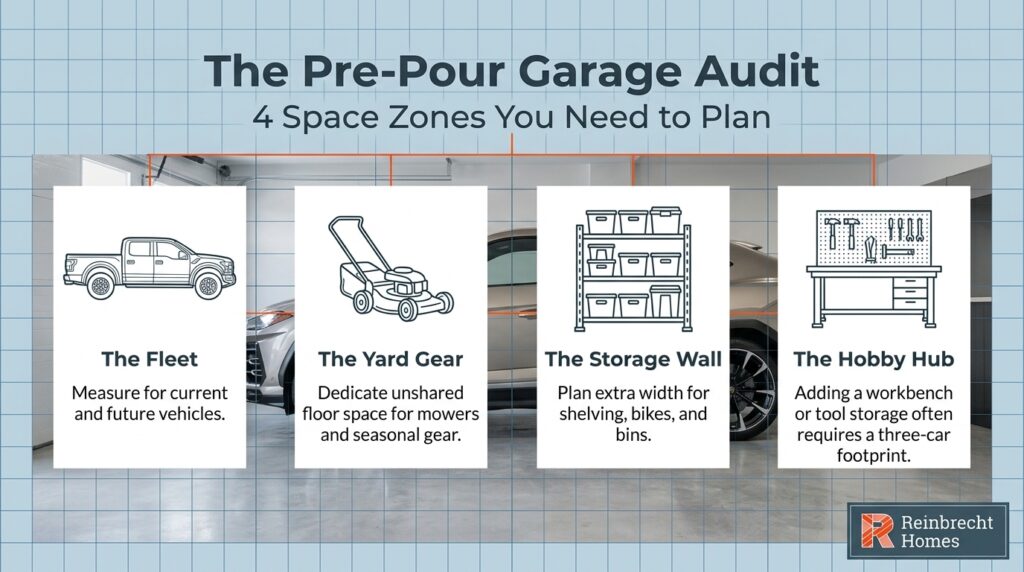
Before you settle on garage dimensions, walk through how you will actually use the space:
- Vehicles: count what parks inside now and what you might own in a few years. Full-size trucks and SUVs need more depth than the garage minimums suggest.
- Lawn and outdoor equipment: mowers, trimmers, and seasonal gear take up floor space that vehicles cannot share.
- Storage: shelving, bikes, and bins push you toward extra width or a deeper bay. It is worth remembering that garage storage ranks among the most-wanted features for buyers of all generations.
- Workspace: a workbench, tool storage, or a hobby area is often what turns a two-car footprint into a three-car decision.
This is also where building with a local team pays off. During a semi-custom build, you personalize an existing floor plan, including the garage, by adjusting layouts and selections to fit how you live. A fully custom home designs the garage from scratch around your vehicles, equipment, and storage. Either path lets you size the garage before the pour rather than living with a default.
Getting it right early also avoids a familiar mistake. A garage that is too small is one of the most common floor plan regrets buyers wish they had avoided, and the same build-it-in-now logic applies to the garage-to-mudroom transition that connects the garage to the rest of the home. Planning these details up front is what lets the build stay on track from the first decision to the final walkthrough:
Frequently Asked Questions About Garage Dimensions
Does a garage count as square footage?
No. Garage space is generally excluded from a home’s finished or living square footage because it is unconditioned and not living space. It is listed separately on floor plans and appraisals, so a home’s living area and its garage are measured apart.
How do you calculate garage size?
Multiply the usable interior width by the interior depth. A 24-by-24-foot garage, for example, is 576 square feet. Always measure the interior dimensions rather than the exterior footprint, since the wall framing reduces the space you can actually park and store in.
What is the average height of a garage ceiling?
Most garages have 8-foot ceilings, though 9 to 10 feet is increasingly common in new construction. Higher ceilings leave room for overhead storage racks, taller vehicles, or a lift, which is worth specifying during design if you plan to use the space that way.
What is a standard single-car garage size?
A single-car garage commonly runs about 12 feet wide by 22 feet deep, enough for one vehicle with limited storage. Width matters for opening doors and clearing mirrors, while depth matters for longer vehicles, so even a single bay benefits from a few extra feet.
Plan a Garage That Fits How You Live
Getting the garage right starts with a plan that matches your vehicles, your gear, and the way you use the space, and it is far easier to build that in than to add it later. When you are ready to plan a garage that fits your life, contact the Reinbrecht team to start the conversation, or explore Reinbrecht’s customizable floor plans to see what is possible for your new home.
