
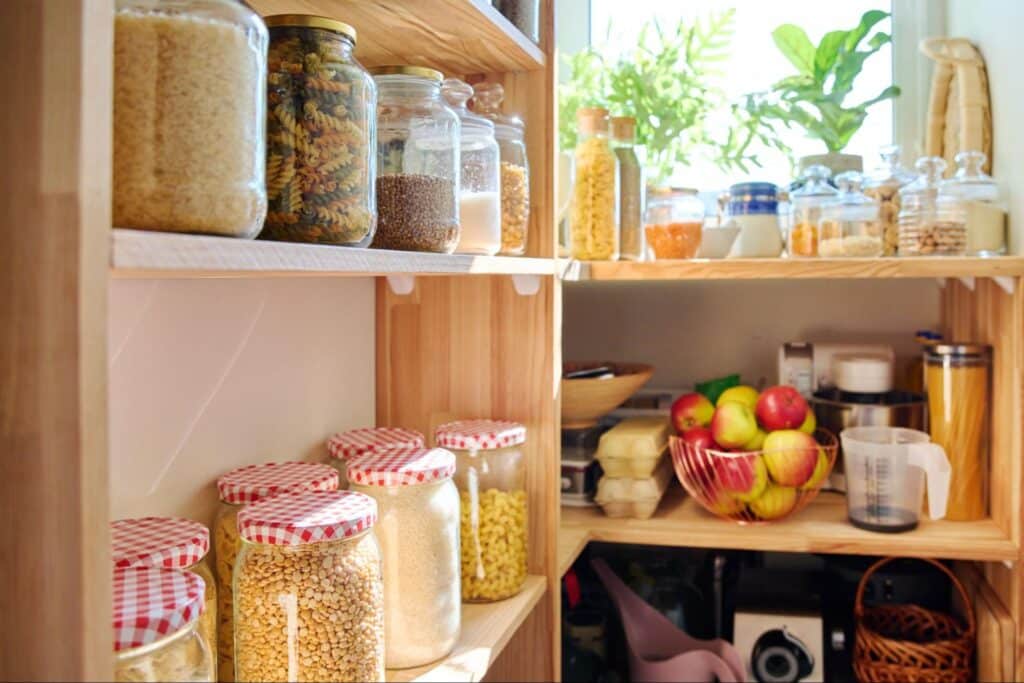
Somewhere between TikTok going viral over “Costco doors” and Reddit declaring organized pantries “life-changing,” the walk-in pantry quietly became the most coveted feature in new home construction. The driving motivation? Keeping clutter out of sight and gaining additional storage. In an era where kitchens are expected to look camera-ready at all times, the walk-in pantry has become the secret weapon.
And then there’s the viral factor. On TikTok, videos featuring hidden pantry doors and “Costco doors”—garage-to-pantry pass-throughs—have racked up millions of views. One video alone, a simple reveal of a concealed pantry entrance, earned nearly 8 million views and 400,000 likes. The pantry isn’t just functional anymore. It’s content.
For Southern Indiana families who shop at Costco, Sam’s Club, or simply need room for a week’s worth of groceries, the walk-in pantry isn’t a luxury—it’s a necessity. Here’s why this feature is reshaping how we think about kitchen design, and what you should know before building your next home.
Why the Walk-In Pantry Became Non-Negotiable
Enhancing Functionality and Creating a Calm Atmosphere
The 2026 kitchen is defined by one word: functionality. Designers report that clients want kitchens that “feel calmer and quieter,” with flexible layouts that include walk-in pantries, appliance garages, and fully integrated storage solutions. After years of wide-open floor plans where every item sat on display, buyers are craving places to hide the mess.
Catering to Bulk-Shopping Lifestyles
This shift makes practical sense. Modern families shop in bulk—Costco runs, Sam’s Club hauls, Aldi stock-ups. Traditional pantry cabinets simply can’t accommodate 48-roll toilet paper packs, cases of bottled water, or the sheer volume of groceries a busy household goes through. Walk-in pantries provide the square footage that bulk shopping demands.
Achieving an Instagram-Worthy Kitchen
There’s also the social media pressure. Instagram and Pinterest have created an expectation that kitchens should look pristine at all times. The walk-in pantry solves this by giving you a dedicated space for the cereal boxes, the small appliances, the visual chaos that accumulates in any real kitchen. Close the door, and your kitchen looks magazine-ready.
Potentially Increasing Home Appeal
The resale implications matter too. According to the 2026 U.S. Houzz Kitchen Trends Study, 25% of kitchen renovators are motivated by boosting their home’s resale value. Walk-in pantries are increasingly expected in new construction, not treated as bonus features. Homes without adequate kitchen storage are starting to feel dated before they’re even built.
The Viral Pantry Features Taking Over TikTok
Social media has played a big role in highlighting unique pantry innovations, many of which have become favorites in 2026 kitchen design.
The “Costco Door” Phenomenon
If you’ve spent any time on TikTok’s #hometok community, you’ve probably seen a Costco door reveal. The concept is simple but brilliant: a door—small or full-sized—connecting your garage directly to your pantry, allowing groceries to pass straight from car to storage without walking through the house.
One viral video showing this feature earned 7.9 million views. The appeal is obvious. For anyone who’s ever made six trips from the garage to the kitchen carrying heavy bags, or tried to navigate through the house with a case of water while kids and pets weave underfoot, the Costco door solves a genuine daily frustration.
Implementation varies based on your space. Some homeowners opt for a small pass-through door at cabinet height—just big enough to hand items through. Others install a full-sized door for complete walk-through access. The key requirement is that your pantry must be adjacent to your garage in the floor plan, which is worth considering early in the design process.
Hidden Pantry Doors
The “secret room” reveal is inherently shareable, which is why hidden pantry doors have become TikTok gold. These are pantry entrances disguised as regular cabinetry, creating a seamless kitchen appearance that opens to reveal a full storage room behind.
Beyond the viral appeal, hidden doors serve a real design purpose. They create a clean, uninterrupted kitchen aesthetic. They make smaller kitchens feel more spacious by eliminating visual breaks. And they feed directly into the “hide the mess” desire that’s driving so much of 2026 kitchen design.
Options range from cabinet-front doors that swing open, to pocket doors that slide into the wall, to Murphy-style doors with built-in spice racks on the exterior. The right choice depends on your space, budget, and how dramatic you want the reveal to be.
Butler’s Pantry: The Entertainer’s Upgrade
For serious hosts and home cooks, the butler’s pantry takes storage a step further. This is a secondary workspace—typically positioned between kitchen and dining room—with additional counter space, often a sink, and storage designed to keep cooking mess out of sight when entertaining.
Houzz reports that 7% of kitchen renovators are now adding butler’s pantries or prep kitchens — secondary workspaces designed to keep cooking mess out of sight when entertaining. Think refrigerated drawers for beverages, prep areas for appetizers, and staging space for plating dishes before they go to the table. It’s the ultimate upgrade for anyone who loves to host.
What Makes a Walk-In Pantry Actually Work
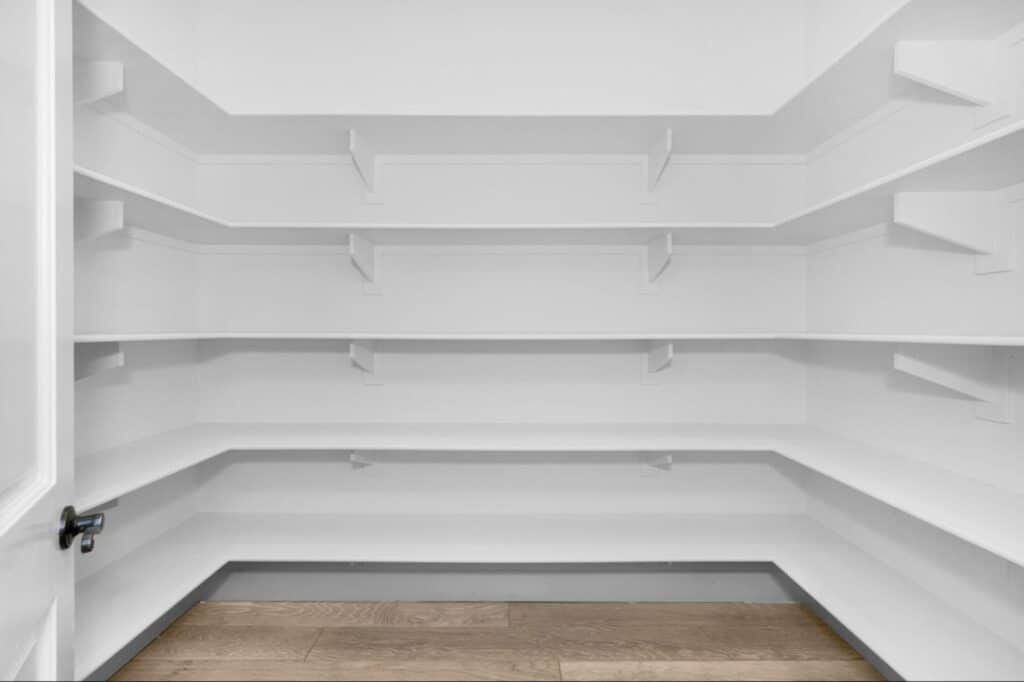
A walk-in pantry is only as good as its design. Here’s what separates functional pantries from frustrating ones.
Size and Placement
Walk-in pantries typically need at least 4 feet by 4 feet (16 square feet) to be truly functional. Narrower “step-in” versions can work for smaller homes, but you’ll sacrifice organizational flexibility. Larger pantries—6 feet by 8 feet or more—allow for countertops, appliance storage, and serious organization systems.
Placement matters as much as size. The pantry should be adjacent to your main cooking area for maximum efficiency. If a garage connection is possible, you gain the Costco door advantage. And consider traffic flow: the pantry should be close to where you actually prep and cook, not across the kitchen.
The Features That Matter
Size and placement get you started, but the details inside the pantry determine whether it actually works day-to-day. These are the features worth prioritizing:
- Adjustable shelving is non-negotiable. Standard shelf depth should be 12 to 16 inches—deeper shelves make it hard to see items in the back. Adjustable heights let you accommodate everything from spice jars to stand mixers. Consider pull-out drawers for lower sections where bending to see contents becomes annoying.
- Proper lighting transforms a pantry from frustrating to functional. LED strips or recessed lights ensure full visibility. No one wants to dig through a dark pantry hunting for the pasta sauce. Motion-sensor lights are a practical upgrade that pays off daily.
- Ventilation is often overlooked but crucial, especially in enclosed walk-ins. It reduces humidity, prevents food spoilage, and keeps the space from feeling stale. A small exhaust fan or connection to your HVAC system makes a real difference.
- Organizational zones turn chaos into order. Group dry goods together, canned goods together, baking supplies together. Designate space for small appliances you use regularly but don’t want on your counter. Keep heavy bulk items on bottom shelves where they’re easier to access.
- Counter space, if you have room, creates a true working pantry. It provides a prep area, a coffee station, or simply a surface to set things down while organizing. This feature bridges the gap between a basic walk-in and a butler’s pantry without the full footprint.
2026 Design Trends in Pantries
Pantry aesthetics are evolving beyond pure function. The trend is toward pantry interiors that match your kitchen’s cabinetry and finishes, creating a cohesive look when the door opens. Clear containers and labeling remain popular—the “Home Edit” organizational aesthetic shows no signs of fading.
Color-wise, we’re seeing movement away from stark white pantry interiors toward warmer, more inviting palettes. This aligns with the broader 2026 shift toward warm neutrals (think Sherwin-Williams’ Color of the Year, Universal Khaki). Woven baskets, wood accents, and mixed materials add warmth and that “collected over time” feeling that makes spaces feel personal rather than sterile.
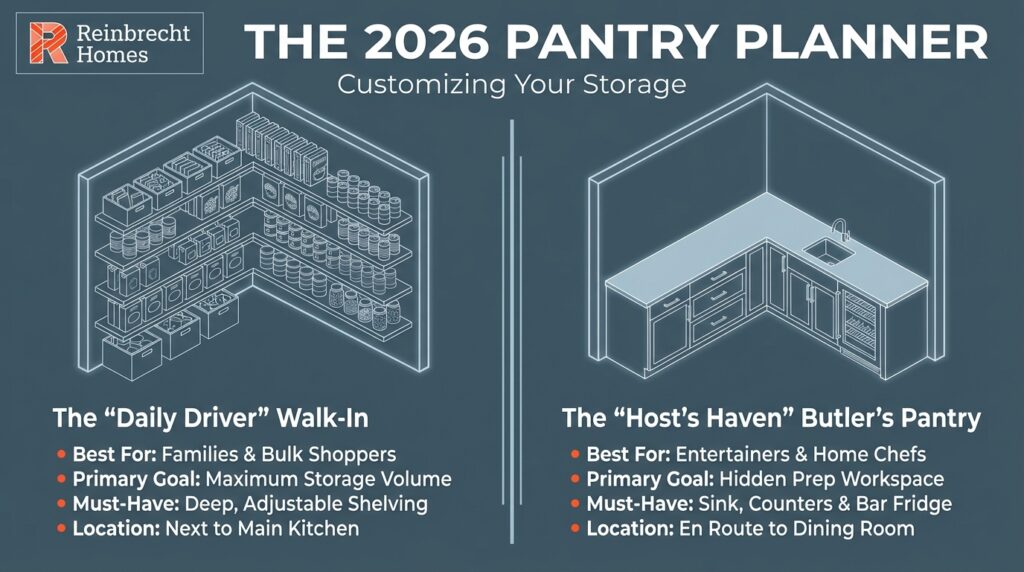
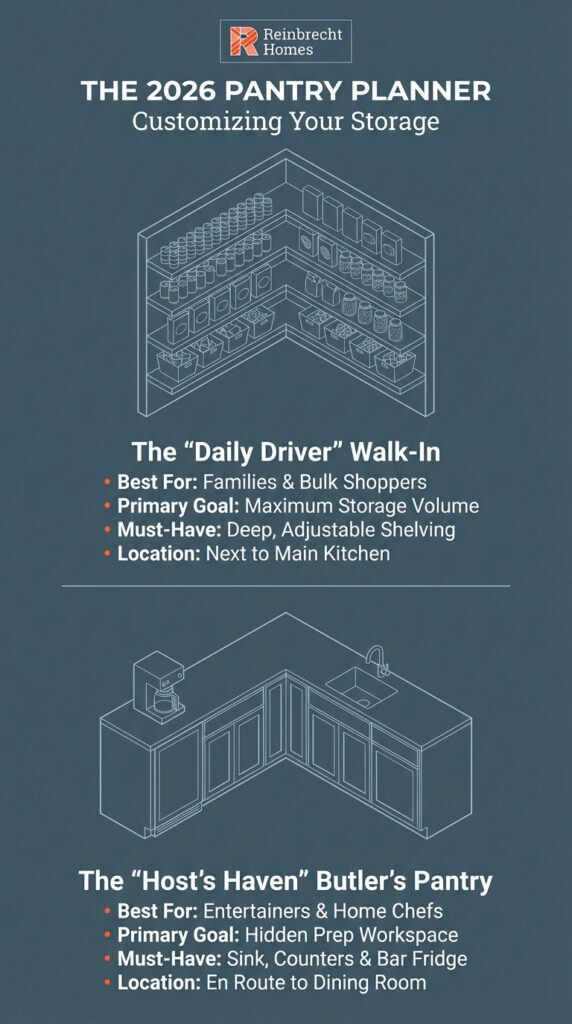
Walk-In Pantry vs. Butler’s Pantry: Which Is Right for You?
Choosing between a walk-in pantry and a butler’s pantry depends on your lifestyle, storage requirements, and entertaining habits.
Walk-In Pantry
- Purpose: Suited for bulk storage and everyday organization.
- Ideal For: Families who regularly shop for large quantities of goods.
- Placement: Often located adjacent to the main kitchen or near the garage.
- Key Benefit: Efficiently conceals clutter while providing ample storage for oversized items.
Butler’s Pantry
- Purpose: Serves as an auxiliary space for food preparation and entertaining.
- Ideal For: Homeowners who frequently host guests and desire extra prep areas.
- Additional Features: May include a sink, extra countertop, or specialized appliances.
- Key Benefit: Keeps food staging separate from the main kitchen, maintaining order and functionality.
The Hybrid Approach
For those who wish to blend both concepts, a hybrid solution combines elements of both: a walk-in pantry with a small counter and outlet for appliances creates butler’s pantry functionality without the full footprint. This “working pantry” approach is increasingly popular in new construction where space is at a premium but versatility is valued.
Choosing between a walk-in pantry and a butler’s pantry depends on your lifestyle, storage requirements, and entertaining habits.
Why Southern Indiana Families Need This Feature
The walk-in pantry makes sense anywhere, but it makes especially good sense in the Midwest.
- Bulk shopping is how families here operate. Costco in Evansville, Sam’s Club, weekly Aldi runs—buying for the week (or the month) is standard practice. Traditional pantry cabinets can’t accommodate that volume, which is why so many older homes feel cramped despite decent square footage.
- Four-season living creates unique storage needs. Canning and preserving traditions remain strong in Southern Indiana. Garden produce needs space for processing and storage. Holiday baking requires room for supplies that sit unused most of the year but need to be accessible when the season arrives.
- The Midwest mentality of being prepared. Having reserves on hand isn’t hoarding—it’s common sense. Walk-in pantries support that mindset in a way that scattered cabinet storage simply can’t.
- The Costco door makes even more sense here. Attached garages are standard in Indiana new construction. Carrying groceries through snow, rain, or summer humidity is a genuine pain point. The garage-to-pantry connection solves a real problem that Midwest homeowners face regularly.
- Existing homes here lack adequate kitchen storage. Walk-in pantries in new construction represent a genuine upgrade over the housing stock—a practical reason to build new rather than buy existing.
Planning Your Walk-In Pantry: Questions to Ask
Before finalizing your floor plan, consider these questions:
- On location: Is the pantry adjacent to the main cooking area? Could a garage connection work? Is there natural light available, or will you rely entirely on artificial lighting?
- On size: How much square footage can you dedicate? Do you want U-shaped, L-shaped, or galley-style shelving? Is there room for a small counter or appliance station?
- On storage: How much bulk shopping do you actually do? Do you need space for small appliances? Will you store anything beyond food—paper goods, cleaning supplies, pet food?
- On features: Do you want a hidden door or visible entrance? What’s your budget for organizational systems? Do you need electrical outlets inside the pantry for appliances?
- On the future: Will your storage needs grow with your family? How important is resale value and broad appeal? Could this space serve another purpose if your needs change?
Reinbrecht Homes: Custom Solutions for Modern Living
At Reinbrecht Homes, we believe that a versatile walk-in pantry can be a valuable component of any new home. Our home building process emphasizes collaboration, allowing you to customize your pantry to fit your household’s unique needs. From thoughtfully placed pass-throughs to seamlessly integrated hidden doors, our team works to ensure your kitchen layout aligns with your storage goals while complementing your personal style.
Explore our range of available homes and floor plans to see how traditional design meets modern convenience, or learn about our home buyers warranty to discover how we stand behind our work.
A Kitchen Built for How You Actually Live
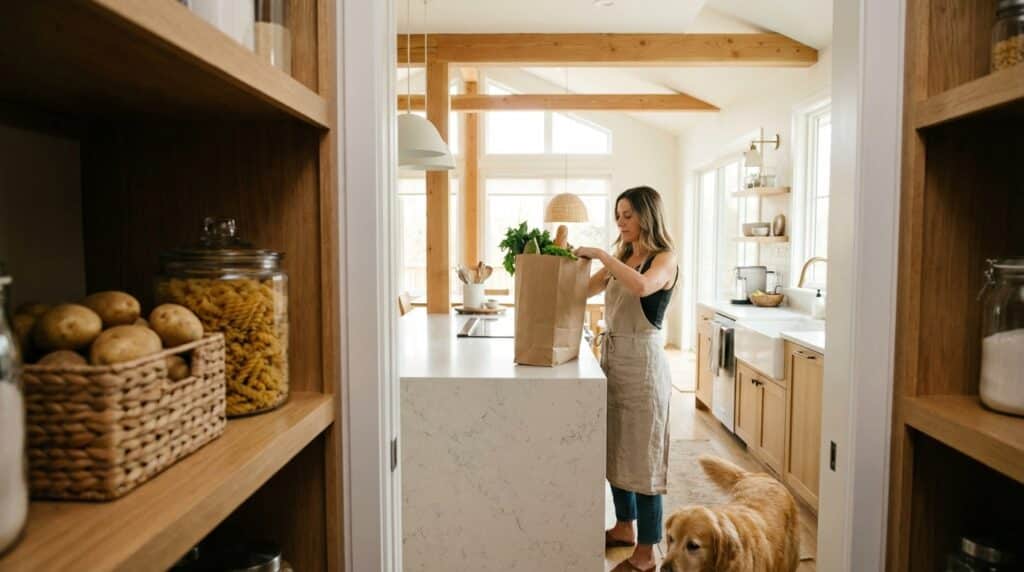
The walk-in pantry has evolved from nice-to-have to need-to-have. For Southern Indiana families who shop at Costco, stock up at Aldi, and want a kitchen that works as hard as they do, it’s not about following a trend — it’s about solving a daily problem. Coming home and unloading groceries straight into a dedicated storage space, having room for canning supplies and holiday baking ingredients, keeping your kitchen clean without a second thought — that’s the kind of feature that pays off every single day.
Reinbrecht Homes builds walk-in pantries into our floor plans because we know how local families actually live. Our Hickory Floor Plan, for example, features an oversized pantry right off the 2-car garage — exactly the kind of garage-to-pantry connection that makes bulk shopping effortless. Whether you want a simple storage pantry, a Costco door from the garage, or a full working pantry with counter space and appliance storage, our team can help you design the layout that fits your household. Schedule a tour of one of our model or move-in ready homes to experience our pantry designs in person.
