
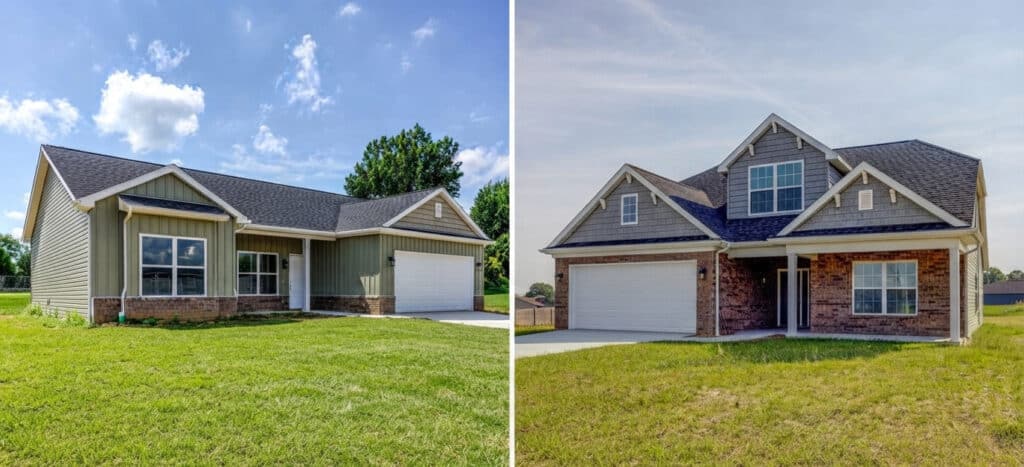
When you weigh one-story vs two-story homes, the choice comes down to how your household lives, what your lot allows, and what you want to spend. This guide compares the two on cost, energy use, lifestyle, and lot fit, using Reinbrecht Homes floor plans as examples. It also explains where a ranch fits in.
Key Takeaways
- Ranch and one-story mean the same thing. A ranch house is a one-story house, typically with a low-pitched roof and an open plan. A home with two full levels is a two-story home, whatever its exterior style.
- A two-story home generally costs less to build than a one-story home of the same size. Stacking two equal levels roughly halves the footprint, and with it the foundation and roof area. Nationally, foundations average 10.5% and roofing 3.9% of construction cost (2024).
- Your lot can decide it. A two-story plan covers less ground and suits a narrower lot. A one-story plan needs room to spread out.
- Lifestyle matters as much as cost. Long-term fit is worth weighing early, since 75% of adults 50 and older wish to remain in their current homes as they age.
- Middle options exist. Reinbrecht plans such as Aspen (main-level living with a bonus room) and Ash and Maple (two-story, main-floor master) sit between the two.
- Either type can have a basement. Whether one works depends on the lot and soil.
What Is the Difference Between a One-Story and a Two-Story Home?
A one-story house has all of its living space on a single level. A two-story house stacks its living space on two levels connected by stairs, usually with the main rooms below and the bedrooms above. Everything else in this comparison follows from that difference.
In the East North Central division, which includes Illinois, Indiana, Michigan, Ohio, and Wisconsin, single-story homes were 55.7% of new homes started in 2025. Nationally, 51.4% had two or more stories and 48.6% had one.
Is a Ranch Home the Same as a One-Story Home?
Yes. A ranch home is a one-story house, typically with a low-pitched roof and an open plan, which is why you’ll also see it called a single-story or one-story ranch. Reinbrecht Homes builds both one-story (ranch) homes and two-story homes across Southern Indiana.
A state historic preservation field guide lists these features of the ranch type:
- A single story with a long, low-pitched roofline
- An asymmetrical rectangular, L-shaped, or U-shaped design
- Open and simple floor plans
- An attached garage or carport, and partially enclosed courtyards or patios
That also settles the “two-story ranch” question. A home with two full levels is a two-story home, whatever its exterior style. In a ranch vs. two-story comparison, the real question is how many levels you want.
How Each Layout Uses Space
A one-story home spreads its rooms across one level, and a two-story home stacks them.
- One-story (ranch): The living room, kitchen, bedrooms, and baths share one floor, with no stairs between them. The home covers more of the lot.
- Two-story: The living room, kitchen, and dining room sit on the main floor, with bedrooms and baths upstairs in most plans. That separates living and sleeping areas and shrinks the footprint.
Reinbrecht Homes offers 30+ customizable floor plans in Southern Indiana. These examples show each plan type but are not a complete list.
| Plan type | What it means | Reinbrecht plans |
|---|---|---|
| One-story (also called a ranch) | All living space on one level. | Juniper, Cypress, Emerald, Sycamore |
| Main-level living with a bonus room | Everyday rooms on the main level, plus a bonus room: a larger informal space, often over the garage. | Aspen |
| Two-story | Living space on two full levels connected by a staircase. | Walnut, Fir, Tulip |
| Two-story with a main-floor master | Two levels, with the master bedroom on the main floor. | Ash, Maple |
Comparing Costs: One-Story vs Two-Story Homes
A two-story home generally costs less to build than a one-story home with the same living space, because stacking two levels shrinks the foundation and the roof. In a ranch vs. two-story cost comparison, the lot, the plan, and the finishes still matter, so ask for the cost of a specific plan on a specific lot.
Both the foundation and the roof cover roughly the home’s footprint. Here is the illustrative arithmetic for 2,000 square feet of living space:
- Foundation: About 2,000 square feet of foundation on one level, and about 1,000 on two equal levels. Foundations average 10.5% of construction cost nationally.
- Roofing: About 2,000 square feet of roof area on one level, and about 1,000 on two equal levels, before pitch and overhangs. Roofing averages 3.9% of construction cost nationally.
These square footage figures only illustrate the math. They are not a Reinbrecht plan or a quote. The cost shares are 2024 national averages from an NAHB cost survey, based on responses from 41 builders, which notes it is not a perfect tool for estimating costs for a particular house.
The Topaz Floor Plan is 1,800 square feet and the two-story Tulip Floor Plan is about 2,560 square feet, but size alone won’t tell you what either one costs. Reinbrecht calls cost per square foot an unreliable crutch for comparing builds. Instead, Reinbrecht gives a firm price that won’t change unless you want it to, with the costs detailed up front.
Three more factors affect the comparison:
- Land: A one-story plan needs a wider lot, which can add to the project cost.
- Upkeep: On a one-story home, the roof and exterior walls are easier to reach from the ground. On a two-story home, they sit higher, which can call for ladders, lifts, or professionals.
- Resale: Resale value depends on your local market and the home itself. One-story plans appeal to buyers who want to avoid stairs, and two-story plans appeal to buyers who want separate sleeping areas.
For the full budget picture, read the cost guide for Evansville-area buyers. If you are weighing building up for cost, down with a basement for severe-weather protection, or out for stair-free living, the guide on building up, down, or out compares all three.
Energy Efficiency: How One-Story and Two-Story Homes Differ
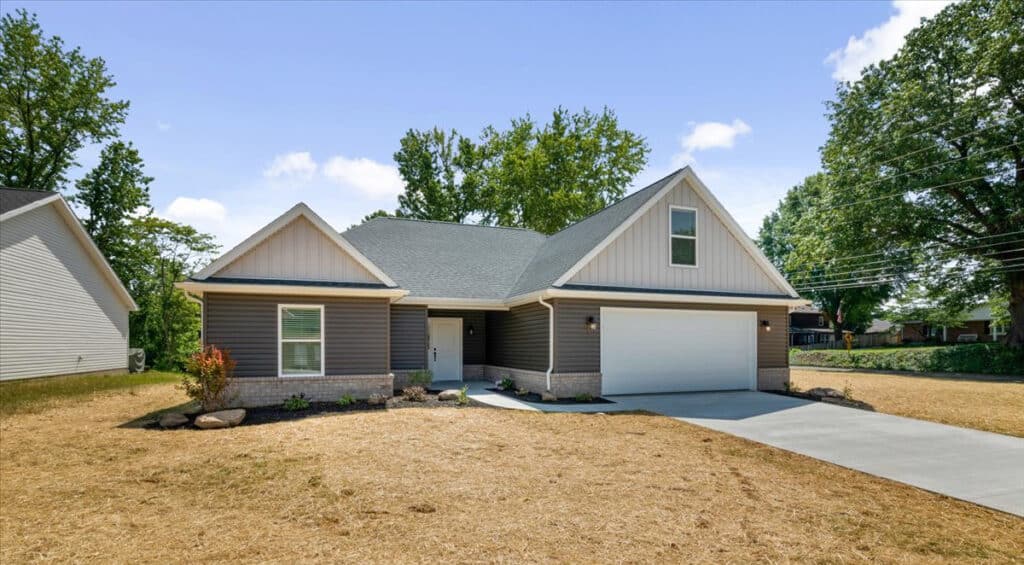
A one-story home can hold a more even temperature from room to room, while a two-story home can run warmer upstairs because warm air rises. Either way, utility bills depend on construction quality, insulation, and the HVAC system.
A two-story home may call for HVAC zoning, which lets each part of the home run on its own settings. These heating and cooling tips for two-story homes go deeper on keeping both levels comfortable.
Reinbrecht builds every home, one level or two, with the same building envelope:
- Wall insulation: Spider Plus sprayed-in fiberglass in the exterior walls.
- Band boards: Spray foam sealing the band board, which is the framing at the edge of each floor.
- Air sealing: Caulk sealant on the inside of the exterior walls.
See how Reinbrecht builds energy-efficient homes for the full list.
Personal Preferences and Lifestyle: Considering One-Story vs Two-Story Homes
The right choice depends on who lives in the home now and who will live in it later. One-story homes favor stair-free living and easy upkeep, while two-story homes favor privacy and a smaller footprint.
Accessibility and mobility: A one-story home puts every room on one level, which suits people with mobility challenges, families with young children, and anyone planning to age in place. As AARP’s Rodney Harrell, PhD, put it, most older adults “want to stay in their homes.” A two-story plan with a main-floor master bedroom is another option, since everyday living can stay on the main level.
Family size and future growth: A two-story home can offer more bedrooms on a smaller footprint, and a one-story home can expand outward where the lot allows.
Noise levels and privacy preferences: With no upper level, a one-story home has no footsteps overhead. A two-story home separates living areas from sleeping areas, which gives teenagers or couples more privacy.
Long-term plans: Think about whether you plan to age in place or sell someday. Designing a home you can live in forever starts at the plan stage.
Which Fits Your Lot: A One-Story or a Two-Story Home?
A two-story plan covers less ground, so it suits a smaller or narrower lot. A one-story plan spreads out and fits best on a wider lot. Any Reinbrecht floor plan can be built in one of the company’s neighborhoods across Southern Indiana or on your own lot.
Narrow your choice in four steps:
- Start with the lot. If you already own land, note its width and depth. Building on your lot may require infrastructure such as electricity, water, or sewage.
- Filter the plans. On the floor plans page, use the Levels filter (1 or 2).
- Check local rules. Review zoning and any neighborhood covenants for building height before you choose a plan.
- Match a plan to a lot. If you don’t own land yet, browse lots for sale in Reinbrecht neighborhoods.
1.5-Story vs Two-Story: What Is the Middle Option?
Reinbrecht’s plan pages don’t use a 1.5-story label, but they show two middle options. Both keep daily living on the main level while adding space above:
- Main-level living with a bonus room: The Aspen plan features a bonus room, with the master bedroom on the main level.
- Two-story with a main-floor master: Ash and Maple are two-story plans with the master bedroom on the main floor.
Can a Ranch or a Two-Story Home Have a Basement?
Yes. Either plan type can have a basement where the lot and soil allow one. Under a one-level home, a full basement adds about as much floor area as the main level without widening the footprint, which makes room for a game room, home theater, or guest suite. Under a two-story home, a basement adds room for storage or living space.
A basement can also give you a safe place to ride out severe weather. Reinbrecht’s guide to the four basement types explains the options for new homes in Southern Indiana.
The Advantages and Disadvantages of One-Story Homes vs. Two-Story Homes
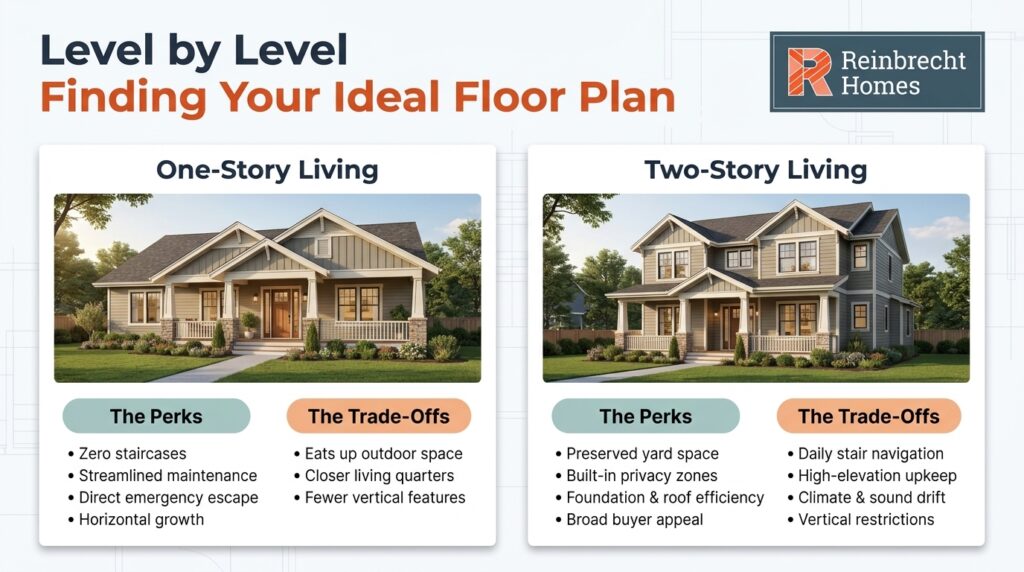
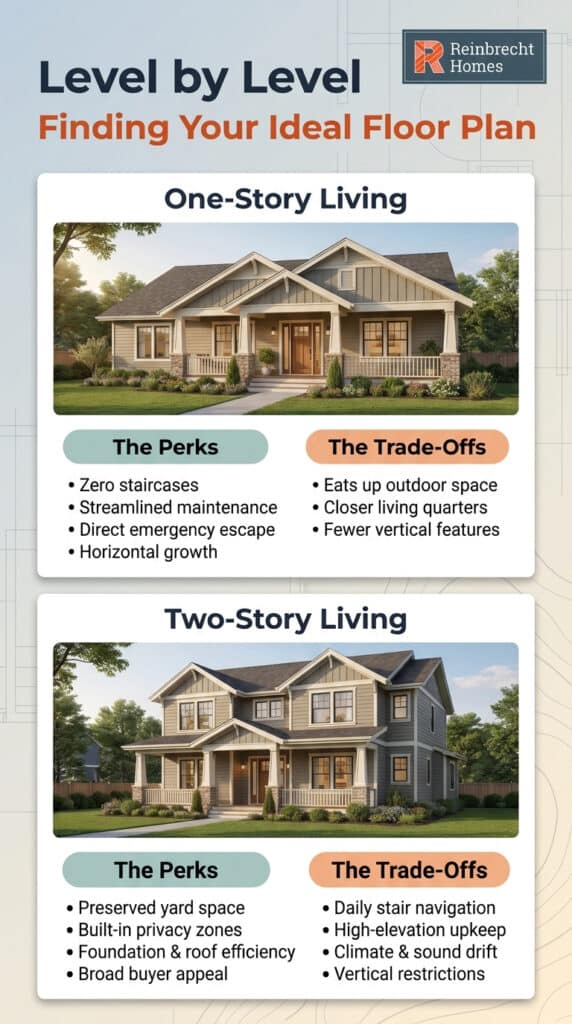
Neither plan type wins outright. One-story homes trade a larger footprint for stair-free living. Two-story homes trade stairs for a smaller footprint and more separation between living and sleeping areas.
One-Story Home Pros
Reasons to choose a single level:
- Caters to mobility concerns: With everything on one level, there are no stairs to manage, which helps young children, older family members, and anyone with limited mobility.
- Easier maintenance: Cleaning and laundry happen on one floor, and the roof is easier to reach.
- Ground-floor bedrooms: No one sleeps upstairs, so no bedroom is a flight of stairs away from an exit. Whatever the layout, every household should have a home fire escape plan.
- Expansion potential: One-story homes can be expanded outward where the lot allows. A basement adds space without widening the home.
One-Story Home Cons
Trade-offs to weigh:
- Limited design options: A single level rules out features that need an upper floor, such as a loft or an upstairs balcony.
- Larger footprint: The same living space spreads across more ground, which takes more land and leaves less yard.
- Less privacy: With every room on one floor, there is less separation between living and sleeping areas.
Two-Story Home Pros
Reasons to choose two levels:
- Design flexibility: A second level makes room for more bedrooms, bathrooms, and living areas on a smaller footprint, which can leave a larger yard.
- Cost savings potential: The smaller footprint can mean lower foundation and roofing costs, in both labor and materials.
- Resale appeal: Separate sleeping areas appeal to some buyers, though resale value depends on your local market.
- More privacy: Bedrooms can sit upstairs, away from the living room and kitchen.
Two-Story Home Cons
Trade-offs to weigh:
- Stairs to climb: Daily stairs can be hard on young children, older relatives, and anyone with limited mobility.
- Harder-to-reach exterior: Roof, gutter, and upper-wall work happens at height, which may mean ladders, lifts, or hiring a professional.
- Energy efficiency challenges: Heat rises, so upper levels can run warmer and raise cooling costs.
- Increased noise levels: Footsteps and voices can carry from one level to the next.
- Zoning and covenants: Check local rules on building height before choosing a two-story plan.
Frequently Asked Questions About One-Story vs Two-Story Homes
Is it cheaper to build a one-story or two-story house?
A two-story house is generally cheaper to build than a one-story house with the same living space, because stacking the rooms shrinks the foundation and roof. Lot, plan, and finishes still change the total.
Is a ranch house always one story?
Yes. A ranch is a one-story house, typically with a low-pitched roof and an open plan. A home with two full levels is a two-story home, whatever its exterior style.
What is the difference between a 1.5-story and a two-story home?
A 1.5-story home has one full level topped by a half story: an uppermost story, usually lighted by dormer windows, in which a sloping roof replaces the upper part of the front wall. A two-story home has two full levels. Reinbrecht’s plan pages don’t use a 1.5-story label. Its middle options are Aspen, which keeps the master bedroom on the main level with a bonus room upstairs, and Ash and Maple, which are two-story plans with the master bedroom on the main floor.
Do single-story homes sell for more?
Not as a rule. Resale value depends on your local market, the home’s location, and its condition. A one-story home appeals to buyers who want to avoid stairs, so demand depends on who is shopping in your area.
What are the disadvantages of a two-story house?
The main disadvantages are stairs, a harder-to-reach exterior, and upstairs rooms that can run warmer because heat rises. Footsteps and voices can also carry between floors.
Working with Reinbrecht Homes to Build Your Dream Home
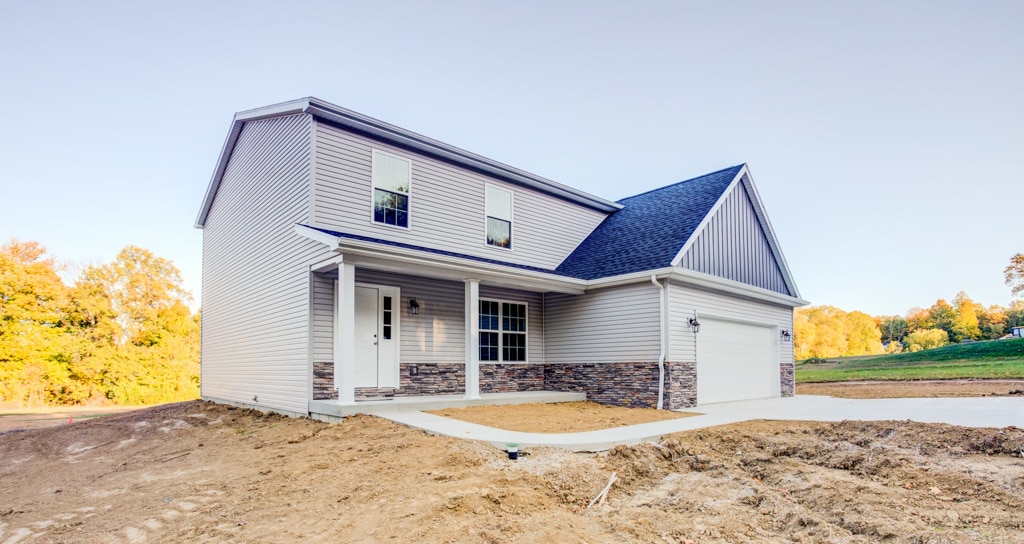
Reinbrecht Homes builds one-story homes, two-story homes, and two-story homes with a main-floor master across Southern Indiana, Northwestern Kentucky, and Eastern Illinois. You can start from one of 30+ customizable floor plans for a semi-custom home or design a custom home from scratch. Reinbrecht is dedicated to a stress-free and enjoyable experience from the first design meeting to move-in day. Here’s what to expect at your first meeting.
One Reinbrecht customer put it this way: “The Reinbrecht team and their sub contractors did a wonderful job bringing our dream home to reality. They delivered a home of exceptional quality on time and on budget. They were present for us every step of the way, delivering a personal and professional home building experience.”
Ready to start planning your new home? Contact the Reinbrecht team to schedule your first meeting.
