
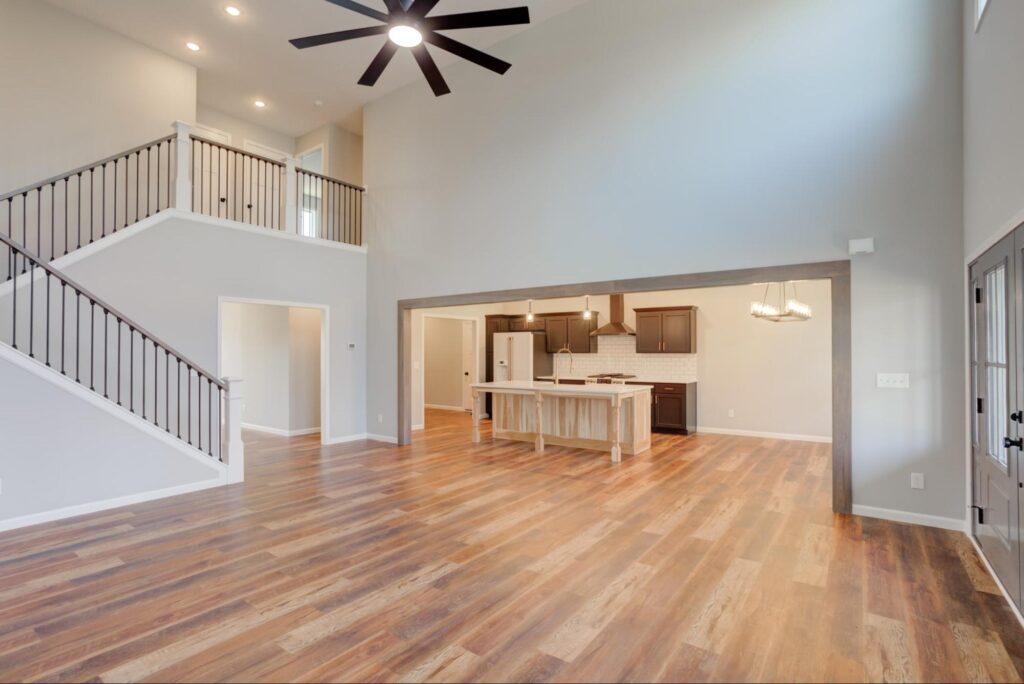
Choosing the right flooring is one of the most significant decisions you’ll make when building a new home. It covers every room, affects how your home looks and feels every day, and isn’t a quick fix if you get it wrong. Understanding your flooring options for new construction homes before you break ground saves you from second-guessing yourself through every selection meeting.
Key Takeaways
- LVP (luxury vinyl plank) is the most popular flooring choice in new construction homes, particularly in main living areas, kitchens, and bathrooms.
- Carpet remains the preferred choice for bedrooms, stairs, bonus rooms, and hallways. It’s quieter, warmer underfoot, and better suited to spaces designed for rest.
- Reinbrecht Homes’ standard semi-custom build includes LVP in all main-floor living areas and wet rooms (6 wood look options and 2 tile look options) and carpet in all bedrooms, bonus rooms, stairs, and hallways (10 color options), all at no extra cost.
- The right flooring for each room depends on three things: foot traffic level, moisture exposure, and the comfort the space requires.
- Hardwood and tile are strong upgrade options for specific rooms, but LVP’s performance profile makes it the default choice in most new builds.
- Light flooring opens up smaller spaces and tends to show less dust. Dark flooring creates a grounded, dramatic look but shows more debris in high-traffic areas.
What Are the Most Popular Flooring Options for New Construction Homes?
Four flooring types dominate new construction today: luxury vinyl plank (LVP), carpet, hardwood, and tile. Each performs differently depending on the room, so understanding what each brings helps you make decisions room by room rather than trying to apply a single answer across the whole home.
- Luxury Vinyl Plank (LVP): The top-performing flooring for most rooms in a new build, LVP is water-resistant, scratch-resistant, and available in profiles that convincingly replicate the look of wood and stone. It requires less maintenance than hardwood and holds up in the rooms that take the most punishment. Think of it as the middle ground between carpet’s soft comfort and tile’s hard durability, without tile’s cold, loud surface underfoot.
- Carpet: Still the dominant choice in bedrooms and upper-floor spaces, and for good reason. It’s softer, quieter, and warmer than any hard surface, which makes it the right material for rooms built around comfort and rest. Bedrooms, bonus rooms, and stairs are carpet territory in nearly every new build.
- Hardwood: A premium choice with genuine appeal. It’s beautiful, timeless, and adds real resale value. The trade-off is sensitivity to moisture and the need for periodic refinishing. In new construction, hardwood is often available as an upgrade in living and dining areas for buyers who want that specific look.
- Tile: Completely waterproof, highly durable, and easy to clean, making it ideal for bathrooms and laundry rooms. The downsides are its hardness and coldness underfoot and the sound it carries. Tile is excellent where moisture is the primary concern but uncomfortable as a whole-home solution.
How Reinbrecht Homes Approaches Flooring
After 30 years building homes across Southern Indiana, Northwestern Kentucky, and Eastern Illinois, Reinbrecht has a clear approach: match the right material to the right room, and make sure buyers get quality choices included from the start without having to negotiate for them.
That hands-on guidance runs through every decision in the build, not just framing and finishes. As one homeowner shared:
“Our home started with a good plan, then moved on to a budget that included everything from concrete and fill rock to towel bars! Matt Reinbrecht helped us make decisions and even took us to the cabinet maker on an icy, winter day. The quotes were specific and based on what we said we wanted. Thanks to everyone who helped us!”
That approach is built into the standard flooring included in every semi-custom home.
What’s Included Standard in a Reinbrecht Semi-Custom Build
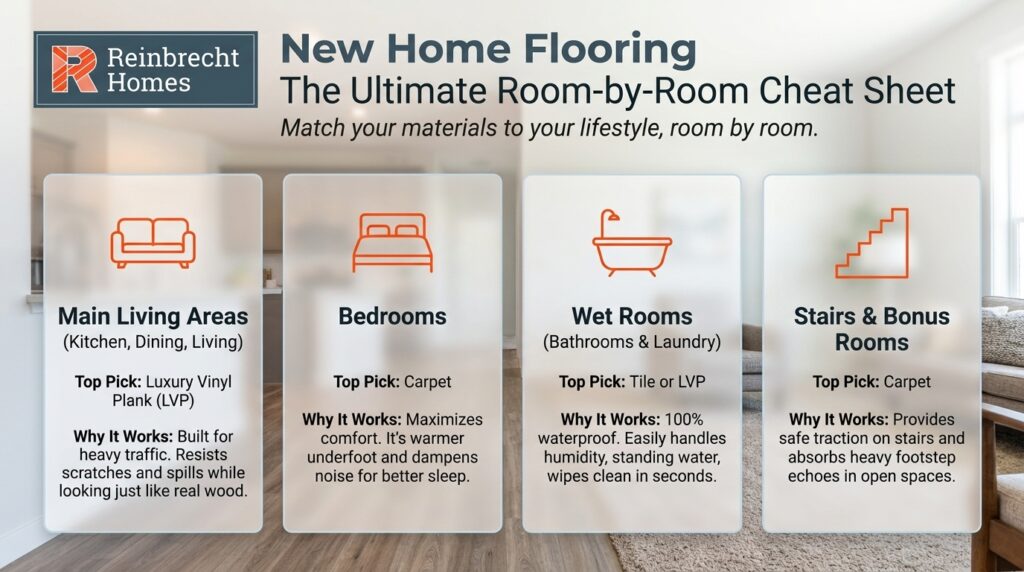
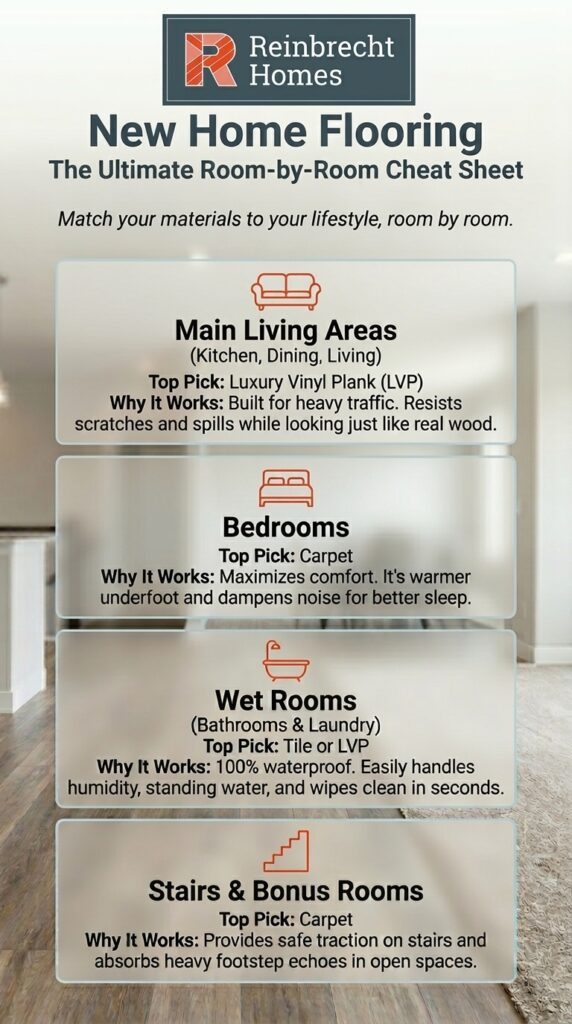
Every semi-custom build from Reinbrecht includes LVP for all main-floor living areas and wet rooms, with 6 wood look options and 2 tile look options to choose from. Carpet is included for all bedrooms, bonus rooms, stairs, and hallways, with 10 color options available.
These aren’t placeholder selections added to hit a price point. They’re the materials Reinbrecht has found to perform best room by room, included in every build at no extra cost. The full breakdown of every standard interior feature, including flooring, is available in the Semi-Custom Standards Guide.
Room-by-Room Flooring Guide for New Construction
No single flooring choice is right for every room in a home. The practical approach is to match the material to what the room actually needs: how much traffic it gets, how much moisture it sees, and how comfortable the floor needs to feel.
Main Living Areas: Living Room, Kitchen, and Dining Room
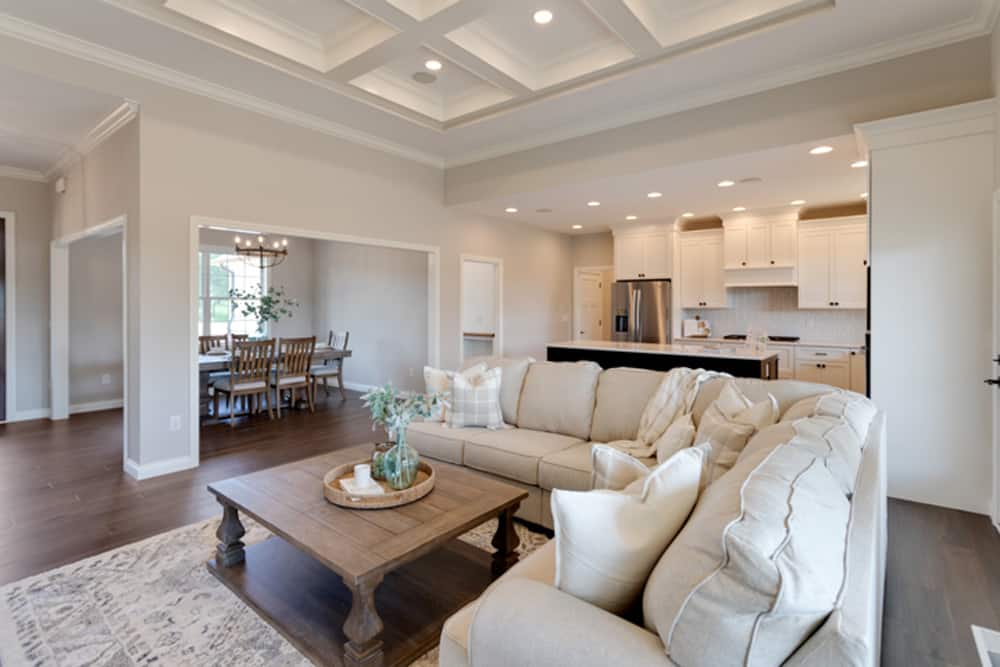
LVP is the clear choice for main-floor living areas. These rooms take the most daily punishment. Spills happen, pets track in mud, shoes come and go, and foot traffic is constant. LVP handles all of it without warping, staining, or showing the wear that other materials would.
Modern LVP profiles are worth noting. The realistic wood grain textures and finishes available today are difficult to distinguish from hardwood at a glance and considerably easier to maintain over a decade of use.
Bathrooms and Laundry Rooms
Bathrooms and laundry rooms need flooring that handles water reliably over years, not just weeks. Tile and LVP are both appropriate here. Tile is completely waterproof, handles standing water well, and is easy to clean around fixtures. LVP is also a strong choice in wet rooms when installed correctly.
Hardwood and carpet don’t belong in bathrooms or laundry rooms. Moisture will degrade hardwood over time, and carpet in a wet room creates sanitation problems that compound quickly. For a broader look at which bathroom and kitchen finishes deliver the best long-term value, see Smart Kitchen and Bath Upgrades with the Best ROI in New Builds.
Bedrooms
Carpet belongs in bedrooms. The reasons are practical: bedrooms are designed for rest, and carpet is softer, quieter, and warmer than any hard surface option. You step out of bed onto carpet rather than a cold, hard floor. The sound dampening matters in a room where people are sleeping, and the comfort difference is noticeable every day.
Builder industry data backs this up. Tracy Wyrick, Vice President of Builder and Multi-Family at Engineered Floors, confirmed the pattern in a Floor Covering Weekly industry piece: “carpet is popular in bedrooms and upstairs.” The preference is consistent because the material performs better in spaces built around rest.
Some buyers ask about putting LVP in bedrooms to create a consistent look throughout the home. That’s a valid preference and it works, but the comfort trade-off is worth thinking through before committing.
Stairs, Hallways, and Bonus Rooms
Stairs see constant foot traffic without meaningful moisture exposure, making carpet the sensible default. It provides traction, absorbs sound, and takes the traffic well. Hallways follow the same logic. Bonus rooms (playrooms, home offices, flex spaces) benefit from carpet’s warmth and acoustic properties, particularly if the room sits above a bedroom or shared living space.
Carpet vs. LVP in Bedrooms: Which Is Better?
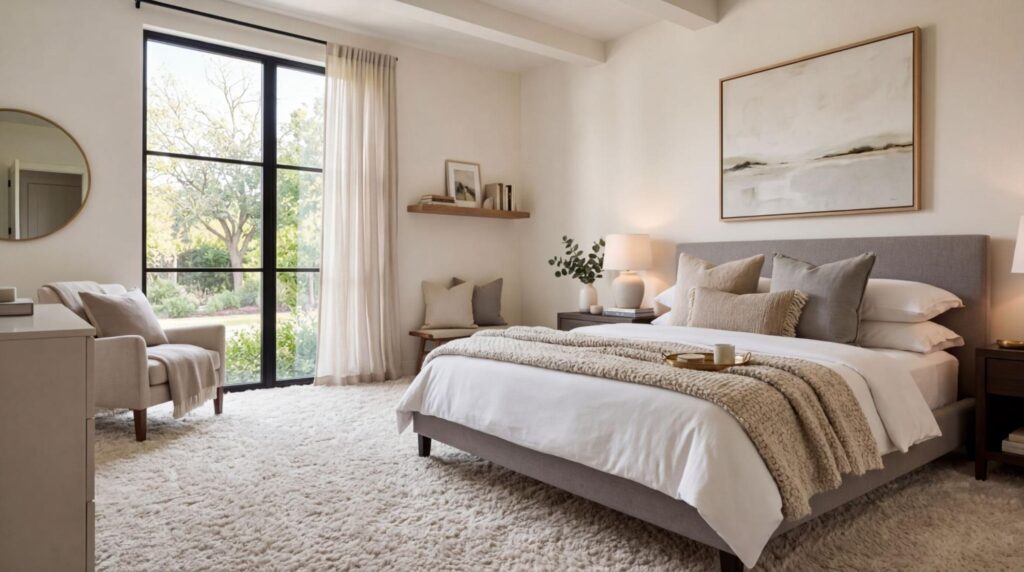
Carpet is the better choice for most bedrooms. It’s softer and warmer underfoot, reduces sound transmission, and is more comfortable in a space designed for sleep and rest. The performance advantages that make LVP worth choosing in a kitchen or living room (water resistance, scratch resistance, heavy traffic durability) matter far less in a bedroom.
Bedroom carpet also holds up better than many people expect. Because bedrooms don’t face the daily punishment of a main living area, carpet in bedrooms typically lasts 10 to 15 years, and bedroom carpet often goes longer than that.
The case for LVP in bedrooms is mostly visual: a consistent hard-surface look throughout the home. If that’s a priority, it’s achievable. Most buyers find that area rugs in bedrooms accomplish a similar effect while keeping the comfort advantages of carpet.
Light or Dark Flooring: How to Choose
Choose your flooring tone based on room size, natural light, and how much daily maintenance you want to do. Light tones make smaller rooms feel more open and tend to hide dust better. Dark tones create a grounded, dramatic look and work especially well in larger, well-lit spaces. Both directions are available within Reinbrecht’s standard LVP selection.
- Light flooring (pale oak, beige, and greige tones): Makes rooms feel larger and brighter, which is a practical advantage in smaller rooms or homes with limited natural light. Light floors tend to show less dust than dark options, though they can show scuffs and certain types of scratches more readily.
- Dark flooring (walnut, espresso, and charcoal tones): Creates a grounded, dramatic look that works especially well in kitchens and open living areas. Dark tones can obscure certain debris, but they show dust, pet hair, and fine particles clearly. High-traffic areas with dark flooring require more frequent cleaning to look their best.
For most buyers, the practical starting point is this: choose a tone that complements your cabinetry and wall colors, then evaluate it in the actual lighting of the rooms where it will be installed. Reinbrecht’s selection process gives you samples to review in context before you commit to a color. If you’re still working through your interior palette, Warm Neutral Paint Colors 2026 covers the tones that pair well with both light and dark flooring.
Can You Put LVP Throughout the Whole House?
Yes. Installing LVP throughout an entire home is a legitimate choice, and some buyers prefer it for visual continuity. Open floor plans benefit especially from the seamless look a single hard surface material creates across living, dining, and kitchen spaces.
The trade-off is comfort in rooms where carpet excels. Many buyers who choose LVP throughout add area rugs in bedrooms and living areas. That’s a workable approach, but worth factoring into your budget and planning before making the decision.
Frequently Asked Questions About Flooring in New Construction Homes
Is carpet or LVP better for bedrooms?
Carpet is generally the better choice for bedrooms. It’s softer and warmer underfoot, reduces noise, and is more comfortable in a space primarily used for rest. The durability and moisture resistance of LVP matter less in bedrooms than in kitchens or living rooms. Most buyers building with Reinbrecht choose carpet in bedrooms and LVP in main living areas.
What is the most popular flooring in new construction homes?
LVP is currently the most popular flooring in new construction homes, particularly in main living areas and wet rooms. Carpet remains the standard in bedrooms and upper-floor spaces. Together, LVP and carpet cover the majority of flooring in most new builds.
What flooring is best for high-traffic areas in a new home?
LVP is the best choice for high-traffic areas like kitchens, living rooms, and entryways. It resists scratches, repels spills, and cleans easily. Tile is also a strong option in wet, high-traffic spaces like mudrooms and bathrooms. Carpet handles traffic well on stairs and in hallways where moisture isn’t a concern.
Does carpet decrease home value?
Worn or stained carpet can negatively affect home value, but new carpet in bedrooms (where buyers expect it) is generally a neutral factor. Carpet in main living areas is more likely to be a concern for today’s buyers, since most prefer hard surface flooring in those spaces. The bigger risk is installing carpet where hard surface flooring is the market expectation.
Is it cheaper to install carpet or vinyl flooring?
Entry-level carpet is often less expensive per square foot than entry-level LVP, but mid-range options compete closely when installation and underlayment are factored in. In a Reinbrecht semi-custom home, both are included as standard selections. You’re choosing between options that fit the build, not comparing installation costs.
Start Planning Your New Home’s Flooring
Flooring is one of the most personal choices in a new home build. The right combination of LVP in the rooms that need performance and carpet in the rooms built for comfort gives you a home that works well and feels right from day one.
Ready to start building? Contact the Reinbrecht team to schedule your first conversation. If you’re still in the planning stage, explore Reinbrecht’s floor plans to see how room layouts connect to your flooring decisions.
