
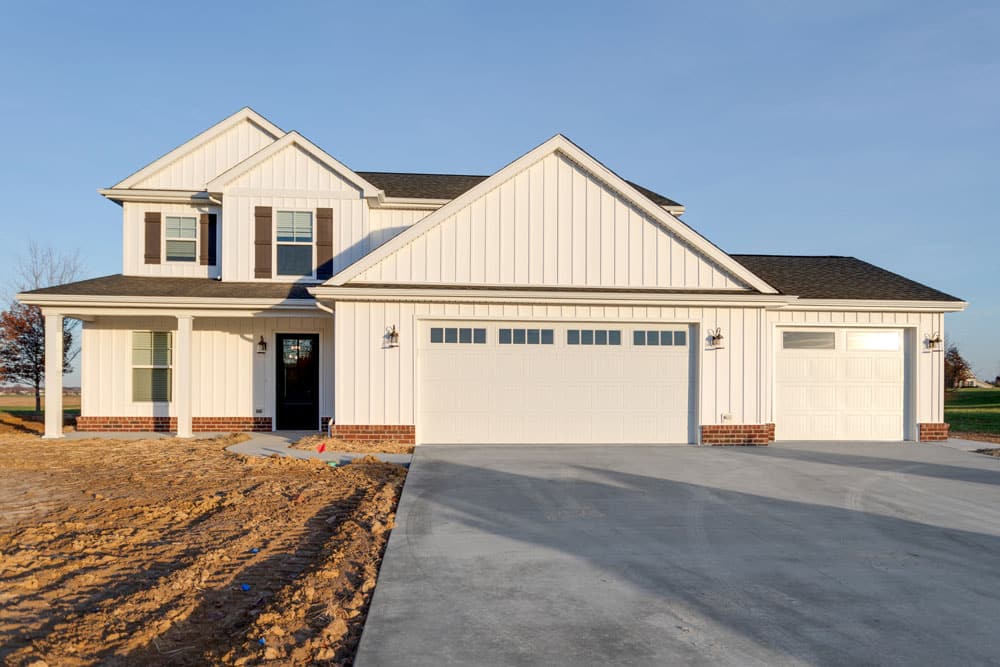
When you’re comparing new homes, “energy efficient” is easy to nod along to and harder to pin down. If you’re weighing energy-efficient new construction in Southern Indiana, the practical questions are simple: will this home cost less to run, and stay comfortable through our humid summers and cold winters? Here’s how Reinbrecht Homes builds for both, starting with the parts of the home you never see.
Key Takeaways
- Energy efficiency in a new home comes mostly from the building envelope: the house wrap, insulation, air sealing, and framing details that stop air and heat from leaking. It’s built in, not bolted on.
- Reinbrecht builds that sealed envelope into every home as standard: Typar house wrap, Spider Plus sprayed-in insulation, caulk air sealing, insulated headers, and band-board spray foam.
- Heating and cooling is the single biggest energy expense in a home, about 43% of a typical utility bill (DOE), so a tighter envelope is where the savings live.
- Air sealing and added insulation are worth about 17% of heating and cooling costs for a typical existing home in the Southern Indiana climate zone (EPA), and a new build gets that sealed envelope from the start.
- A newly built, well-sealed home runs more efficiently and comfortably than a typical older home, which matters most through humid summers and cold winters.
- The efficiency features that matter most are standard on every Reinbrecht home, at every budget, not add-ons.
What Makes a New Home Energy Efficient?
An energy-efficient home uses less energy to keep you comfortable, and in new construction that starts with the building envelope: the continuous shell of wrap, insulation, sealing, and framing that separates your conditioned indoor air from the outdoors. Appliances and smart thermostats help, but a tight, well-insulated envelope does the heavy lifting.
The envelope decides how much heated or cooled air stays inside and how much leaks out. Two homes with identical furnaces can post very different utility bills if one has a leaky shell. Since heating and cooling is the largest single line on a home’s energy bill, about 43% of it (DOE), the shell around that conditioned air is where efficiency is won or lost. That’s why Reinbrecht builds efficiency into the structure first, then treats things like premium windows and geothermal as choices you can layer on top.
A home’s envelope has a few working parts:
- The house wrap and sheathing that block air and moisture at the exterior walls.
- The insulation in walls, headers, and band boards that slows heat transfer.
- The air sealing at the joints and seams where leaks usually hide.
- The windows and doors, since about 20% of a home’s air leakage comes through windows, doors, and skylights (DOE).
These parts work as a system. A gap in one place, an unsealed band board, a thin spot in the attic insulation, a leaky window, undercuts the others, which is why efficient construction treats the whole shell as one continuous barrier rather than a checklist of separate items.
This isn’t a premium-only approach. It’s the same standard build that earned a Reinbrecht home in Poet Square a 2021 regional energy-efficiency award, using standard construction rather than special add-ons.
How We Build a Tight, Efficient Building Envelope
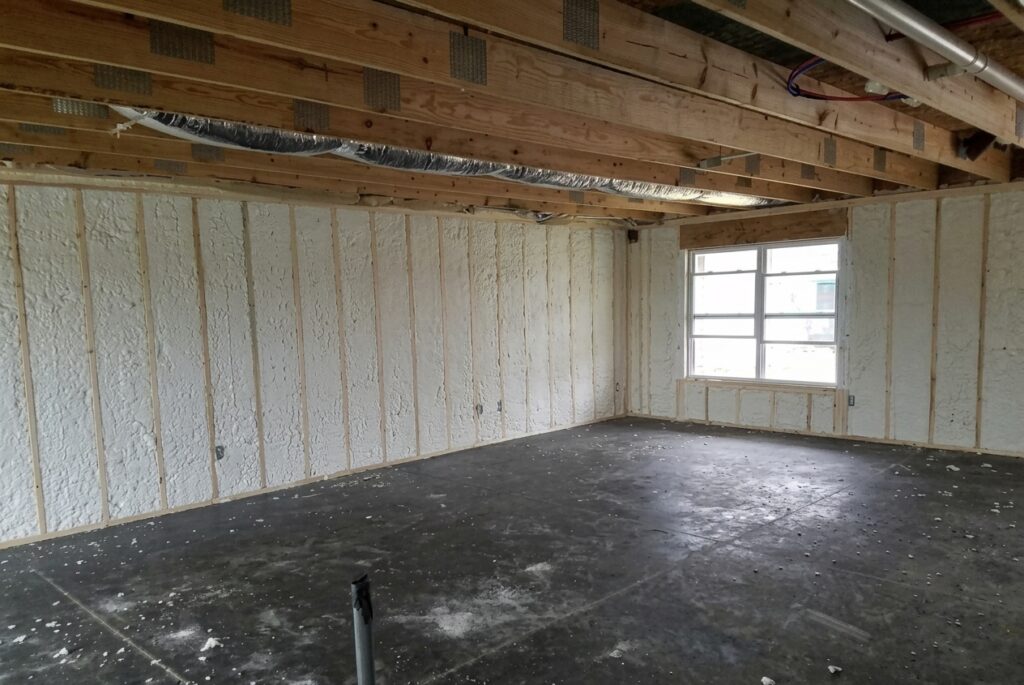
Reinbrecht builds the efficient envelope into every home as a standard, not an upgrade: a full house wrap, sprayed-in fiberglass insulation, sealed air joints, insulated headers, and spray foam where floors meet exterior walls. To put a number on why that shell matters, EPA modeling puts air sealing plus insulation at about 17% of heating and cooling costs for a typical existing home in our climate zone (EPA).
Here’s exactly what comes standard in every Reinbrecht home, and what each piece does:
| Envelope component | What it is | What it does for you |
|---|---|---|
| House wrap | Typar house wrap across the entire exterior | Blocks air and moisture from getting into the walls |
| Wall insulation | Spider Plus sprayed-in fiberglass in the exterior walls | Fills the gaps that standard batt insulation often misses |
| Air sealing | Caulk sealant on the inside of all exterior walls | Closes the small joints and seams where conditioned air escapes |
| Insulated headers | An insulated core above doors and windows | Cuts a common cold spot in the wall |
| Band-board spray foam | Spray foam sealing the band board between floors | Stops a major source of air infiltration in ordinary construction |
The U.S. Environmental Protection Agency estimates that air sealing combined with added insulation saves an average of about 15% on heating and cooling nationally, and closer to 17% in the climate zone that covers Southern Indiana and the Evansville area (EPA). The U.S. Department of Energy adds that of the roughly $2,000 the average household spends on energy each year, $200 to $400 could be going to waste from drafts, air leaks, and outdated heating and cooling systems (DOE). Those figures describe upgrading an older home, which is exactly why building the sealed envelope in from day one matters: you get that performance as your baseline instead of chasing it later.
Windows and Doors
Windows and doors matter because about 20% of a home’s air leakage comes through windows, doors, and skylights (DOE), so they’re worth getting right. Reinbrecht’s standard windows are built a grade above the industry standard, with the option to upgrade to aluminum-clad wood windows for better performance and a different look. If you want to understand the ratings and specs that separate a strong window from an average one, our guide to choosing windows for a new construction home breaks it down.
Optional Upgrades Like Geothermal
Beyond the standard envelope, some buyers choose to go further. Geothermal heating and cooling is available as an upgrade, using the stable temperature below ground to help heat and cool the home efficiently. It’s a larger upfront investment, so it tends to appeal to buyers focused on long-term operating cost.
Year-Round Comfort Through Southern Indiana’s Humid Summers and Cold Winters
An energy-efficient home isn’t just cheaper to run, it’s more comfortable to live in. A sealed, well-insulated envelope holds temperatures steady from room to room, keeps humidity out during muggy summers along the Ohio River, and blocks drafts when winter temperatures drop. Comfort and efficiency come from the same construction details.
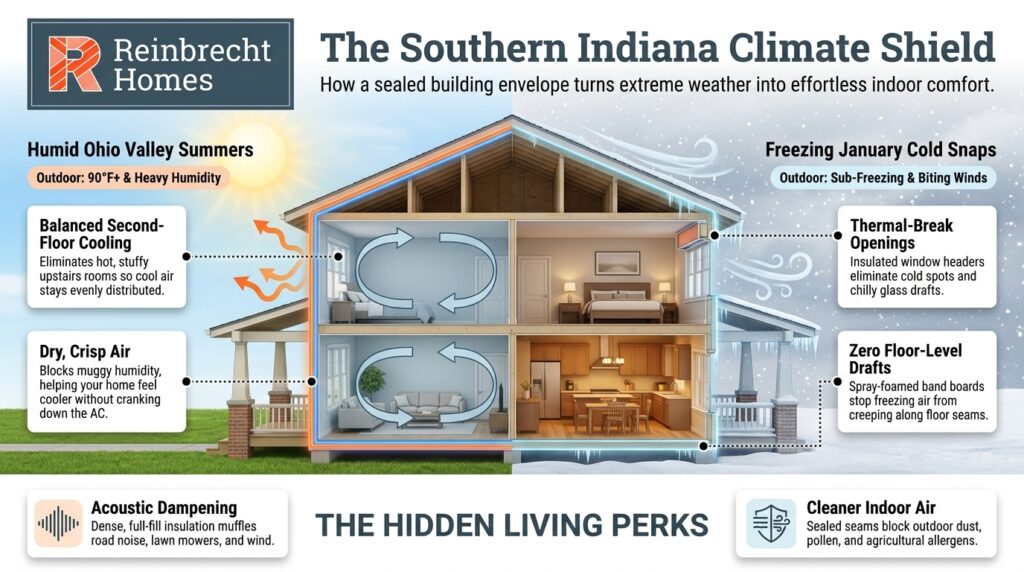
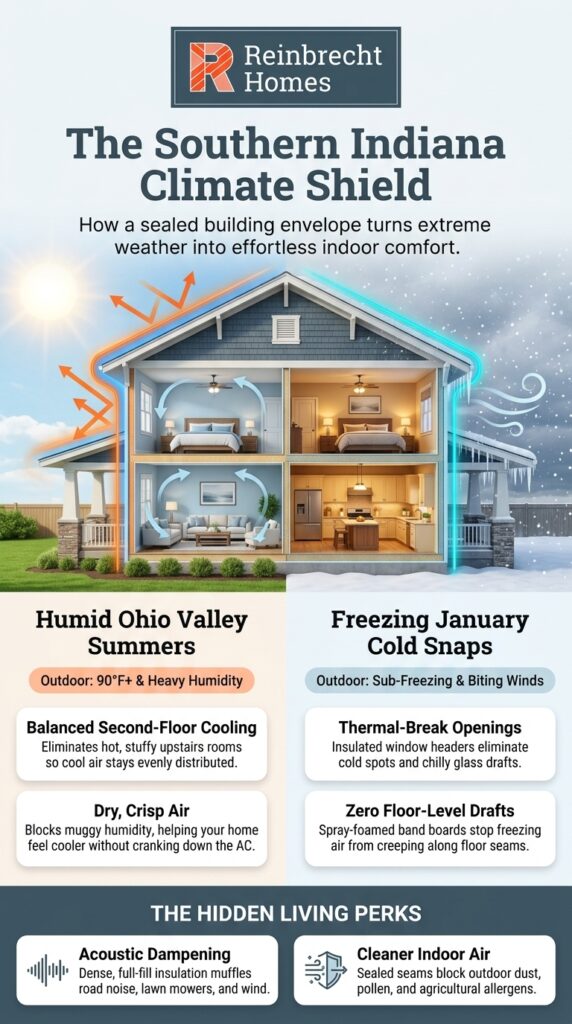
In everyday terms, that shows up as:
- More even temperatures between floors and rooms, with fewer hot and cold spots.
- Steadier humidity through the sticky part of summer, so the home tends to feel cooler at the same thermostat setting.
- Fewer drafts in winter, especially near windows, doors, and floors.
- A generally quieter interior, since the same sealing that blocks air also helps dampen outside noise.
There is a cleaner-air benefit too. A well-sealed envelope gives dust, pollen, and outdoor humidity fewer gaps to drift through, so the air inside tends to stay easier to filter and condition. The same sealing that lowers your bill is what helps keep a bedroom from feeling clammy in August or drafty in January.
Two-story homes add one more wrinkle, since heat naturally rises and the upstairs can run warmer than the main floor. Balancing that takes a few extra considerations, which we cover in our tips for heating and cooling efficiency in two-story homes.
What to Ask a Builder About Energy Efficiency
When you tour new homes, the fastest way to compare efficiency is to ask what’s standard versus what’s an upgrade. A builder who includes the envelope details as standard is building efficiency in. One who lists them all as add-ons is selling it back to you.
Bring these questions to any builder you’re considering:
- What insulation and air sealing come standard, and where? Ask specifically about walls, headers, and band boards.
- Is a house wrap or continuous air barrier included on every home?
- What windows come standard, and what upgrades are available?
- Which efficiency features are standard on every home, and which cost extra?
At Reinbrecht, the efficiency features that matter most are part of the standard specifications on every home, at every budget. You can see the brands and materials that come standard in the Semi-Custom Standards Guide, and read more about why families across Southern Indiana build with Reinbrecht. A lower energy bill is part of the true cost of owning a home, alongside your mortgage, and free construction financing on the build helps keep more of your budget working toward the home itself.
It’s an approach customers notice. As one Reinbrecht homeowner put it: “The Reinbrecht team and their sub contractors did a wonderful job bringing our dream home to reality. They delivered a home of exceptional quality on time and on budget, and they were present for us every step of the way.”
Frequently Asked Questions About Energy-Efficient New Construction
What makes a newly built home more energy efficient than an older one?
Newer homes are built to current energy standards, with a continuously sealed envelope, modern insulation, and tighter construction details that most older homes never had. Older homes tend to leak air around windows, doors, and the framing between floors, and their insulation has often thinned or settled over the decades. A new, well-sealed home simply starts more efficient, which shows up as steadier temperatures and lower heating and cooling costs. Since heating and cooling is about 43% of a typical utility bill (DOE), a tighter shell makes a real difference.
Does spray foam or house wrap really make a difference?
Yes. According to the U.S. Department of Energy, reducing the drafts in a home can save 5% to 30% a year on energy, and adding insulation is one of the fastest and most cost-effective ways to reduce energy waste (DOE). Reinbrecht uses band-board spray foam, caulk air sealing, and a full house wrap on every home to close those leaks from the start.
How much can an energy-efficient new home save on utility bills?
Exact savings depend on your home’s size, the weather, and your energy rates, so there’s no single dollar figure that fits every home. What’s measurable is where the savings come from: heating and cooling is about 43% of a typical utility bill (DOE), and EPA’s modeling puts air sealing plus insulation at about 17% of heating and cooling costs for a typical existing home in our climate zone (EPA). A home built with that sealing from day one isn’t chasing those savings later.
Are a Reinbrecht home’s efficiency features standard, or an upgrade?
The core efficiency features are standard on every Reinbrecht home, at every budget: the Typar house wrap, Spider Plus insulation, caulk air sealing, insulated headers, and band-board spray foam all come with the build, not as add-ons. Bigger-ticket options like geothermal heating and cooling or aluminum-clad wood windows are available if you want to push efficiency further, but you don’t need them to get a well-sealed, efficient home.
Ready to Build a Home That Costs Less to Run?
Building energy efficient doesn’t have to mean paying more or waiting longer. The sealed envelope, quality insulation, and air sealing that drive real efficiency come standard on every Reinbrecht home across Southern Indiana, Northern Kentucky, and Eastern Illinois. Ready to start planning? Contact the Reinbrecht team to schedule your first meeting, or explore our customizable floor plans to find the right fit for your family.
