

When buying a home, mortgage rates, location, and property taxes usually get the most attention—but HOA rules can shape your day-to-day life (and your long-term costs) just as much. In many Southern Indiana and Eastern Illinois neighborhoods, homeowners’ association (HOA) requirements can affect everything from parking and pets to renovations, rental restrictions, and even whether unexpected fees or special assessments pop up after closing.
This guide walks you through how to evaluate HOA documents—CC&Rs, bylaws, rules and regulations, and architectural guidelines—plus the HOA’s financial health. You’ll get a practical checklist, key questions to ask, and a simple comparison matrix so you can confidently compare communities and avoid costly surprises before you buy.
Why HOA Documents Should Guide Your Neighborhood Choice
Homeowners’ associations maintain community standards, oversee shared spaces, and protect property values. Before choosing a neighborhood, it’s crucial to review the governing documents to understand the obligations and limitations placed on property owners.
HOA Rules: A Window into Neighborhood Personality
HOA rules do more than enforce regulations; they reflect the character and priorities of the community. By examining the rules, you gain insight into whether a neighborhood values uniformity or encourages individual expression. Consider the following aspects:
- Aesthetic Consistency: Strict guidelines on exterior colors, landscaping, and architectural styles often signal a community that prizes uniformity and property value preservation.
- Lifestyle Compatibility: Some HOAs enforce quiet hours, restrict large gatherings, or impose pet limitations. In fact, HOA Pet Policies: What Every Homeowner Should Know can provide insight into common pet guidelines (unlinked reference).
- Maintenance Responsibilities: Detailed requirements for lawn care, upkeep, or exterior repairs highlight the community’s commitment to long-term property values but may also add financial or personal responsibilities.
Understanding these underlying values helps you decide if the neighborhood’s personality fits your long-term vision.
The Risk of Skipping a Detailed Review
During the excitement of home shopping, it’s tempting to glance over HOA documents. However, bypassing a thorough review can lead to several risks, such as:
- Unplanned Costs and Fines: Discovering restrictions on outdoor structures or vehicle parking only after purchase may result in costly fines or additional expenses.
- Neighborhood Conflicts: Ignorance of rules regarding shared spaces or common responsibilities can lead to friction with neighbors.
- Legal and Financial Repercussions: Overlooking clauses about fee assessments or compliance can trigger liens, foreclosures, or disputes.
- Lifestyle Limitations: Unanticipated restrictions on home-based business operations can force unwanted compromises.
Taking the time to review these documents helps you avoid unpleasant surprises and ensures your home purchase aligns with your future needs.
How This Guide Empowers You to Confidently Compare Communities
Navigating complex HOA documents doesn’t have to be overwhelming. This guide simplifies the process with actionable strategies:
- Identify Critical Sections: Focus on rules regarding property use, architectural standards, and fees to quickly uncover potential red flags.
- Match Rules to Your Priorities: Compare restrictions with your personal needs—whether that involves modifications, vehicle storage, or pet ownership.
- Simplify Comparison: Use tools like a side-by-side comparison matrix to objectively evaluate multiple communities based on key criteria.
By following these steps, you can narrow down your options and ask the right questions during conversations with real estate professionals and HOA representatives.
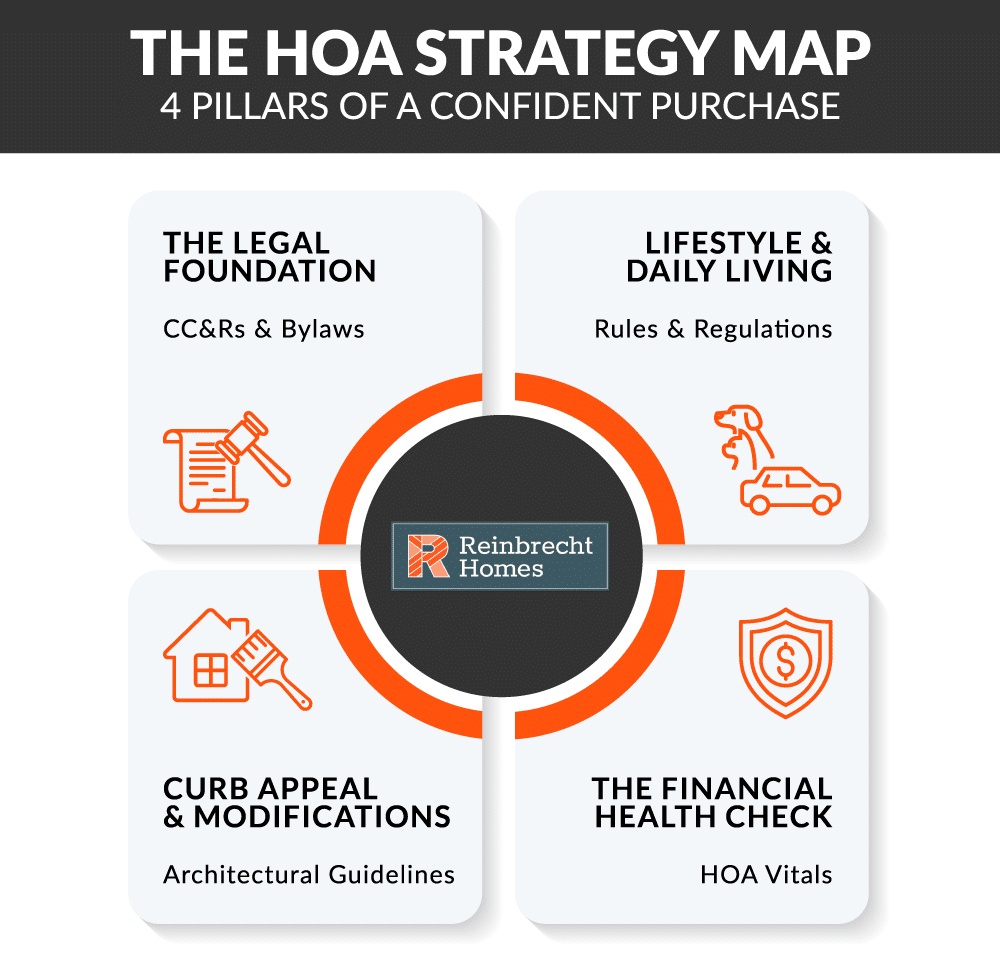
Types of HOA Documents and Where to Find Them
Familiarize yourself with the three essential HOA documents:
Covenants, Conditions, and Restrictions (CC&Rs)
The CC&Rs are the governing contract between homeowners and the HOA. They detail:
- Property Use: Specifies whether the property can be used for home-based businesses or strictly residential purposes.
- Maintenance Responsibilities: Outlines who handles common-area maintenance.
- Homeowner Rights: Includes voting rights and participation guidelines.
These documents are typically recorded with local government offices and can also be provided by the seller or the HOA.
Rules and Regulations
These guidelines offer operational details for day-to-day living:
- Parking and Vehicle Rules: Clarify what types of vehicles are allowed and where.
- Pet Policies: Define restrictions on pet types, sizes, and numbers.
- Community Amenities Usage: Explain guidelines for amenities like pools or clubhouses.
Rules and Regulations are more flexible than CC&Rs and may be updated periodically by the HOA board.
Architectural Guidelines or Design Standards
These guidelines maintain the community’s aesthetic by:
- Dictating Materials and Colors: Define approved materials and color palettes.
- Setting Limitations on Modifications: Describe permitted additions, such as sheds or outbuildings.
- Enforcing Uniformity: Ensure a harmonious look throughout the neighborhood.
Request these documents through the seller, real estate agents, or the HOA’s management company.
How to Read CC&Rs: Understanding Your Property’s Limits
The CC&Rs determine how you can use and modify your property. Here’s how to approach them:
- Check “Use of Lot” or “Permitted Uses”: Identify clauses that restrict property use. For example, if you plan to run a home-based business, look for rules regarding home occupation.
- Review Parking and Storage Rules: If you own larger vehicles, an RV, or a boat, examine the parking and storage rules. Ensure the policies accommodate your requirements.
- Understand Restrictions on Outbuildings: If modifications such as building a shed or workshop are on your agenda, check the CC&Rs for details on size, location, or design compatibility with the main house. Research outbuilding restrictions for clarity.
- Assess Guidelines for Fencing and Outdoor Features: Rules regarding fencing, pools, or other outdoor installations vary widely. Verify that these restrictions are in line with your plans so you can avoid costly surprises later.
Thoroughly reading these sections ensures the property you choose will fit your current and future needs.
How to Understand Architectural Guidelines: Balancing Design Freedom and Uniformity
Architectural guidelines shape the visual identity of the community and influence your future remodeling efforts.
- Materials, Colors, and Exterior Appearance: Review the approved materials and color palettes. If the guidelines mandate specific types of siding, roofing, or paint colors, determine if these restrictions suit your aesthetic preferences.
- Size, Height, and Structural Requirements: Architectural standards often include guidelines on minimum and maximum sizes or height restrictions for buildings. Ensure that these limits won’t hinder your plans for expansions or renovations.
- Rules for Future Additions and Modifications: Understand the approval process for home improvements. Some HOAs require detailed proposals for additions like decks or porches. Knowing these procedures in advance helps you plan and budget more effectively.
How the Rules Are Enforced: Approvals, Timelines, and Penalties

Knowing how an HOA enforces its rules is critical for managing expectations and avoiding disputes.
The Architectural Review Process
Most HOAs require homeowners to submit proposals for major modifications. The review process often includes:
- Submission of Detailed Proposals: This may involve blueprints, material samples, and color choices.
- Approval Timelines: Some approvals occur within weeks, while others take months.
- Enforcement Measures: Initial enforcement typically involves written warnings, but persistent non-compliance may lead to fines or legal actions.
Dispute Resolution
Most HOAs have formal processes for dispute resolution, which may include appeals or mediation. Familiarizing yourself with these procedures upfront ensures you’re prepared if any conflicts arise.
HOA Financial Health: What to Review Before You Buy
HOA rules are important—but the HOA’s finances can impact you just as much through dues increases, special assessments, deferred maintenance, and even lending/insurance issues. Before you buy, request these items (often provided through the seller or HOA management company) and scan for red flags:
- Current dues + increase history: Confirm today’s dues, what they cover, and how often they rise. Ask for 3–5 years of dues history. Red flag: sudden jumps or frequent “catch-up” increases.
- Reserve study (does it exist, and how recent?): A reserve study forecasts major repair/replacement costs (roads, roofs in condos, amenities, drainage, fencing). Red flag: no reserve study—or one that’s outdated.
- Reserve balance vs. upcoming projects: Review the reserve balance alongside planned projects in the next 12–36 months (repaving, roofs, pool, drainage). Check meeting minutes for “deferred maintenance.” Red flag: low reserves with big projects coming.
- Recent or pending special assessments: Ask whether there have been special assessments in the last 3–5 years and whether any are proposed/approved now. Red flag: repeated assessments that signal chronic underfunding.
- Delinquency rate: Find out what percentage of owners are behind on dues and whether it’s trending up or down. Red flag: persistent high delinquency (cash-flow problems often follow).
- Litigation: Ask if the HOA is involved in active lawsuits (or major recent ones). Litigation can increase costs and affect mortgage approval. Red flag: ongoing high-stakes or frequent legal disputes.
- Insurance basics (high level): Understand what the HOA’s master policy covers (common areas/shared structures) vs. what owners must insure individually, plus any high deductibles or recent premium spikes. Red flag: unclear coverage responsibilities or unusually high deductibles.
Creating a Practical Framework for Comparing Neighborhoods
A structured comparison method makes evaluating multiple HOA-governed communities far less daunting.
Use a Comparison Matrix
Develop a simple spreadsheet to compare key criteria across neighborhoods. Include factors such as:
- HOA Fees: Note monthly or annual dues and whether special assessments are planned.
- Architectural Restrictions: Summarize major rules regarding exterior modifications.
- Parking and Storage Limits: Document any restrictions on vehicle or boat storage.
- Pet Policies and Shared Amenities: Assess guidelines for pets and the availability of communal amenities.
Align Community Rules with Your Lifestyle
Pay attention to how each community’s rules align with your personal preferences:
- If you’re planning home renovations, confirm whether the architectural guidelines offer some flexibility.
- If you own multiple vehicles, review whether stricter parking rules can accommodate them.
- Pet owners should verify that community pet policies meet their needs.
Using this framework streamlines your decision-making and clarifies which neighborhood fits your long-term plans.
Questions to Ask Key Stakeholders
To gain a comprehensive view of an HOA’s governance and culture, ask critical questions:
Questions for the HOA or Management Company
- What are the current HOA dues, how have they changed over the last 3–5 years, and have there been any recent—or approved/pending—special assessments?
- Do you have a current reserve study (when was it last updated)?
- What is the current reserve balance, and what major repairs or projects are planned in the next 12–36 months?
- What is the current delinquency rate (how many owners are behind on dues)?
- Is the HOA involved in any active litigation or major disputes that could affect finances or mortgage approvals?
- What is the enforcement process for rule violations (warnings, fines, appeals), and what is the typical timeline?
Questions for Your Real Estate Agent
- How do current residents perceive the HOA?
- Do properties in this community maintain strong resale values?
- Are there any local trends or developments that might affect HOA fees or rules in the future?
Questions for Your Insurance Advisor
- Does the HOA’s master policy cover all shared areas, and how does it affect my coverage?
- Are there particular risks in the community that require additional coverage?
- How might HOA restrictions influence my insurance needs, especially for major property modifications?
Final Steps: Using HOA Documents to Choose Your Ideal Neighborhood

Selecting the right neighborhood requires aligning your homeownership goals with the community’s rules and expectations. By reviewing HOA documents, asking the right questions, and comparing neighborhoods systematically, you ensure that the community you choose supports your lifestyle and long-term plans.
Pre-Purchase HOA Document Checklist
Before finalizing your purchase, verify that you have:
- Reviewed the CC&Rs in Detail: Identify any restrictions that could impact your use or plans for the property.
- Examined the Rules and Regulations: Make sure these align with your daily lifestyle, such as parking or pet considerations.
- Understood the Architectural Guidelines: Confirm that aesthetic and modification rules will not interfere with your future improvements.
- Asked Key Questions: Talk to HOA representatives about finances, enforcement policies, and general community dynamics.
- Conducted a Side-by-Side Comparison: Use a comparison matrix to assess multiple communities at once.
Once you’ve chosen the right community, use our New Homeowner Checklist to stay organized after closing.
Consider Professional Expertise
If you find the documents overwhelming, consult with professionals such as real estate attorneys or coverage experts. For example, you might reach out to a real estate attorney for legal insights or an independent insurance agency for coverage advice.
Protect Your Investment with Informed Decisions
By taking these steps, you build a strong foundation for a confident decision. Ensuring that HOA rules align with your lifestyle and financial goals not only safeguards your investment but also contributes to long-term satisfaction in your new home.
FAQ: HOA Rules & Documents for Homebuyers
Can an HOA change the rules after I buy?
Yes. Many HOAs can update rules and regulations (and sometimes parts of governing documents) through board votes or community/member votes. Ask what can be changed, how often updates happen, and whether owners vote on major changes.
What HOA documents should I request before closing?
At minimum: CC&Rs, bylaws, rules & regulations, and architectural guidelines. Also request financial items like the current budget, recent financials, reserve study (if available), meeting minutes, and any notice of special assessments.
What’s the difference between CC&Rs and Rules & Regulations?
CC&Rs are typically recorded legal restrictions that are harder to change. Rules & Regulations are day-to-day guidelines that are usually easier for the HOA board to update.
What are common HOA “deal-breakers” for buyers?
Common deal-breakers include strict rental limits, vehicle/RV/boat parking restrictions, tight pet rules, expensive or frequently increasing dues, pending special assessments, unclear/slow architectural approvals, and ongoing litigation.
Are HOA dues negotiable?
Usually no—dues are set by the HOA. However, you can protect yourself by reviewing the HOA’s financial health (reserves, assessments, dues trends) and factoring the cost into your overall home budget before making an offer.
Can HOA issues affect my mortgage approval?
Yes. Some lenders review HOA finances, insurance coverage, owner-occupancy ratios, delinquencies, and litigation (especially for condos/townhomes). Active litigation or weak reserves can create financing hurdles.
What happens if I violate HOA rules?
Most HOAs follow a process such as a written notice, time to correct, then possible fines—sometimes with an appeal or hearing option. Always confirm the enforcement process and whether fines escalate.
Choose an HOA Community With Confidence
Buying a home in an HOA-managed community can come with real benefits—but only if the rules and the finances match your lifestyle and long-term plans. Before you move forward, take time to review the CC&Rs, rules and regulations, architectural guidelines, and the HOA’s financial health. When you know what to look for (and which red flags to take seriously), you’ll be able to compare neighborhoods clearly, avoid costly surprises, and choose a community that supports how you actually want to live.
If you’re considering HOA neighborhoods in Southern Indiana or Eastern Illinois, Reinbrecht Homes can help you evaluate HOA documents as part of your home search and narrow your options with confidence. Contact Reinbrecht Homes to schedule a conversation, tour homes, and get expert guidance on finding the right fit—HOA rules included.
