
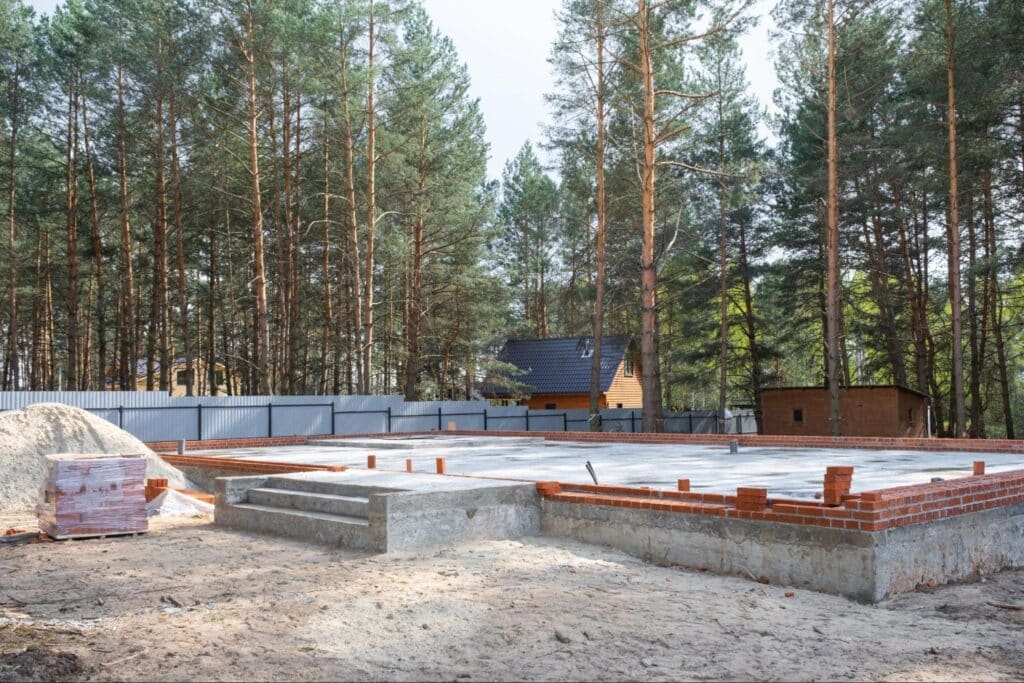
The foundation is the most consequential decision in any new home build. It’s also the least visible, which is why many homebuyers don’t think much about it until the builder asks which type they want. Understanding the main home foundation types, and what drives the choice in Southern Indiana specifically, puts you in a much better position before that conversation begins.
Key Takeaways
- The three main home foundation types are slab, crawl space, and basement. In Southern Indiana, the practical choice for most homebuyers comes down to slab or basement.
- Slab foundations are the most common in new construction. 73% of new single-family homes started in 2024 were built on slabs, and the trend continues to climb.
- Southern Indiana’s clay-heavy soil, frost line requirements (Indiana’s code-required depth ranges from 24 to 36 inches by county per the 2020 Indiana Residential Code, with Southern Indiana counties toward the lower end of that range), and drainage conditions all influence which foundation works best for a given lot.
- Basement foundations offer usable square footage and storage, but they cost more to construct and require proper waterproofing to perform well in this region.
- Crawl space foundations are declining nationally and are generally not the recommended starting point for new construction in Southern Indiana due to ongoing moisture management demands.
- Reinbrecht Homes has built 500+ homes across Southern Indiana, Northwestern Kentucky, and Eastern Illinois. The Reinbrecht team guides every buyer through foundation selection based on their specific lot, goals, and budget.
The Three Main Home Foundation Types
Every new home in Southern Indiana is built on one of three foundation types: slab, crawl space, or basement. Each has a distinct structure, a different cost profile, and tradeoffs that matter more in some regions than others. Here is what each one means for your build.
Slab Foundation
A slab foundation is a single continuous layer of poured concrete placed directly on prepared ground. There is no space beneath the home. The concrete is typically 4-6 inches thick, with additional thickness in load-bearing areas, and is reinforced with steel rebar or wire mesh. The slab also serves as the finished floor surface or the base for other flooring materials.
Slab foundations are the most straightforward to build, which translates directly to lower upfront cost. They are also low-maintenance: there are no crawl spaces or basement walls that can trap moisture, and no understructure to attract pests or wood-boring insects. From a longevity standpoint, a slab built on well-prepared, properly drained ground is exceptionally stable.
The main tradeoff is utility access. Plumbing and electrical conduit are embedded in or run beneath the slab, so accessing them for repairs requires more work than in a home with an accessible understructure. Good planning during construction minimizes this concern. In Southern Indiana, slabs work best on flat or gently sloping lots with stable soil and reliable drainage.
Crawl Space Foundation
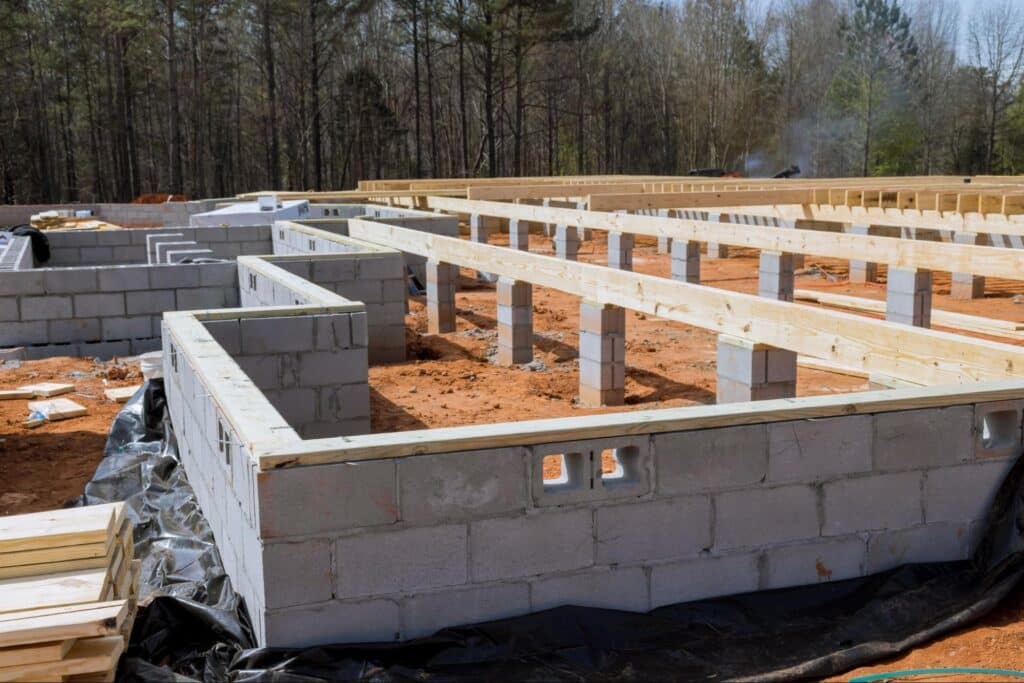
A crawl space foundation raises the home off the ground on perimeter walls, creating a shallow accessible space of roughly 18-36 inches beneath the floor. Utilities run through this space, making them more accessible than in a slab home. The added height also provides a buffer between the ground and the living space above.
The primary challenge with crawl spaces in this region is moisture. Southern Indiana’s clay-heavy soils retain water, and a crawl space that is not properly sealed and ventilated can develop humidity, mold, or wood rot over time. Keeping a crawl space healthy requires ongoing attention: vapor barriers, ventilation or encapsulation, and periodic inspections throughout the life of the home.
From a cost standpoint, crawl spaces fall between slabs and basements. Given the moisture management demands and the availability of better-suited alternatives in this market, crawl spaces have become less common in new construction. Nationally, crawl space foundations made up just 9.2% of new single-family starts in 2024, continuing a long-term decline.
Basement Foundation
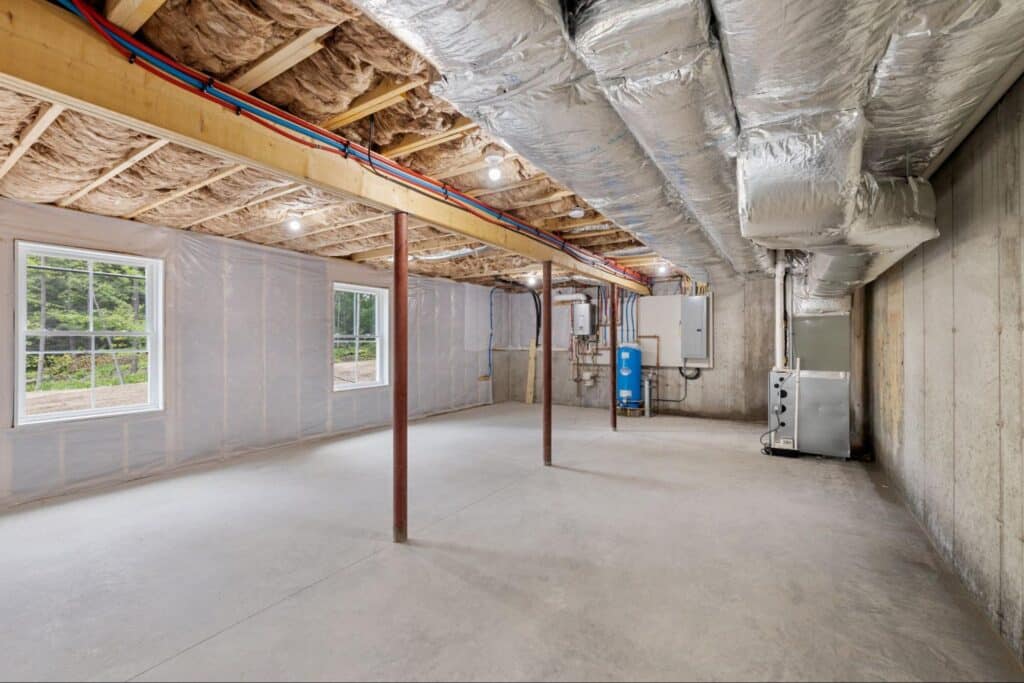
A basement foundation extends the home’s structure below grade, typically 7-10 feet underground, creating a full level beneath the first floor. Basements can be left unfinished as storage and utility space or finished into living areas, home offices, gyms, or additional bedrooms. The extra square footage they provide is a meaningful value for many buyers.
Basements require deep excavation and significantly more concrete work than slabs. In Indiana, the foundation must extend below the frost line to prevent frost heave from shifting or cracking the structure. Basement construction also requires waterproofing membranes and drainage systems to manage groundwater. Done correctly, a basement is a durable, dry, and highly functional part of the home for decades.
The East North Central census division, which includes Indiana, Illinois, Michigan, Ohio, and Wisconsin, recorded 50.3% of new homes built with basements in 2024, the highest share of any region in the country. This reflects the region’s deeper frost line, colder winters, and a long tradition of basement construction that many buyers here still expect.
What Drives Foundation Choice in Southern Indiana?
Foundation choice in Southern Indiana is not simply a matter of preference. Several site-specific factors determine what is practical and cost-effective for a given lot. Every Reinbrecht build begins with a thorough evaluation of these conditions before any decisions are finalized.
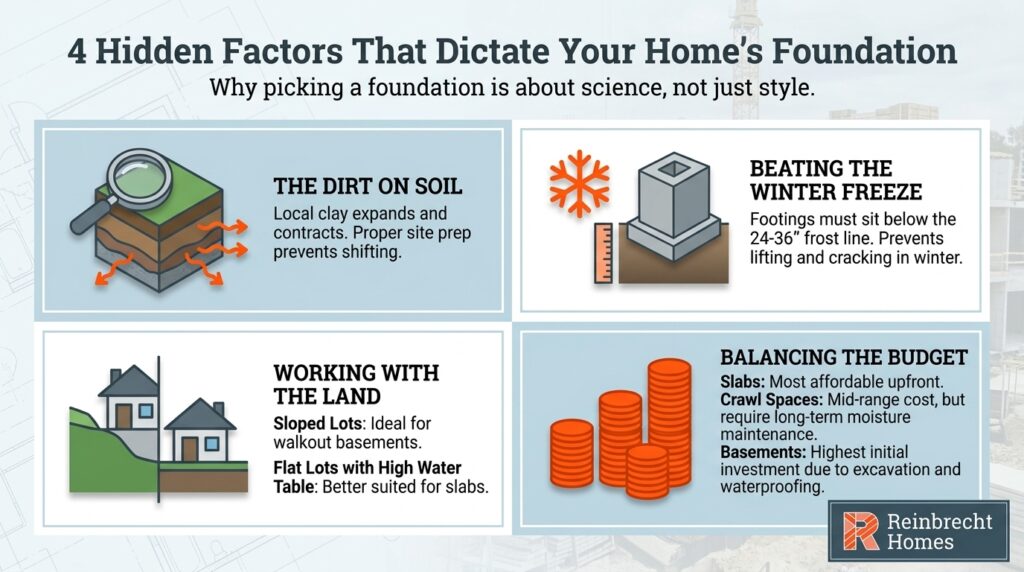
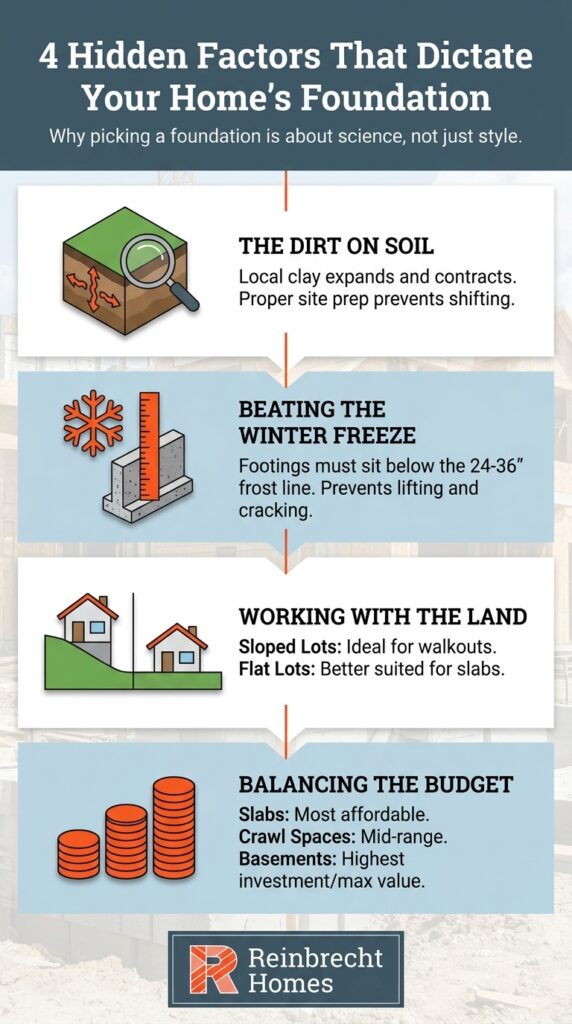
- Soil composition: Southern Indiana soils include significant clay content in many areas. Clay expands when wet and contracts when dry, which places ongoing stress on foundation walls over time. A proper site evaluation identifies how the soil will behave under load and what preparation, compaction, or drainage improvements are needed before the pour.
- Frost line depth: Indiana’s frost line ranges from 24 to 36 inches depending on county, per Table R301.2(1) of the 2020 Indiana Residential Code. Southern Indiana counties fall toward the lower end of that range. Any foundation must extend below this depth to prevent frost heave, which can crack slabs or shift foundation walls over winter freeze-thaw cycles. Basement footings naturally satisfy this requirement. Slab and crawl space designs must account for it explicitly in the footing design.
- Lot topography and drainage: A sloped lot may naturally lend itself to a walkout basement. A flat lot with clay soil and a higher water table may be better suited to a properly prepared slab with perimeter drainage. The grade, drainage flow, and proximity to utility connections all factor into the final recommendation.
- Budget: Slabs are the most cost-effective foundation to construct. Basements cost significantly more due to excavation depth, concrete volume, and waterproofing requirements. Crawl spaces are a middle-ground option in initial cost, though the long-term maintenance expenses for moisture management can offset early savings over the life of the home.
For buyers navigating these decisions for the first time, having a builder who evaluates every one of those factors for your specific lot makes a real difference. As one Reinbrecht homeowner described it:
“The Reinbrecht team and their sub contractors did a wonderful job bringing our dream home to reality. They delivered a home of exceptional quality on time and on budget. They were present for us every step of the way, delivering a personal and professional home building experience.”
For a comprehensive look at foundation selection specific to this region, download Reinbrecht’s Complete Home Foundations Guide.
Which Foundation Type Is Most Common in New Construction?
Nationwide, slab foundations dominate new home construction. 73% of new single-family homes started in 2024 were built on slab foundations, per the NAHB/U.S. Census Bureau Survey of Construction. This share has grown steadily for more than a decade, driven by cost efficiency and shifting regional growth patterns toward Sun Belt states where slabs are standard.
The Midwest tells a different story. In the East North Central division, 50.3% of new single-family homes were built with basements in 2024, the highest percentage of any region in the country. This reflects the practical reality of the region: deeper frost lines require deeper foundations, and buyers in Indiana and neighboring states have long expected the additional square footage a basement provides.
In Southern Indiana specifically, both slabs and basements are common. The choice comes down to the lot conditions, the buyer’s budget, and whether the extra space a basement provides is worth the additional construction cost. Crawl space construction is declining and is rarely the first recommendation for a new build in this area.
Slab vs. Crawl Space vs. Basement: Quick Comparison
The three foundation types differ most on upfront cost, long-term maintenance, utility access, and what they contribute to usable living space.
| Slab | Crawl Space | Basement | |
| Construction Cost | Lowest | Moderate | Highest |
| Maintenance | Minimal | Ongoing (moisture) | Moderate (waterproofing) |
| Utility Access | Limited (embedded) | Good | Excellent |
| Extra Living Space | None | None | Yes |
| Moisture Risk | Low (proper drainage) | Higher (requires sealing) | Managed (waterproofing) |
| Common in Indiana? | Yes | Declining | Yes |
Frequently Asked Questions About Home Foundation Types
What are the three main types of home foundations?
The three main home foundation types are slab, crawl space, and basement. A slab is a flat concrete pour placed directly on prepared ground with no space below the home. A crawl space raises the home on perimeter walls, creating a shallow accessible area underneath. A basement extends the foundation below grade to create a full usable level beneath the first floor. Slab and basement are the most common choices for new construction in Southern Indiana.
What type of foundation is most common in Southern Indiana?
Both slab and basement foundations are widely used in Southern Indiana. Nationally, slabs account for 73% of new single-family home starts according to NAHB data, while the East North Central region, which includes Indiana, shows 50.3% of new starts built with basements. The regional number reflects Indiana’s frost line depth and buyer preference for the additional space basements provide. Crawl spaces are used but continue to decline in new construction statewide.
Is a slab or crawl space better for Indiana homes?
In most cases, a slab is the better choice for new construction in Indiana. Slabs cost less to build, require minimal maintenance, and avoid the moisture challenges that crawl spaces present in a region with clay-heavy soil and significant seasonal rainfall. A well-sealed crawl space can perform adequately, but it demands more active management over the life of the home. For a detailed comparison of these two options and why slab tends to be the better investment in this market, read Slab vs. Crawlspace: Get the Most for Your Money.
Does foundation type affect home value?
Foundation type can influence both initial construction cost and long-term resale value. A finished basement adds usable square footage that can increase appraised value compared to a slab-only home with the same footprint. However, a slab home built on the right lot with proper drainage and quality construction typically holds value well and carries lower maintenance costs over time. The quality and condition of the foundation matters more to buyers and appraisers than the type alone.
What is the most durable home foundation?
All three foundation types are durable when properly designed and built for the site’s specific soil and climate conditions. Basements built with quality waterproofing and drainage can last for generations. Slabs on well-compacted, well-drained ground are exceptionally low-maintenance and very stable over time. Crawl spaces are structurally sound but require more active moisture management to maintain that condition long-term. Site preparation and construction quality are the primary durability factors, not foundation type alone.
Start with the Right Foundation
Understanding foundation types is the first step. Choosing the right one for your specific lot, budget, and goals is where an experienced local builder adds real value. Reinbrecht Homes has been building in this region since 1995, with 500+ completed homes across Southern Indiana, Northwestern Kentucky, and Eastern Illinois. When you’re ready to move from research to building, new home construction with Reinbrecht is the natural next step.
Reinbrecht backs every build with a 10-year structural defect warranty through the Home Buyers Warranty program, which covers the foundation, framing, and load-bearing components for a full decade. That coverage starts with getting the foundation right from day one.
Ready to start planning your new home? Contact the Reinbrecht team to schedule your first meeting.
